

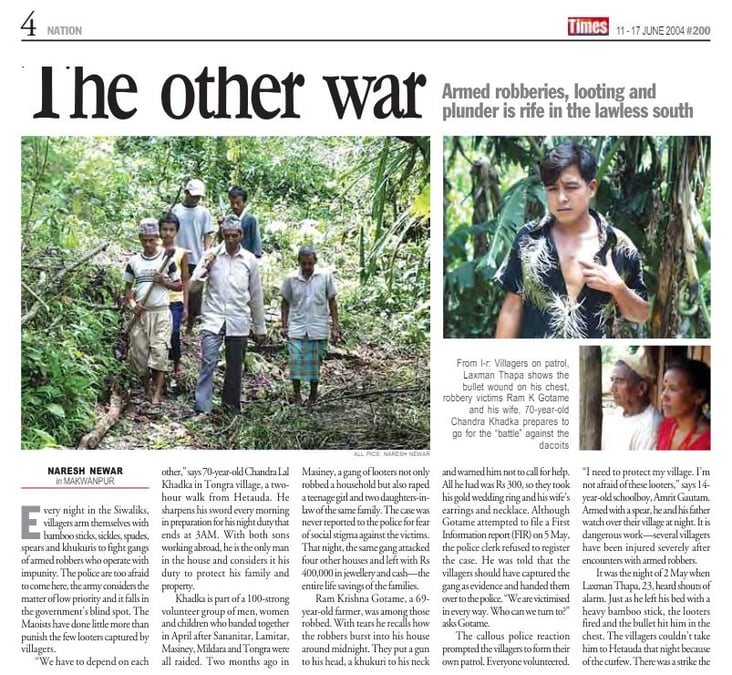
At the height of the Maoist insurgency there was infighting between the palace and the political parties. Armed robberies, looting and plunder were rife in Makwanpur. With the police too afraid to intervene or too preoccupied with the Maoist conflict, villagers took it upon themselves to defend their families with varying degrees of success.
An excerpt of the report published 20 years ago this week in issue #200 11-17 June 2004:
Every night in the Siwaliks, villagers arm themselves with bamboo sticks, sickles, spades, spears and khukuris to fight gangs of armed robbers who operate with impunity. The police are too afraid to come here, the army considers the matter of low priority and it falls in the government's blind spot. The Maoists have done little more than punish the few looters captured by villagers.
"We have to depend on each other," says 70-year-old Chandra Lal Khadka in Tongra village, a two-hour walk from Hetauda. He sharpens his sword every morning in preparation for his night duty that ends at 3AM. With both sons working abroad, he is the only man in the house and considers it his duty to protect his family and property.
Khadka is part of a 100-strong volunteer group of men, women and children who banded together in April. Two months ago in Masiney, a gang of looters not only robbed a household but also raped a teenage girl and two daughters-in-law of the same family. The case was never reported to the police for fear of social stigma against the victims.
Ram Krishna Gotame, a 69-year-old farmer, was among those robbed. With tears he recalls how the robbers burst into his house around midnight. They put a gun to his head, a khukuri to his neck and warned him not to call for help. All he had was Rs300, so they took his gold wedding ring and his wife's earrings and necklace.
For archived material of Nepali Times of the past 20 years, site search: nepalitimes.com