After 10 years of agonising war, and three weeks of spreading street protests, by the stroke of the midnight hour on 24 April 2006, king Gyanendra finally restored Parliament. Girija Prasad Koirala was reappointed prime minister and mobile phone service was restored, FM radio stations could broadcast news again. It would take three more days for the Maoists to declare a ceasefire with a mammoth victory rally at Tundikhel.
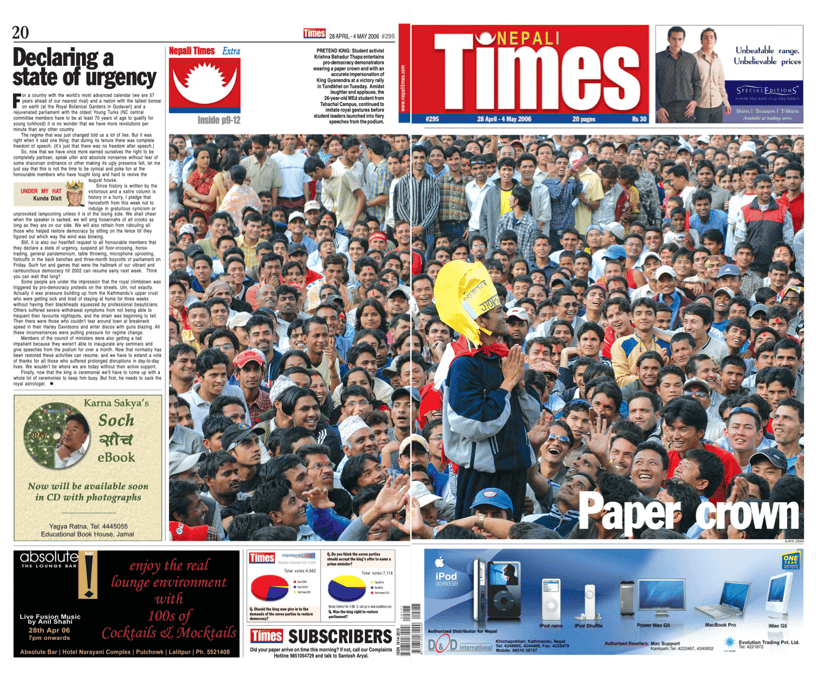
The page 1 foldout of a Nepali Times Special Edition that week carried an iconic photo by Ajay Joshi of a student protester wearing a paper crown and ridiculing Gyanendra with an impersonation. Such an act would have surely meant imprisonment a day previously, but the laughing faces in the crowd were proof that the fear was gone. Gyanendra’s time was up.
But politicians being politicians, the formation of the interim cabinet was delayed because of competing demands for powerful portfolios among the SPAM (Seven Party Alliance + Maoists). The following months of 2006 shows that the People’s Movement had changed the regime without changing the mindset of the leadership to show vision and action.
By the end of 2006, there were ominous signs of things to come. As Nepali Times wrote in an editorial printed on 22-28 December:
‘The euphoria over the ceasefire of the past nine months is now being replaced by a worrying sense of foreboding about ethnic, separatist, and religious fissures that are opening up. Part of this is caused by reaction and resentment that was welling up after the restoration of democracy. Partly it is also identity politics where the radical fringes of the Maoist and other parties have taken to extreme and militant rhetoric to leapfrog into the political arena.’
The Maoists needed to be demobilised, disarmed and reintegrated, and the United Nations was called upon to (with New Delhi’s blessing) which led to the formation of UNMIN to supervise the process. Ian Martin, who was with the OHCHR office in Kathmandu was deputed to head the team that grew to manage the mammoth task of arms management in camps for the former guerrillas across the country.
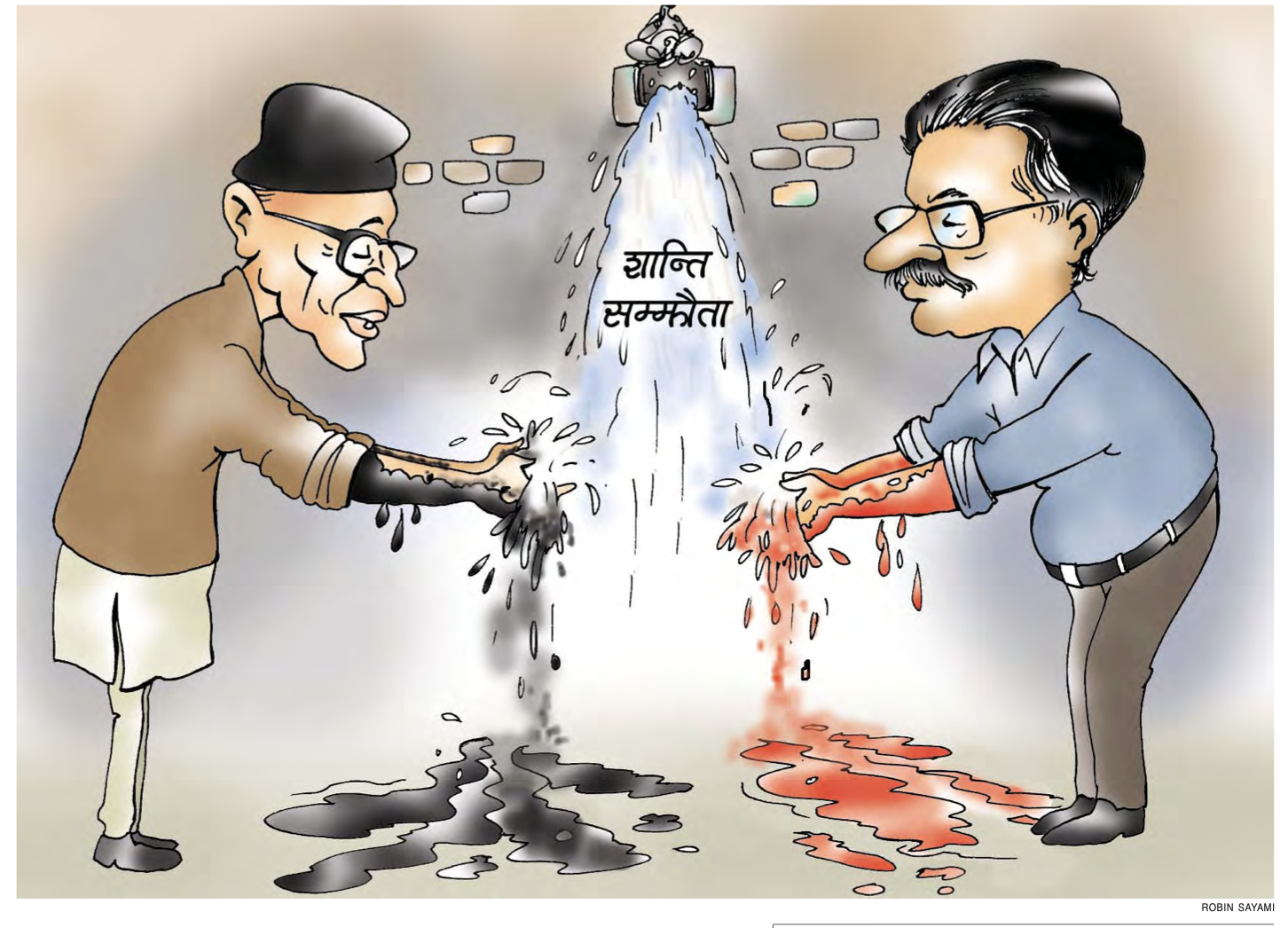
This cartoon (pictured, above) about the peace process by Rabin Sayami from page 1 of the 8-14 December 2006 edition showed Girija Prasad Koirala scrubbing the dirt of corruption, and Prachanda washing the blood from his hands.