
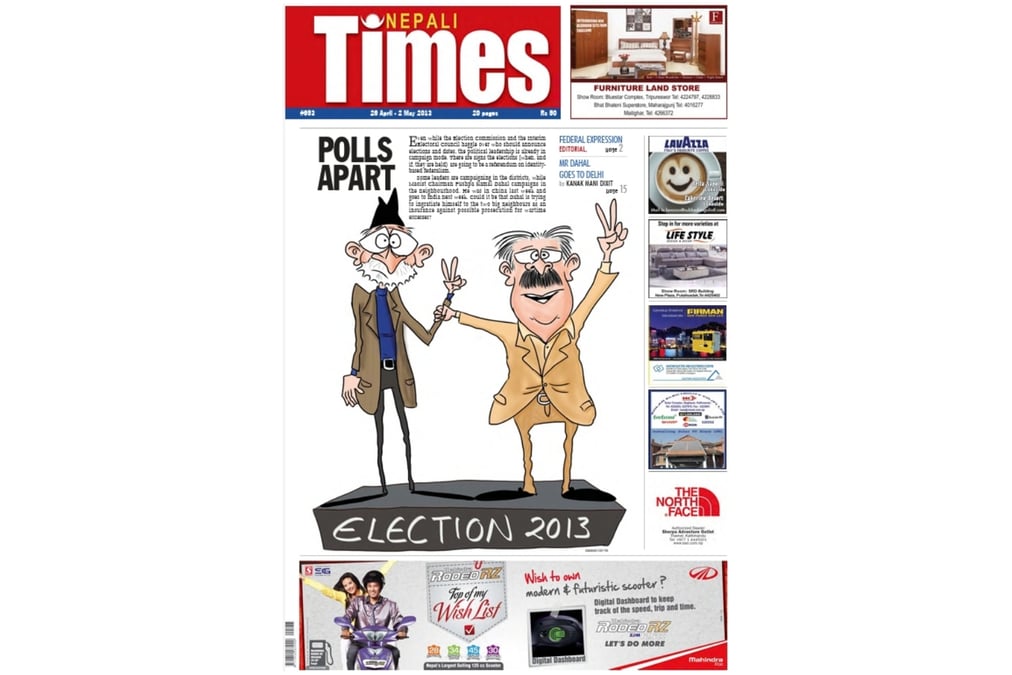
By 2013, the optimism after the ceasefire seven years earlier had more or less disappeared. It was clear that the trust the Nepali people had put in the Maoists in 2008 to lead the country to a new direction had not been realised.
Mohan Baidya breaking away from the Maoists the previous year had weakened the party. In March, results of the annual Himalmedia Public Opinion Poll showed that the apathy, indifference, disenchantment, and cynicism with political parties and their leaders had grown, with more than half the respondents saying they did not trust the crop of political leaders at the time.
That same month, when it became clear that then Prime Minister Baburam Bhattarai’s government could not hold the second Constituent Assembly elections on time, the parties handed over power to a transitional government led by Chief Justice Khil Raj Regmi, who became the Chairman of the Interim Election Council of Ministers.
With the pesky problem of governance out of the way, Nepal’s leaders set their sights on the 2013 race. We wrote that the election would be a referendum on federalism. Indeed, while the Maoists and fringe parties campaigned on ethnicity-based federalism, the NC and UML were against the idea.
Public opinion polls over the years had also shown that Nepalis in general were against the idea of ethnicity-based federalism. Our Editorial after the election in 2013:
‘The people are interested more in bread and butter issues like health, education, jobs, and roads. They want accountable leaders with integrity, they are less than enthusiastic about secularism, and they think federalism based on single ethnicity is a bad idea. Even people from the indigenous communities and the Tarai felt that way, but the Maoists and the Madhesi parties went ahead and made those issues their main plank showing just how out of touch they were.’