
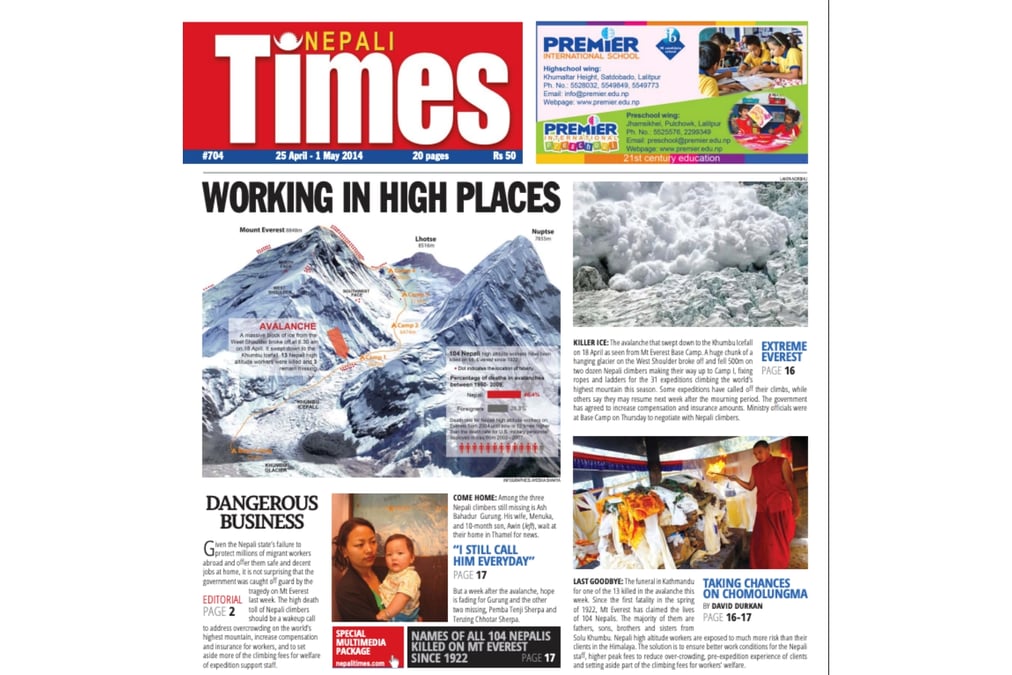
On 18 April, a mammoth avalanche that fell off the West Shoulder of Mt Everest claimed the lives of 16 Nepali guides fixing ropes on the Khumbu Icefall for 31 expeditions during the 2014 season. The serac fell on Icefall Doctors making their way to Camp 1 at the beginning of the season.
On 2 August, the whole side of a mountain fell on the homes of the residents of Jure along the Arniko Highway, taking the lives of 156 people and destroying houses. The Bhote Kosi was blocked, the Kodari Highway and two hydropower plants were submerged.
In his column Strictly Business, Ashutosh Tiwari pointed out the human role in the death toll in ‘Coping Mechanisms’:
‘For a fee, unelected local politicians can give you permissions to rent bulldozers to flatten sections of the hills, to mine sand from the rivers and to extract water from the ground to sell commercially, to construct hotels near the river banks, to let settlements grow into a bajar, and to look the other way when it comes to enforcing building codes.
So, when disasters strike, no one can really be held locally accountable for having let the risks dangerously multiply on the side of people and property.’
After the Everest avalanche, expeditions abandoned their climbs, and the government raised the insurance coverage of high altitude guides and support staff to Rs1.5million. Some called for a moratorium on expeditions for the season, but the Ministry of Tourism urged teams to resume work after a week of mourning.