
Twenty-five years later, where are we? Exactly where we said we would be: with the impact of climate breakdown increasingly visible, good governance still a challenge, and the same politicians still playing musical chairs.
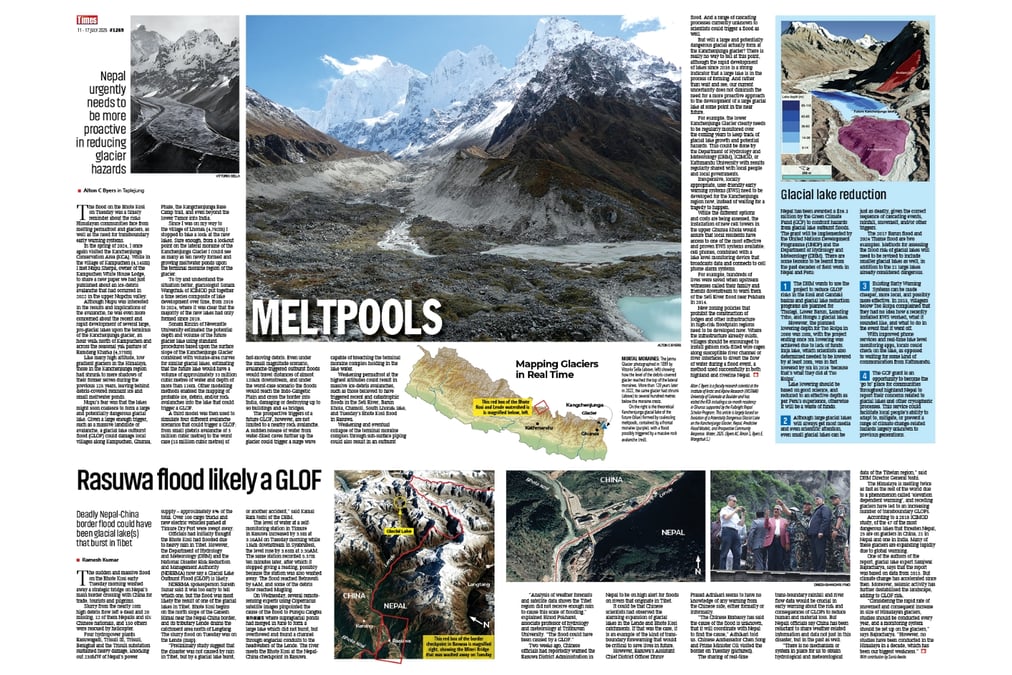
Four hydropower plants were damaged in the Rasuwa flood on the Nepal-China border in the first week of July, knocking out 230MW of Nepal’s power supply – 8% of the total. The September flood last year was worse: the damage caused by three days of rain in central and eastern Nepal slashed Nepal’s generation by 1,700MW, nearly half of the total capacity at the time.
Hydropower, while highly efficient, is unreliable in the fragile Himalayan landscape, vulnerable to earthquakes and cloudbursts. Still, Nepal continues to invest in mega hydropower plants without a proper environmental assessment. In fact, the goal is to generate 28,500MW in the next 10 years.
India has strategically removed China from all the hydropower projects in Nepal, with investments in multiple projects that give them 80% of the power generated before they officially hand them over to the country in 25 years. As it is, India is not after our hydropower, but water to regulate monsoon flow.
Diversification of the energy sector is of utmost importance. Apart from its vast hydropower potential, Nepal gets 300 days of sunlight on average for 6-8 hours per day. And yet, solar power has hardly been explored, even when the price of solar panels has fallen.
Some experts have also suggested promoting smaller infrastructure and decentralising them. One cannot help but think back to the ‘small is beautiful’ model that Nepal championed in the 70s and 80s with biogas, trolley buses, solar plants, windmills and micro hydro. In many ways, Nepal was way ahead of its time but couldn’t keep up when the demand soared.
Among the other energy options Nepali Times covered in 2025 was Pump Storage Hydro (PSH) in tandem with solar PV as an ideal solution that will give hydro development a new and more productive life in the years ahead, as well as increasing electricity quality. ‘Water is pumped from a lower reservoir or the side of river to a higher pond using cheap off-peak grid electricity or surplus solar PV power, and the stored water is then used to generate electricity during peak or no-sunlight periods,’ wrote energy expert Dipak Gyawali in Nepali Times issue #1247.