
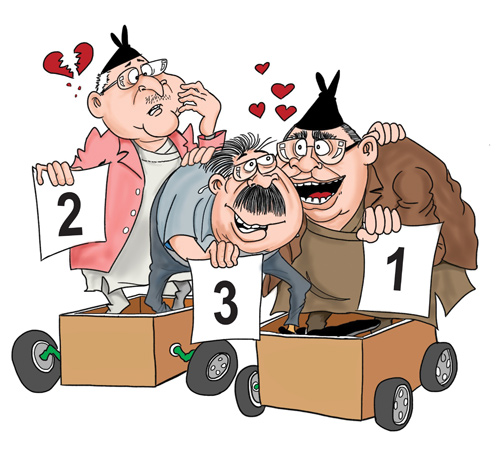
Ever since the conflict ended, Nepal’s political transition has inexorably concentrated decision-making power in the hands of the alpha males of the three main political parties. The Nepali Congress (NC), UML and the Maoists are the Father, Son and the Holy Ghost of Nepali politics, and their leaders Sher Bahadur Deuba, KP Oli and Pushpa Kamal Dahal have consolidated power both within their parties, and together over the Kathmandu establishment.
Reading the headlines in the papers these days it may seem like they are at each other’s throats, but that is an illusion. All three work hand-in-glove to preserve and protect their stranglehold on Nepali politics. The 10 governments in the last 10 years have been, in the main, permutations of these three parties. The last four coalition governments after the 2013 elections have just shuffled the cards, with the weakest of the three parties wielding the most clout because of its king-maker role in government formation.
In normal circumstances it could be considered a good thing that adversarial parties like the NC and the Maoists can work together even though their leaders, lest we forget, tried to kill each other off not too long ago. But these are not normal times. The farce played out in Bharatpur is an extreme example of the unprincipled you-scratch-my-back-I-scratch-yours brand of politics today: Dahal convinced Deuba to withdraw the NC’s mayoral candidate in Bharatpur and support his daughter Renu. When it looked like she might lose, Maoists tore up ballot papers and later the coalition partners leaned on the Election Commission and the Supreme Court to order a recount.