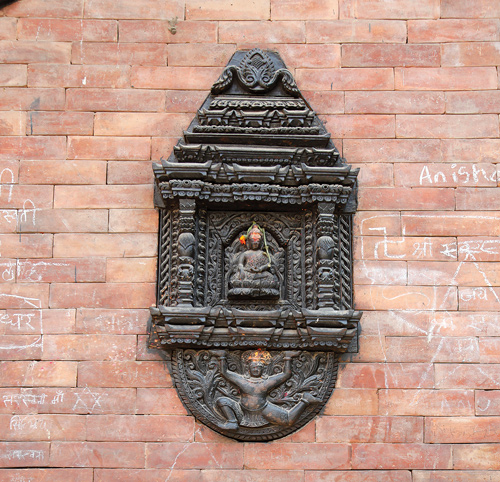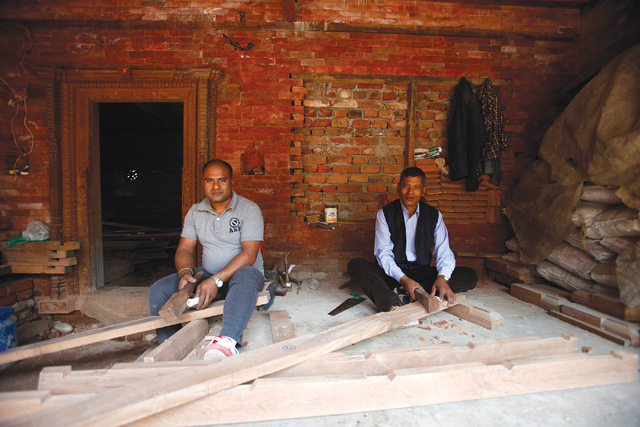
When your father’s resume includes building Kathmandu’s famous temples, you have your work cut out if you intend to follow in his footsteps.
Despite that, Ratna Sundar Silpakar made the brave decision to emulate his famous dad, Mangal Bahadur Silpakar, but changing times have complicated that choice.
Both father and son uphold the tradition of wood carving, but are pragmatic when it comes to adapting to modern construction techniques, especially after the earthquake destroyed many of Kathmandu Valley’s monuments.
Mangal Silpakar has in the past worked on the Aakash Bhairab shrine, the Mahaboudha temple, Dyo Chhen at Tebahal, the Naksal Bhagawati, Dhumbarahi Mahadev Mandir and the reconstruction of Hanuman Dhoka museum.
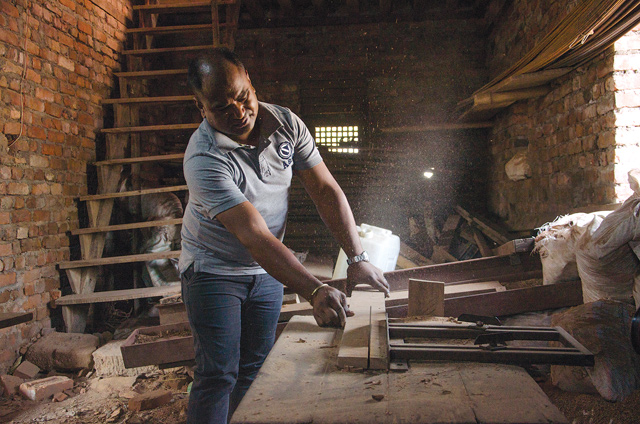
Today, both father and son acknowledge the challenge of finding the right raw materials in post-earthquake rebuilding. Reconstruction is not an exact science, and they try to get the original design of fallen monuments from the municipality, but these are usually not accurate.
“In the case of temples that got damaged during the earthquake and don’t have any measurements, we look at the available photographs and estimate the dimensions,” explains Mangal, who has in the past used steel beams for the wooden dalin while working on the Dyo Chhen at Mahaboudha because a 13-foot timber span was unavailable.
Even the traditional bajra mortar has been modified for strength. The original 1:1 ratio of surki and chun has been replaced with one part cement since the limestone is not of the required quality. The father notes that the time taken to make a temple is directly proportional to the availability of raw materials.