
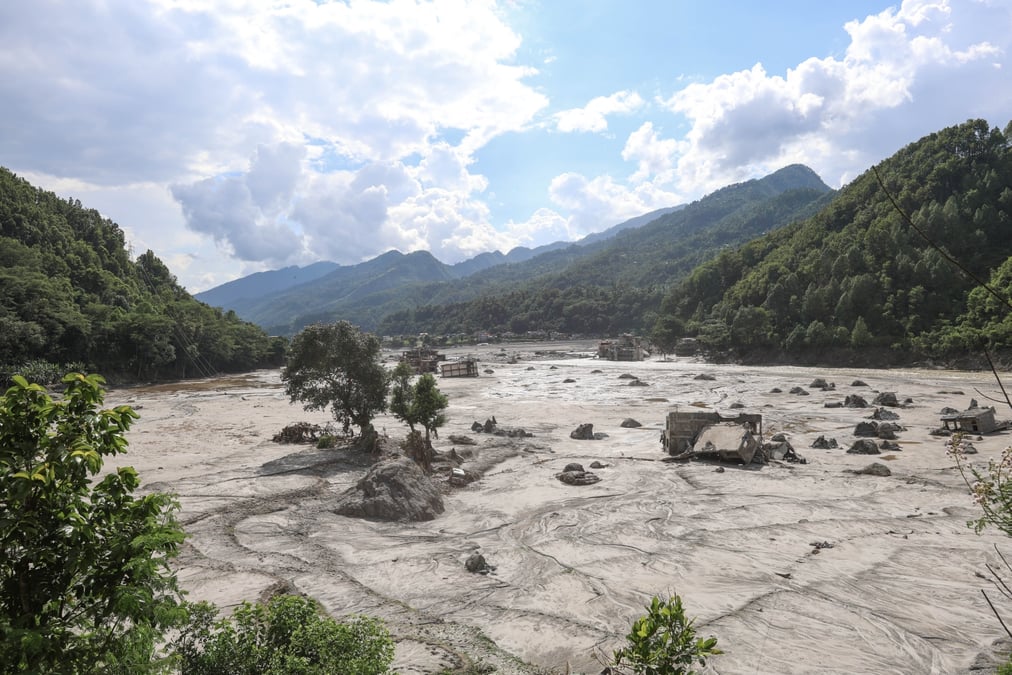
The heavy loss of life in the Trisuli Valley catastrophe of 26 August resulted from it being Nepal’s trade, tourism and energy corridor. What is less well known is the river’s strategic importance dating back to the Gorkha-China War of 1791-92.
Thousands of Gorkhali, Chinese and Tibetan soldiers spilled their blood 234 years ago along the Bhote Kosi-Trisuli in fierce battles at Kerung, Rasuwagadi, Timure, Syapru, Dhaibung, Ramche, Dhunche, and Betrawati. Most of these towns are now buried under deep mud and debris.
Rasuwagadi was the scene of battles in 1791-92, and also where Jang Bahadur Rana established a fort as the staging post for Nepal’s second invasion of Tibet in 1855. These battlefields were all swept away by the debris flow, 100m high in places. The temple and cremation site of Nepal’s founding king, Prithvi Narayan Shah, at Devighat was also buried.
Such was the force of the mudflow that the huge half-submerged boulder at Betrawati (which was itself possibly brought down by a previous flood) tumbled 12km downstream. This rock used to be worshipped by pilgrims, and nearby was where the Betrawati Treaty that ended the war in 1792 is said to have been signed.
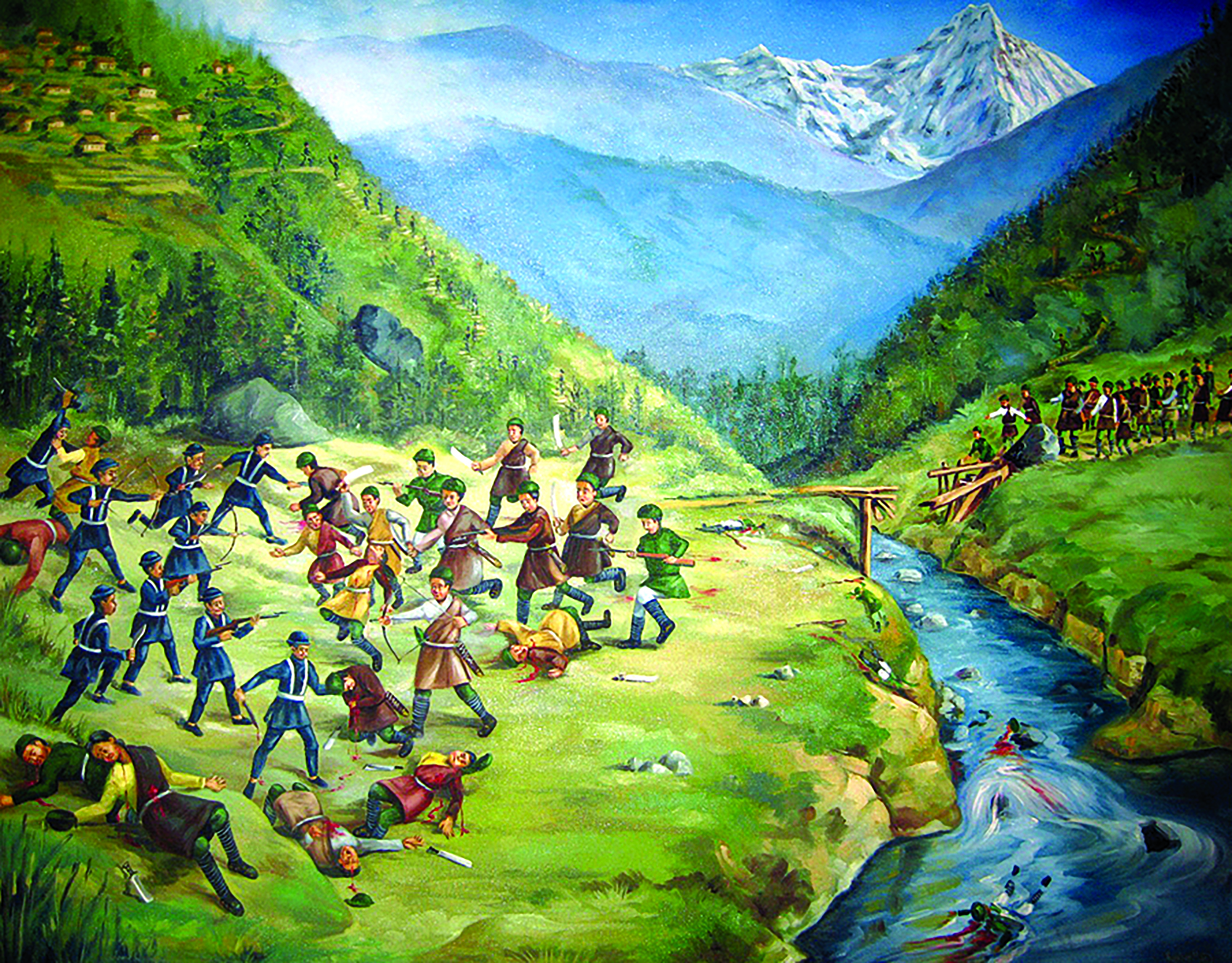
Betrawati itself was where Gorkhalis fought rearguard action, facing the advancing army of Chinese Emperor Qianlong led by the Manchu general Fuk’anggan. Hundreds were killed on both sides as the Chinese tried to cross a bridge over the Trisuli to Nuwakot, and were cut down by Gorkhali khukris and bullets.
Chinese troops are said to have ‘fallen off the bridge like goat droppings’. When they could not find stones and logs, they used the corpses of their comrades as a trench barricade. It was hot, had been raining for 10 days, and more Chinese and Tibetans may have died of dysentery and malaria than were killed in action.
Details like these come thick and fast in the scrupulously researched new book, Who Won the Sino-Nepalese War of 1791-1792? A Study in Transcultural Complexity by professor Axel Michaels at the Südasien-Institut at Universität Heidelberg, and his research associate Xu Yunheng.
The two pored over rare and never before examined archival records in Kathmandu, Lhasa, Beijing, and translated them into English, sifting through propaganda, half-truths and exaggerations contained in letters by field commanders, instructions sent from capitals and biographies.
ADULTERATION
The 1791-1792 war came soon after Prithvi Narayan Shah’s conquest of Kathmandu Valley, and was waged by his second son Bahadur Shah who was regent during the reign of nine-year-old Rana Bahadur Shah. In his Dibyopadesh, Prithvi Narayan advised his descendants to ‘maintain a treaty of friendship with the Emperor of China and keep also a treaty of friendship with the Emperor of the southern seas’.
His sons did not follow this advice. The Shah dynasty inherited already strained relations between Kathmandu Valley’s Malla kings and Tibet’s theocracy. Knowing how important trans-Himalayan trade was, Prithvi Narayan Shah captured Nuwakot in 1744, and cut off the Trisuli transit route to Tibet.
After the Shah conquest, relations with Tibet deteriorated over suspicions about adulteration – of the salt the Tibetans were selling in Nepal, and the coins Nepalis were minting for Tibet.
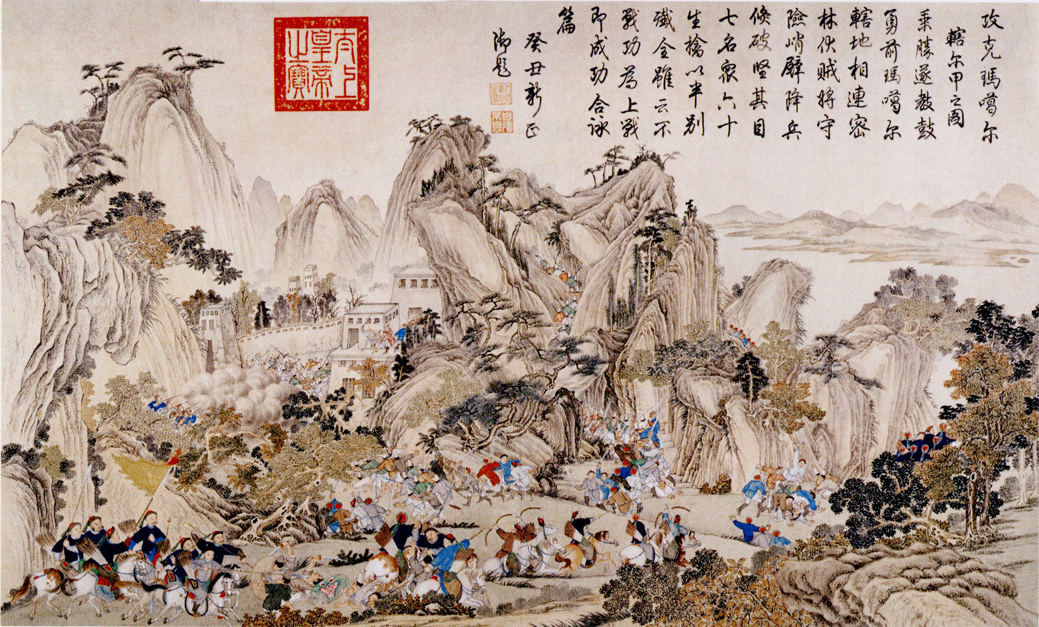
‘Within a span of just 25 years, from 1791 to 1816, the small country of Nepal … challenged two of the world’s largest powers: China with Tibet and British India,’ write the authors in the introduction.
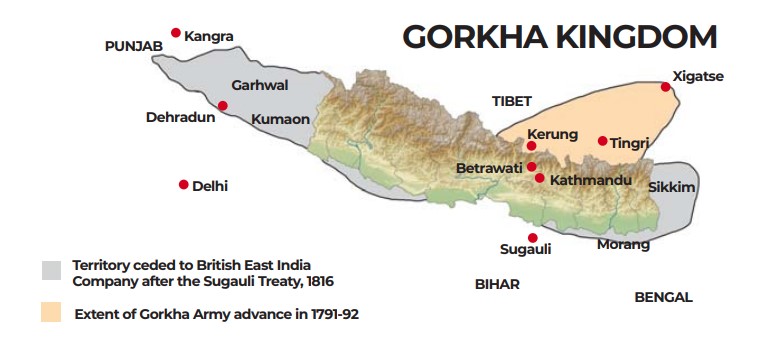
When Bahadur Shah launched his blitzkrieg into Tibet in 1791, reaching as far as Shigatse and plundering the Tashi Lunpo Monastery, his Army was fighting on multiple fronts: the two pronged offensive against Tibet from Kerung and Tingri, on the western front in Kumaon and Garhwal, and against Sikkim in the east.
When the Chinese emperor sent in his Army from Chengdu to help the Tibetans, Nepal’s king dispatched letters to his generals in Kumaon asking them to return and defend Kathmandu from the approaching Chinese. But by the time the letters reached them, the war was over.
The Gorkhalis did not expect the Chinese to come to the aid of the Tibetans, and seem to have underestimated the affinity Emperor Qianlong had for the Gelugpa Yellow Hat sect of Tashi Lunpo, and his willingness to repel ‘anti-Buddhist invaders’.
Documents Michaels and Yunheng unearthed also show that the Tibetans were not happy about the Chinese presence, but were desperate to stop the Gorkhali advance towards Lhasa.
After 1792, a weakened Tibet relied even more on China’s security umbrella. And with the Chinese Army at the gates, Kathmandu did not want a prolonged war that could pull the British into the fray.
The Sino-Gorkha war ended in a stalemate, and both sides needed a truce. But both also wanted a face-saving victory.
The Chinese suffered heavy casualties, desertions, disease, and wanted to retreat back up to the Plateau before snow blocked the passes. The Gorkhalis were overextended on other fronts, and did not want to risk the Chinese marching into Kathmandu.
So, neither side lost and both sides won. Axel Michaels says this was possible because of translation semantics between the words ‘truce’ and ‘surrender’, and in the differing interpretations of the exchange of gifts following the war. The Chinese called them ‘tributes’ to the Emperor, while the Nepalis used the term ‘saugat’ (gift).
The phrase ‘transcultural complexity’ in the title of this book refers to the inadequacy of the concepts of ‘sovereignty’, ‘independence’, ‘tributary state’ because they oversimplify perspectives in analysing historical events like the Gorkha-China War.
The authors conclude that the conflict had valuable lessons for all: ‘China realised the formidable strategic barrier posed by the Himalayas; Tibet suffered great losses and recognised its far-reaching dependence on China; Nepal understood the need to halt its expansionist ambitions; and the British India realised the futility of attempting to conquer Nepal.’
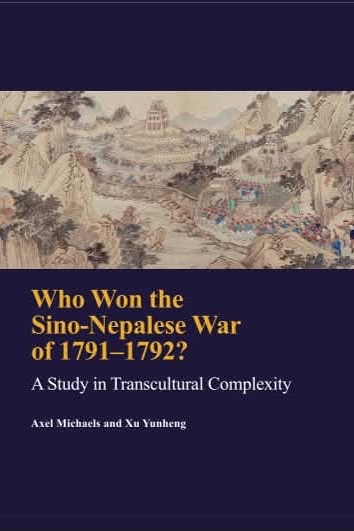
Who Won the Sino-Nepalese War of 1791-1792?
A Study in Transcultural Complexity
by Axel Michaels and Xu Yunheng
Heidelberger Akademie Der Wissenschaften
Vajra Books, Kathmandu 2026
498 pages Rs 5,000