
|
|
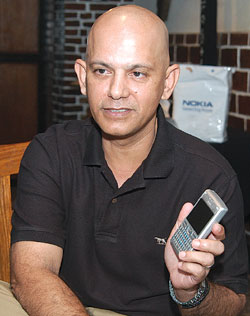
Nokia is entering the Nepali mobile phone market in a big way, hoping to cash in on the rapid growth of the mobile telecom market. Prem Prakash Chand, general manger of Nokia's Emerging Asia spoke with Nepali Times about combating smuggling and Nokia's plans for the future in Nepal.
Nepali Times: What sort of mobile telecom potential do you see in Nepal?
Prem Prakash Chand: At present there are two billion mobile subscribers globally. It took us over ten years to get the first billion, and five years to get the next. Eighteen months ago we believed the total would reach three billion by 2009. Now, however, we think that will happen by the end of this year.
Countries like Nepal, Bangladesh, Bhutan, Sri Lanka, and Maldives are what we call Emerging Asia. The next billion subscribers will come from these emerging markets. In Nepal, the government is ready to deregulate the market and it is ready to take off. That's why Nokia needs to be here.
How do you see the market in Nepal evolving?
Nepal is where countries like Australia used to be ten years ago. The biggest advantage here is that these markets do not need to evolve. In countries like Australia, the market evolved from voice-centric devices to SMS, then MMS, and now they have web browsing and email. But Nepal can go straight through, because the technology is already there. Markets like Nepal will go through a revolution and not have to wait 10 years to get to where Australia or Singapore are today.
What are some of the challenges you foresee?
Of the handsets available in Nepal, 90 percent are brought in illegally, thus depriving government of revenue. Consumers are also being cheated of value, because they may end up buying a handset that is perhaps not genuine, is refurbished, or has counterfeit batteries. Illicit trade is a big challenge, but you can control it. For example in Bangladesh, when we entered, illicit trade was 80 percent, but in 12 months we'd halved that. It is about having the willpower, having media advocate for authorised handsets, and a government that understands the long term gains that come by supporting the industry.
What are some of your goals for the Nepali market?
A recent piece of research shows that the GDP of a country increases by 0.6 percent per 10 percent increase in mobile penetration. The government needs to be aware of how this industry can contribute to the economy. Deregulating the market and making handsets available to the masses benefits the overall economy. After the government realises what the industry can contribute, it needs to put into place a system to assist in the acceleration of the industry. The government could start by reducing the heavy duties and taxes Nepali consumers have to pay on mobile services.