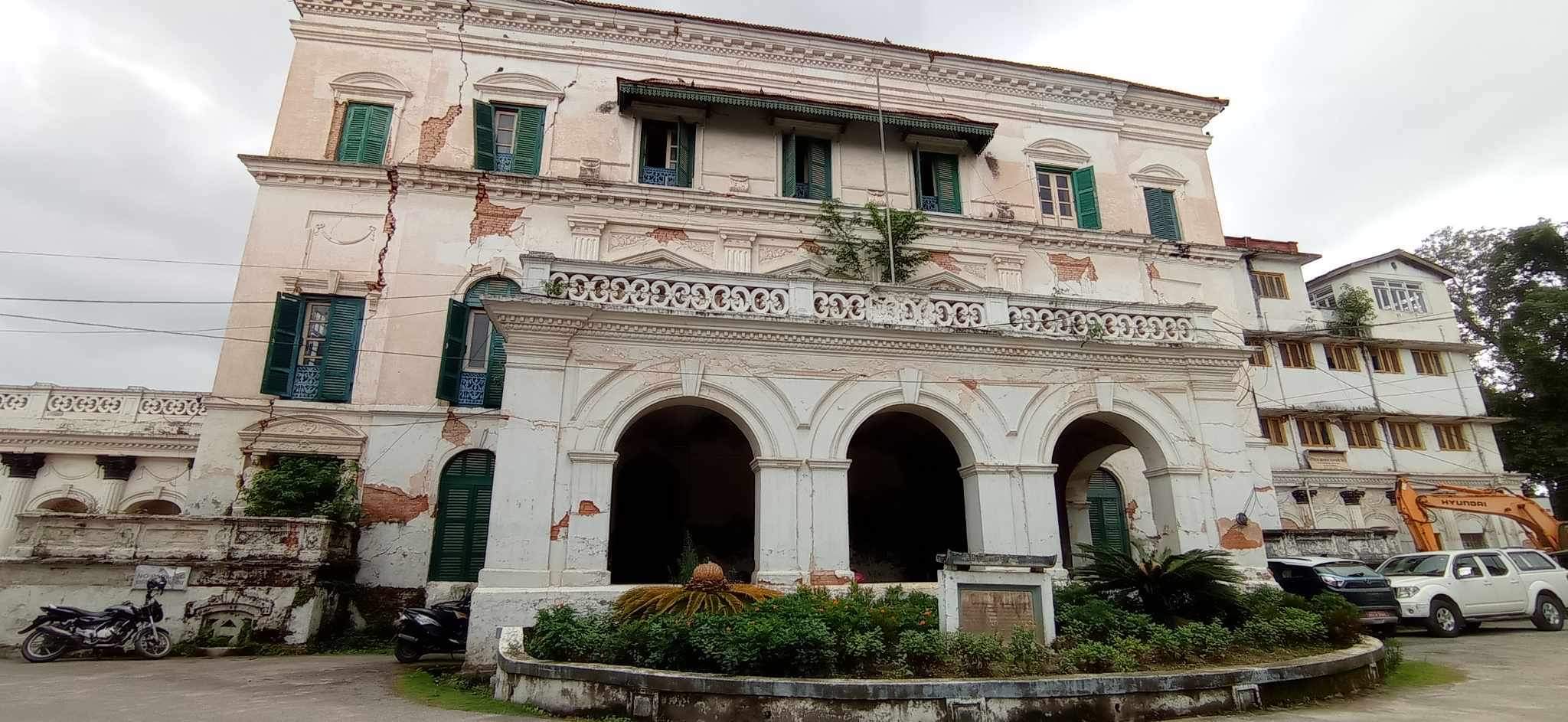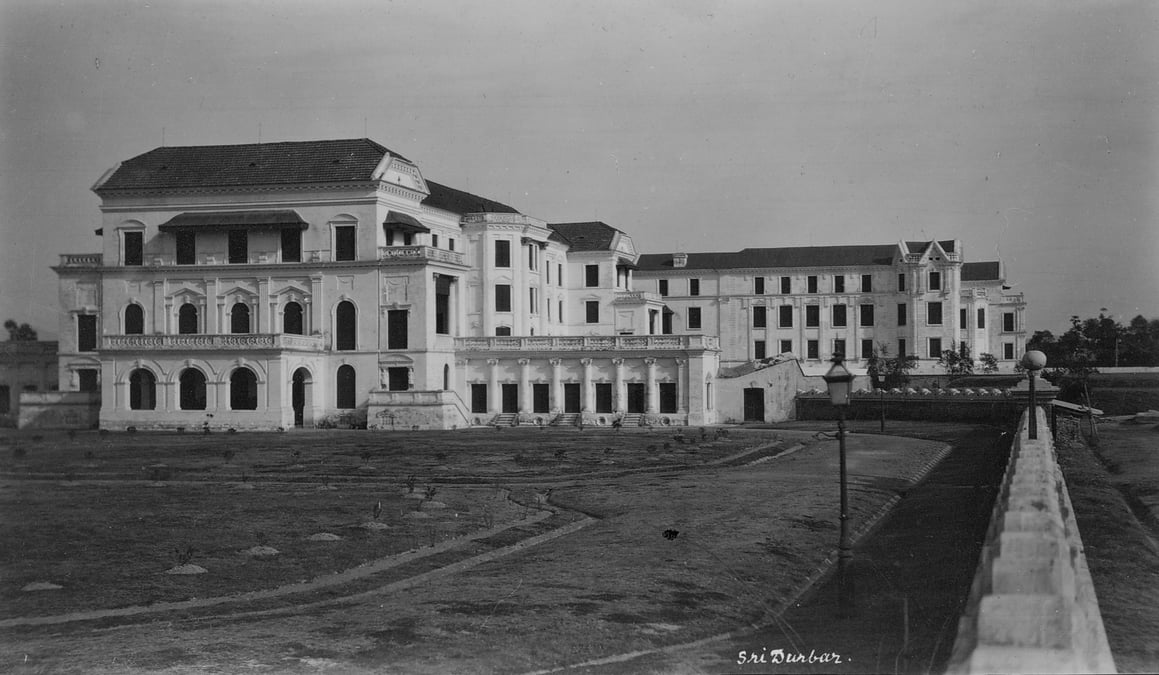
Prime Minister Chandra Shumsher Rana commissioned three palaces in Patan for three of his sons: Bishnu, Shankar and Madan.
Although less grand in scale than his own Singha Darbar, Sri Mahal, Harihar Bhawan and Sri Darbar of the sons were palatial stucco structures that emulated the royal grandeur of Victorian British architecture.
They stood in stark contrast to the densely-packed two-storey brick and tile roof homes of nearby Patan, and were designed and built by Kishor Narasingh and Kumar Narasing Rana, the foremost palace architects of the day.
Construction started within weeks of each other in 1919 of Sri Mahal and Sri Darbar and lasted two years. In the age before cement, this was a structure made of bricks with lime and clay mortar, and plastered with lime mixed with sand and water.
Records show that Chandra Shumsher himself spent a night at one of the palaces and decided to bequeath it to his junior queen, Balkumari Devi and his elder son Bishnu Shumsher. However, his youngest son Madan was born soon after and Balkumari started living with the child on the eastern side at Sri Darbar.
Chandra Shumsher died in 1929, and Bhim Shumsher became prime minister. Chandra's relatives and courtiers fell into disfavour, and Bishnu left for India and on to Britain, never to live in the Sri Mahal palace that his father built for him.
In 1947, India gained independence and the Rana era came to an end in 1951. Bishnu Shumsher died in the Bahamas in 1946, and Madan Shumsher died in 1955 after which his widow Jagadamba Devi bought Sri Mahal from Bishnu Shumsher’s son Pitamber.
She then gifted it in 1960 to the government of B P Koirala, Nepal’s first elected prime minister, to set up an agriculture college.