
|
|
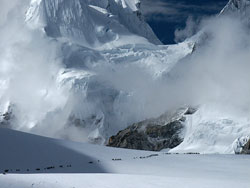
So many Tibetan refugees have been fleeing to India via Nepal for so long
that their crossing is accepted as something normal-until a day like 30
September, when a group of 70 would-be refugees was fired at by Chinese border
guards while trying to cross into Nepal over the angpa La in the Cho Oyu region
(pictured, file photo).
"They started shooting and we ran. It was around
8AM. There were 15 small children aged 8-10, only one escaped and the rest were
arrested," a monk from Tibet's Gyamda county told website phayul.com.
"I
think the soldiers fired for about 15 minutes," he added. "They were shouting,
probably warning us, but I did not hear them as I was terrified, I just heard
gunshots passing my ears . the nun was with us and she was shot and a boy from
Kandze was shot in the leg."
The monk and 40 others who fled arrived in Kathmandu late Monday accompanied
by an official from the UN's High Commissioner for Refugees.
The nun, a
17-year-old according to phayul.com, died in the incident. Climbers at Cho Oyu
advance base camp reported seeing as many as eight people killed, but these
reports are unconfirmed.
Although such shootings are relatively rare,
abuse of Tibetan refugees is common, much of it at the hands of Nepali border
guards, says a new report.
Two years ago, researchers interviewed 50
refugees staying at the refugee reception centre in Kathmandu about their trips
from Tibet to the capital. On average they travelled 34 days, both by foot and
by bus. Most carried little food for fear of arousing suspicion and had to go
hungry for days or resort to begging when their supplies ran out, says the
report 'Dangerous Journey: Documenting the Experience of Tibetan Refugees',
published in the November issue of the American Journal of Public Health.
Although two refugees caught by Chinese border guards experienced the
most severe treatment, 'one of the findings of most concern in our study was the
treatment of refugees by the Nepali border guards. We documented beatings,
torture, and sexual assaults at gunpoint,' says the report.
Three women
'were separated from their groups and, despite attempts to escape, were
captured. The women were taken to an outside area where a group of six guards
disrobed them and sexually assaulted them at gunpoint,' adds the document.
All of the refugees who met Nepali border guards were threatened with
refoulement (being forcibly returned to China). Others ran into Maoists. They
'experienced extortion or detainment. When they were able to pay the required
amounts to the rebels, they received Maoist passes and were allowed to proceed,'
says the report, whose authors include Edward J Mills, of McMaster University in
Hamilton, Canada.
'The longterm impacts of such dangerous circumstances are having a large
impact on the physical and mental suffering of refugees,' he told us via email.
The report recommends that the Tibetan government in exile in Dharamsala
start providing care programs for all refugees, not only political asylum
seekers, including special programs for children.