
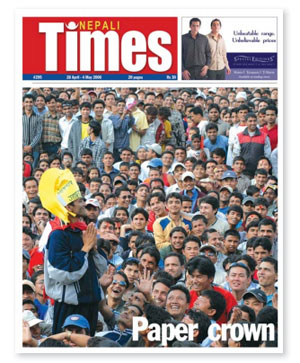
This April will mark the ninth anniversary of the People’s Movement that forced King Gyanendra to step aside, restore parliament and bring the Maoist guerrillas down from the mountains into an interim government. How many different ways can we say the same thing? The duration of the post-conflict transition has now lasted nearly as long as the war itself.
No one expected the peace process to be easy. The country was going from monarchy to republic, from war to peace. The inequality, injustice, discrimination and exclusion that were some of the precursors to the insurgency needed to be recognised and resolved through a new, genuinely democratic constitution.
To be sure, some significant achievements were made. Camps housing the Maoists were dismantled, and the guerrillas disarmed and demobilised. Some opted for golden handshakes, others were inducted into the national army. And despite the human and economic cost of the war, it did significantly make hitherto marginalised Nepalis aware of their rights. It forced the ruling class to grudgingly admit that it had for too long monopolised decision-making, neglecting or ignoring other castes and classes, regions and religions. Never before in Nepal’s history, through the Rana years to the Panchayat period, is the collective Nepali consciousness as alert to rights and justice as it is now.
But this has dragged on for too long. Many of us remember the elation of the ceasefire and restoration of democracy in April 2006. The sense of relief and optimism was palpable, finally we had a chance to reap the peace dividend, catch up with the lost decade of development, and address some of the underlying social issues.
That sense of cautious hope was reflected in an editorial in this newspaper titled ‘Freedom at midnight’ which we carried in this space in our 27 April 2006 issue #295.
Here is an urgent checklist: reciprocate the Maoist ceasefire to create the atmosphere for a peace process to start, bring the army effectively under parliamentary control, halt all major purchases of military hardware and helicopters and use freed up funds to kickstart service delivery of health and education to all corners of the country. Before the euphoria evaporates, people need to see immediate proof that democracy this time will mean an improvement in their lives.