 |
It has been nearly four years since the war ended, Nepalis are still dying from leftover explosives, and the government is dragging its feet in signing the Mine Ban Treaty.
More than 155 countries have signed the Ottawa Treaty since it came into force in 1999, although the US, India, China and Sri Lanka have refused to ratify it.?Landmines and improvised bombs were used by both sides during the Nepal conflict, causing at least 1,500 fatalities. People have continued to die and be injured since the war ended. In 2009 alone 16 people were killed (6 boys, 3 girls, 5 men, 2 women) and 54 injured (24 boys, 5 girls, 13 men, 12 women).
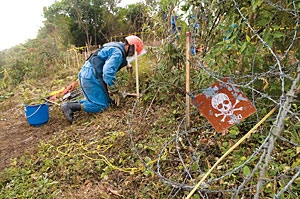
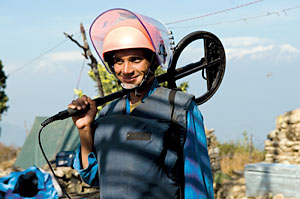
Since the end of the war, the United Nations has spent $5 million in Nepal to help clear minefields, destroyed Maoist explosives, trained Nepal Army personnel in demining and invested in risk education. However, there are still 36 minefields covering 3.25 sq km that need to be cleared and another 18,000 unexploded Maoist bombs, a job that may take another two years.
While Nepal has been praised for its demining work, its delay in signing the Ottawa Treaty could hinder future international support. "Failure to sign the treaty is a blot on Nepal's otherwise excellent global citizenship record. What's holding this up?" asks the UN's Resident Coordinator, Robert Piper.
Indeed, it seems Nepal has nothing to lose and everything to gain from signing the treaty. It has a stockpile of only about 3,000 outdated anti-personnel mines and the international trade in mines has virtually stopped. Experts say Nepal would have little trouble in meeting treaty obligations because it only includes victim-activated devices and gives signatories four years to destroy stockpiles and ten years to clear minefields.