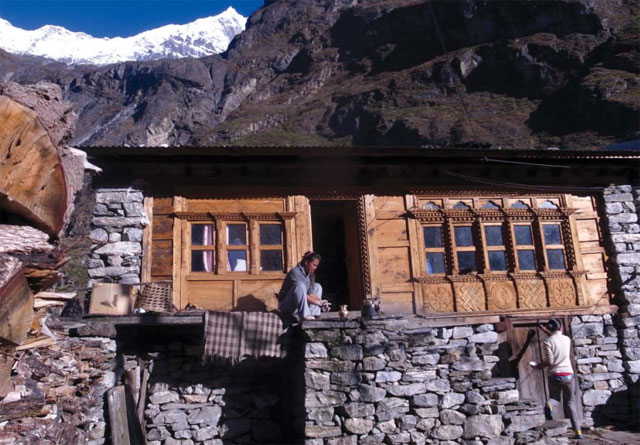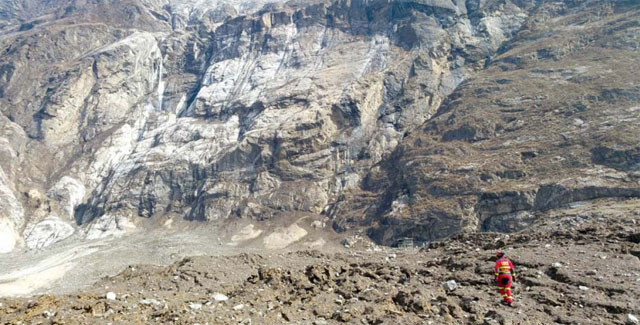
Langtang village after the avalanche. Photo: Luismi Ortiz/ Ocpume
Pasang Dindup was preparing lunch for trekkers in his lodge in Langtang on 25 April when the house started shaking. There was a tremendous roar and the next thing Pasang knew, he was lying on a slope with a terrible pain in his arm.
He had been blown off by the shock wave that preceded a massive avalanche triggered by the earthquake that destroyed this scenic trekking town, killing 175, and at least 150 outsiders inclduing tourists and Nepali workers. Dindup lost his wife, and four trekkers in his lodge were also killed. Her body, as with most of Langtang’s victims was never found.
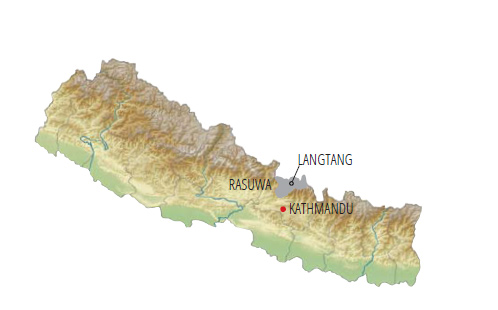
Tashi Tsering also lost his wife and his 4-year-old daughter and everyone on his wife’s side of the family. Tashi was on the balcony of his house with his mother when the earthquake hit, and jumped off. But his trekking lodge, his main means of livelihood is gone.
Pasang Gyalbhu was at a friend’s place with his son when the earthquake hit. He and his son ran for their lives, but were hit by the avalanche. They only survived because they hid behind a rock. He ran back to the house and dug his wife out of the snow, alive.
Dawa Gyalbo was returning from Kathmandu after dropping his son at school and had reached Trishuli when the earthquake hit. Worried about his family, he walked till Dhunche and hitched a ride in an Army helicopter. What he saw there was apocalyptic: bodies everywhere, including of two little girls hugging each other. His mother was killed, but his wife and daughter survived miraculously. He collected the dead, including body parts and cremated them.
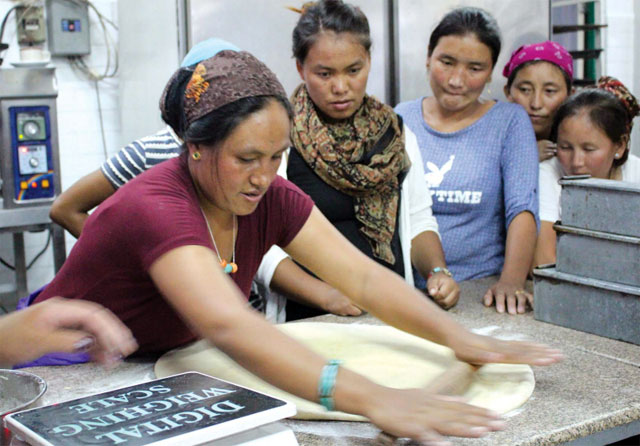
Survivors are trained in baking at the NATHM in Kathmandu last week. Pics: Upasana Khadka
Many Langtang survivors like Dawa, Pasang and Tashi recently completed Trekking Guide Training and Lodge Management Training Courses at the Nepal Academy of Tourism and Hospitality Management (NATHM) in Rabi Bhavan. It is an initiative of Harvard Kennedy School Nepal Fund, Rasuwa Relief and tourism Cares to ensure that despite their tragic loss, the people of Langtang can build back their tourism industry and livelihoods. They will all get Porter/Guide and Lodge licenses and Lodge Management Certificates which will increase their job prospects.
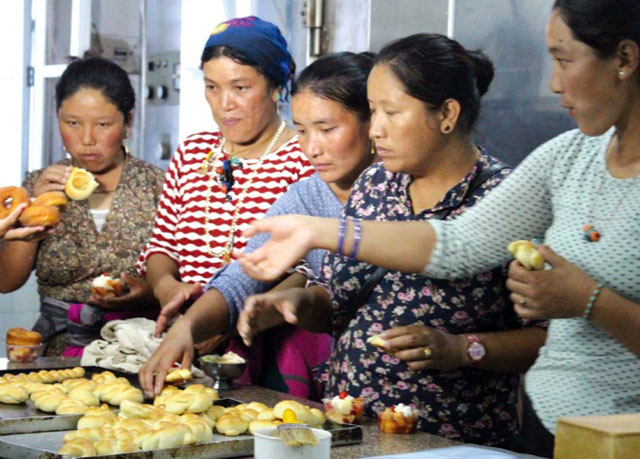
With help from Sustainable Steps Nepal women are also being trained to make thand-knitted woolen products which are for sale at the Yellow Gumba camp, since there are no trekkers on the Langtang Trail this season.
The training has also been helpful because many of the survivors lost immediate family members and have been living in a camp in Kathmandu’s unfamiliar surroundings. Many are still having nightmares.
“One night, at 11 pm I heard a roar that woke me up. I thought it was another landslide, and ran out dragging my wife and two children,” recalls Pasang Gyalbhu. “In my sleep I had forgotten I was in Kathmandu and the sound was of a plane taking off.”