
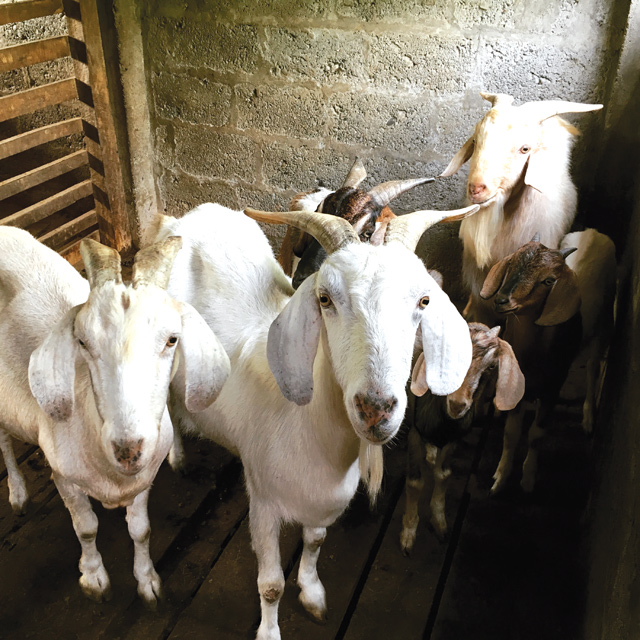
As a boy, I remember one Dasain when my father brought a goat from the village for the festival. It was kept in the house for a few days before it was to be sacrificed on the day of Maha Ashtami.
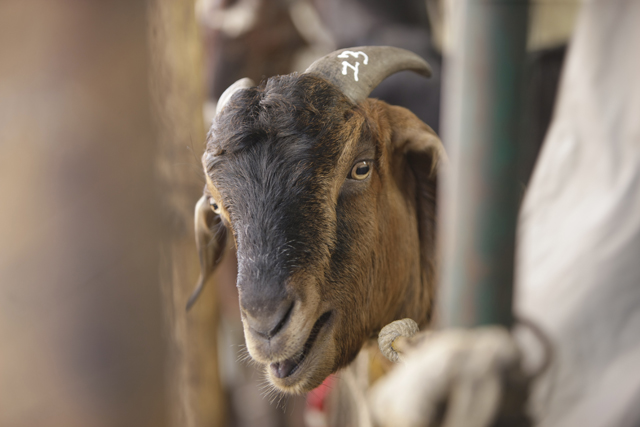
It was a rainy Dasain that year and I was given the responsibility to take the goat outside to graze. What I still remember clearly is the goat’s gaze -- it looked me straight in the eye with a kind of intensity and intelligence I had never seen. This animal was too cute to be eaten, and I sheltered it from the rain with my umbrella.
The next day, the goat was ritually killed and my family feasted on it with great relish. Ever since, I have always had conflicting emotions about eating mutton. Today, as a student of animal behaviour and welfare I have learnt how scientists are finding out about several interesting abilities of goats; that the animals have long-term memory and are able to solve problems relying on their cognitive abilities.
Researchers have now found that the gaze with which that goat communicated with me as a boy was actually an indication that they interact with humans at a visual level, making eye contact and even looking at humans for help if they cannot solve a certain problem – traits similar to those shown by dogs and horses.
Dasain is upon us, and hundreds of thousands of goats and other ungulates will be slaughtered all over the country in this annual festival. In fact, Dasain is synonymous with goat curry and I am sure very few Nepalis will be relating to goats as emotional and intelligent beings.
But the evidence shows otherwise. Wild goats are social beings, and feral goats have been found to return to a complex and dynamic social structure. Hierarchies are formed and there is reconciliation after a fight.
In one experiment, a subordinate and dominant goat were shown food both could see, and only the subordinate goat could see the hidden food also. The subordinate, if it had been the victim of aggression by the dominant goat, opted for the hidden food thus displaying a cognitive mechanism similar to primates.