
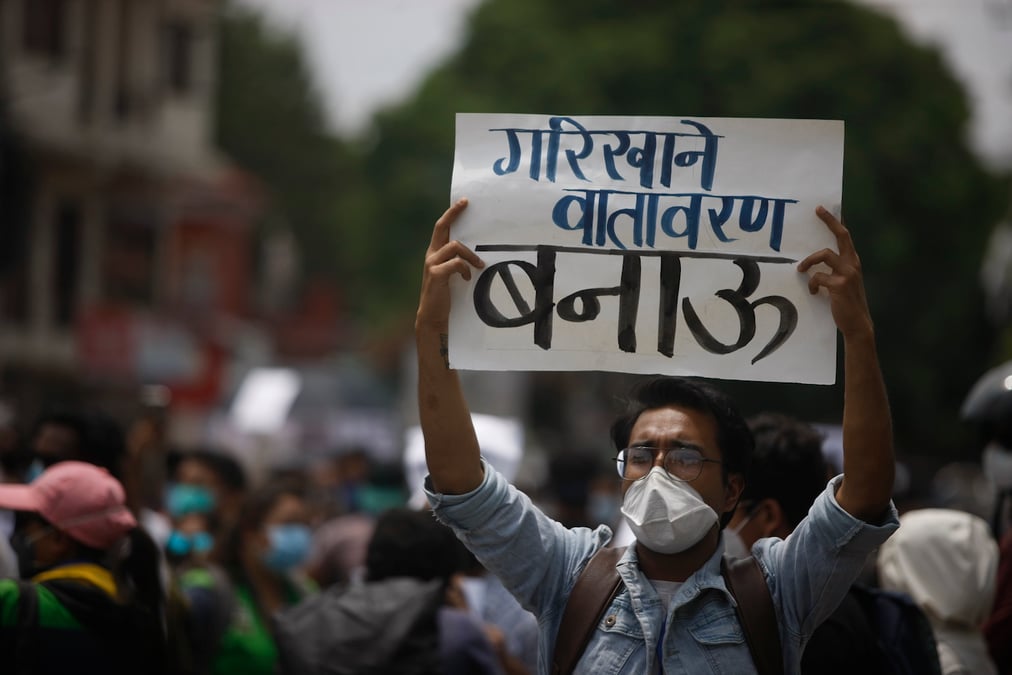
Most people in America and around the world are waiting with bated breaths for 2025, and what a second Trump term will mean. The year 2024 is ending with a botched martial law declaration by Yoon Suk Yeol in South Korea, parliament’s failed attempt to impeach him, and more street protests and vigils.
At a time when people in most Asian countries practice varying degrees of openness, signs signal further democratic reversals in the coming year.
From authoritarian North Korea and China, elected autocracies like Singapore, to formerly democratic countries that are backsliding like the Philippines and Indonesia, the Asia-Pacific region has been witnessing democratic decay for decades.
However, with a new hardline rightwing government in Washington next year, analysts in the region fear further erosion of press freedom, democracy and rule of law. America will no longer have the moral high ground in preaching human rights, democratic values and civic freedoms to the rest of the world.
This will likely be accompanied by Trump’s America ditching traditional allies like South Korea, Japan or Taiwan, or asking them to pay for the US defence umbrella as he tried to do the first time round.
Trump’s muddle-headedness on bilateral trade and security alliances are likely to leave both allies and adversaries scratching their heads. One outcome could be China filling the vacuum left by America’s strategic retreat. Even Kim Jong-Un is relieved that his old pal is back in the Oval Office, and will not be giving him a hard time about sending 10,000 troops to fight in the Russian Army against Ukraine.
Most Asians look admiringly at China and Singapore, which have achieved phenomenal economic progress despite limiting political and media freedoms. They are strongly attracted by ‘Asian values’ that emphasise the collective good rather than individual pursuit of happiness, and feel that Westminster-style parliamentary democracy is not really suited to Asian political culture.
This philosophy has adherents in middle-income states like Vietnam, Thailand and Indonesia, as well as the poorer parts of the continent like India, where there is a hankering for strongman rule.
They argue that political pluralism leads to societal divisiveness, undermines a cohesive national ethos, and distracts leaders from focusing their attention to lift living standards of citizens. What is the point of being allowed to vote freely for a political party if there is no freedom from hunger, is their reasoning.