
 Ram Bahadur Karki spent two years in the jungles of northern Gorkha district as a Maoist guerrilla. He donated all his property to the party (he has receipts) and would have still been fighting had there not been a warrant for his arrest, charging him with murdering civilians. Friends and relatives arranged his flight from Nepal, and he fled because he would otherwise have been killed in a fake encounter with the police.
That is Karki's story. The only thing wrong is that none of it is true. The 28-year-old is actually from east Nepal, he faked his residence in the insurgency-affected Gorkha district to buttress his appeal for political asylum in Britain. Karki (not his real name) is among hundreds of Nepali economic migrants in various European countries and Australia who have sold most of their possessions to pay middlemen, and are trying to get in by applying for political asylum. In the process, Nepalis who are genuinely fleeing persecution either from the Maoists or police do not get a chance. Their applications are almost always rejected, but most "disappear" before that happens.
"The story is a near-perfect cut-and-paste job which virtually every Nepali asylum seeker repeats with a change here or there," says an official involved in the asylum application screening process here.
Most of the stories are the same: "I face prosecution, even death. I escaped after friends and relatives arranged tickets and a passport for me. I don't remember the flight number or airline."
British Embassy officials in Kathmandu told us there has been a sudden rise in the number of Nepalis seeking asylum in Britain in the past few years when there have been 30-35 applications a month in Britain alone. Diplomats from other countries told us they are seeing more Nepalis claiming to be fleeing prosecution and arriving in Norway, the Netherlands, Germany and Australia. While two years ago many Nepalis pretended to be Bhutanese fleeing persecution, now they mostly say they are targeted by Maoists or police.
The number of Nepalis seeking political asylum in Australia last year was 95, and the number this year is down a bit. Many say they are Bhutanese, and most apply for political asylum after their student visas run out. This year there have been 11 instances of "unauthorised entry" of Nepalis in Australia, all by air. The applications are processed by the independent Migration Review Tribunal (MRT), and officials say no Nepali application has been accepted although some are still being processed by an appeals committee.
Nepali sources in Sydney say the rejects usually "disappear" by the time the committee decides. What is attractive to most asylum-seekers is that they get allowances, in some countries under certain conditions they are allowed to go out of the holding centres and can even work and earn money.
One Nepali in Australia told us: "If nothing else the lengthy review and appeal process allows them to continue staying there for at least a year, enough time for anyone to disappear."
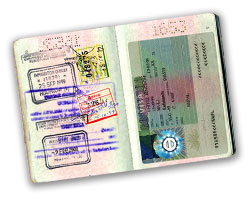
British Embassy officials in Kathmandu say they are monitoring the traffic closely, and have been trying to plug the loopholes. For instance, a Nepali with a multiple entry visa would mail his passport home after getting to Britain, enabling a friend or relative to come in on the same passport, sometimes by changing the photograph. Now, British visas have photo identity pasted on the visas with superglue.
Embassy officials say they are unaware if any of the recent applicants have actually been granted asylum. The numbers from the Middle East and various eastern European countries is growing so fast that it is difficult to keep track. The preferred country changes depending on prevalent laws, but at present Britain is the favourite for Nepalis, along with the Netherlands, Germany and Norway. In the United States, most people don't bother to seek asylum and just stay on as illegal immigrants.
In Europe, many arrive on legal student visas but a small percentage travel with fake passports and visas, which are either destroyed upon arrival or recycled by middlemen. Some Nepalis have now started reaching Britain overland from other European countries with Indians, Afghans and Iraqis.
Alternatively, those with immigration in mind destroy their passports and claim political asylum at the immigration counters-in just the amount of English needed to communicate their intent. Others hang out at the airport lounge waiting to be discovered by officials and taken to immigration. Agents helping these people get there have instructed them to say nothing but: "No passport, no money, I Maoist from Nepal, face big problem, I'm free now."
Once caught, they are held in detention until a lawyer is found to represent those who make formal asylum appeals. During this time, they ring contacts in London who then provide the back-up support needed to follow the application through, or simply help them disappear. The escapes are meticulously planned, rehearsed and carried out under strict directions of handlers both in Kathmandu and London. Even those without acquaintances to help don't have to worry much: the British government gives you ?36 per week as survival allowance, ?10 pounds in cash and ?26 as food vouchers. Nepalis who have come through this channel say they pay between Rs 800,000-Rs 1.2 million to middlemen who arrange the visas. Some agents even accompany their "clients" to London and return with the fake travel documents, which are later recycled.
 Britain has one of the most lenient asylum laws and has of late come under increasing pressure from other European countries to tighten up. This process has accelerated since the 11 September bombings in New York, amid suspicions that terrorists may be using the same loopholes in immigration laws and procedures to sneak into the country. One reason Nepali illegal immigrants or those who overstay have not been targeted is that they are usually economic migrants who stay on the right side of the law once in the UK.