

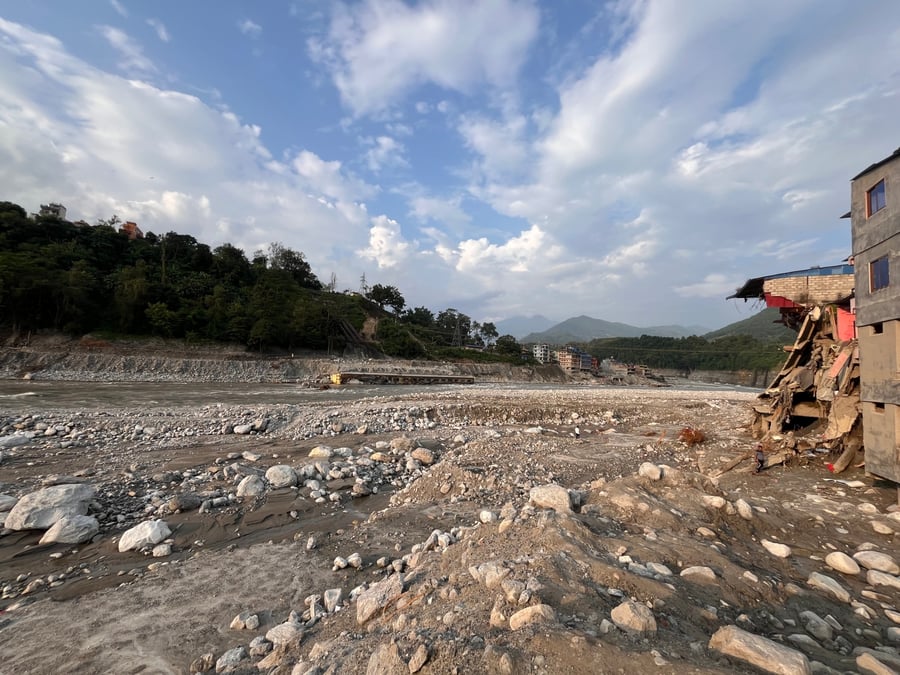
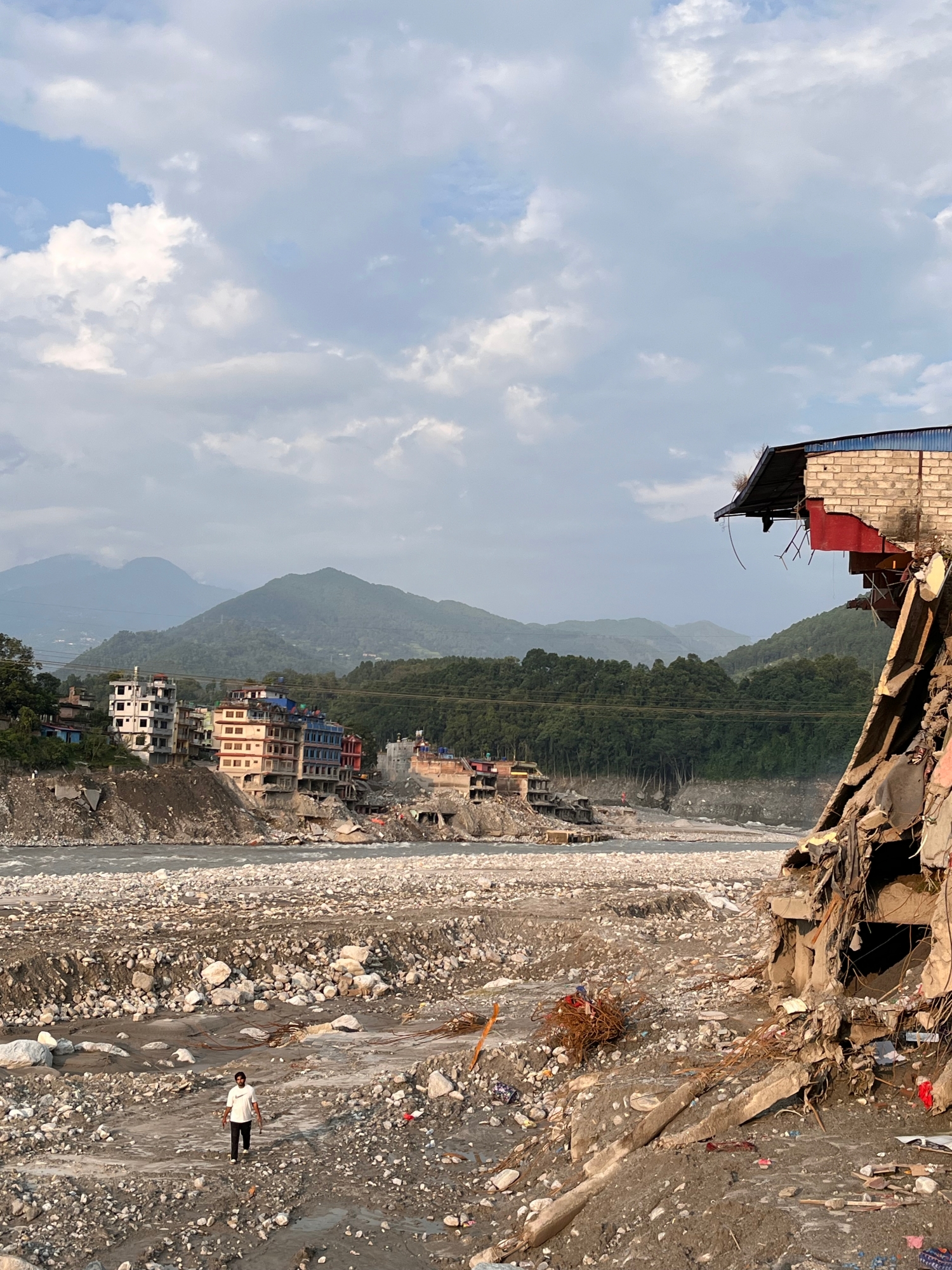
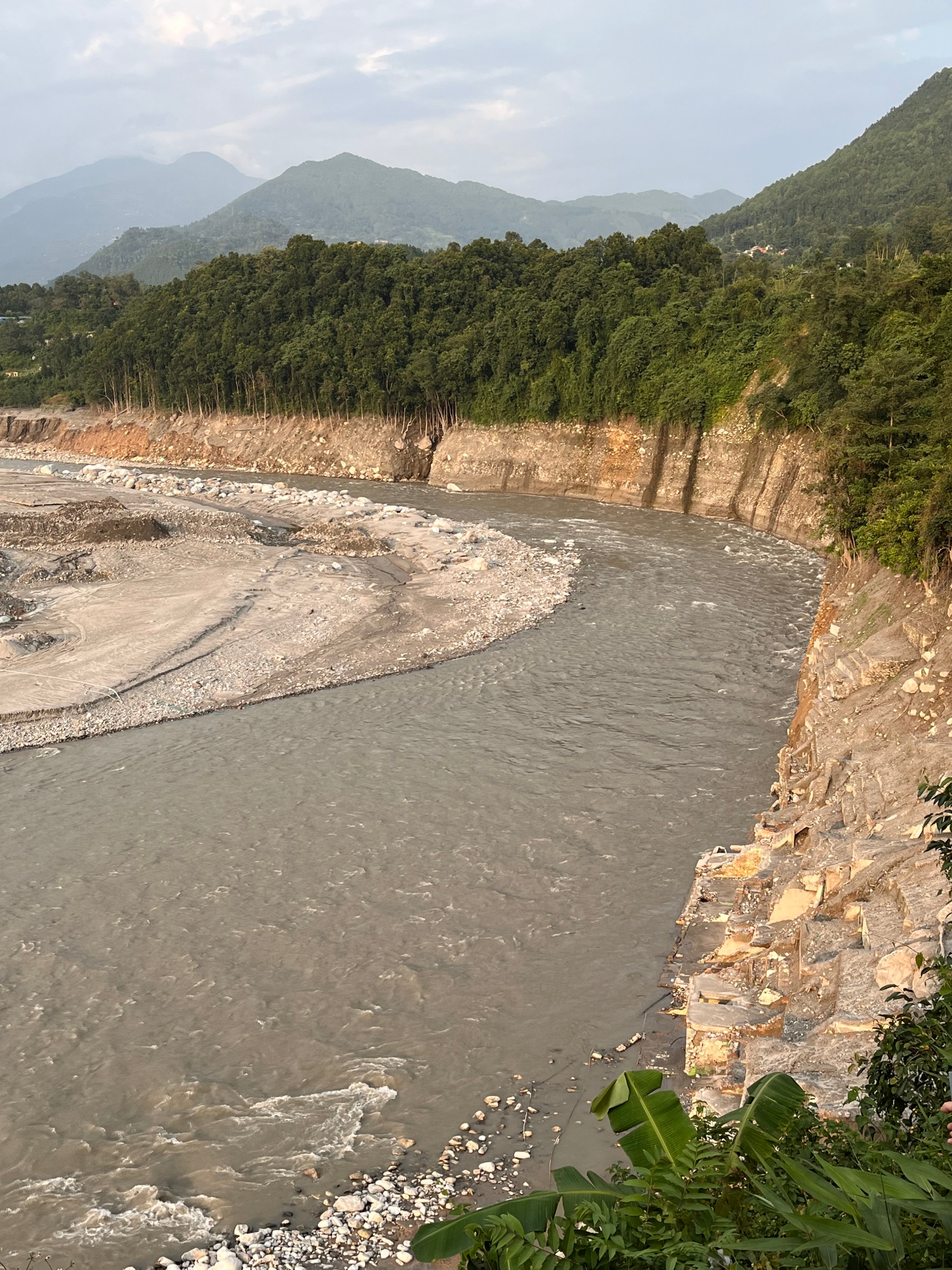
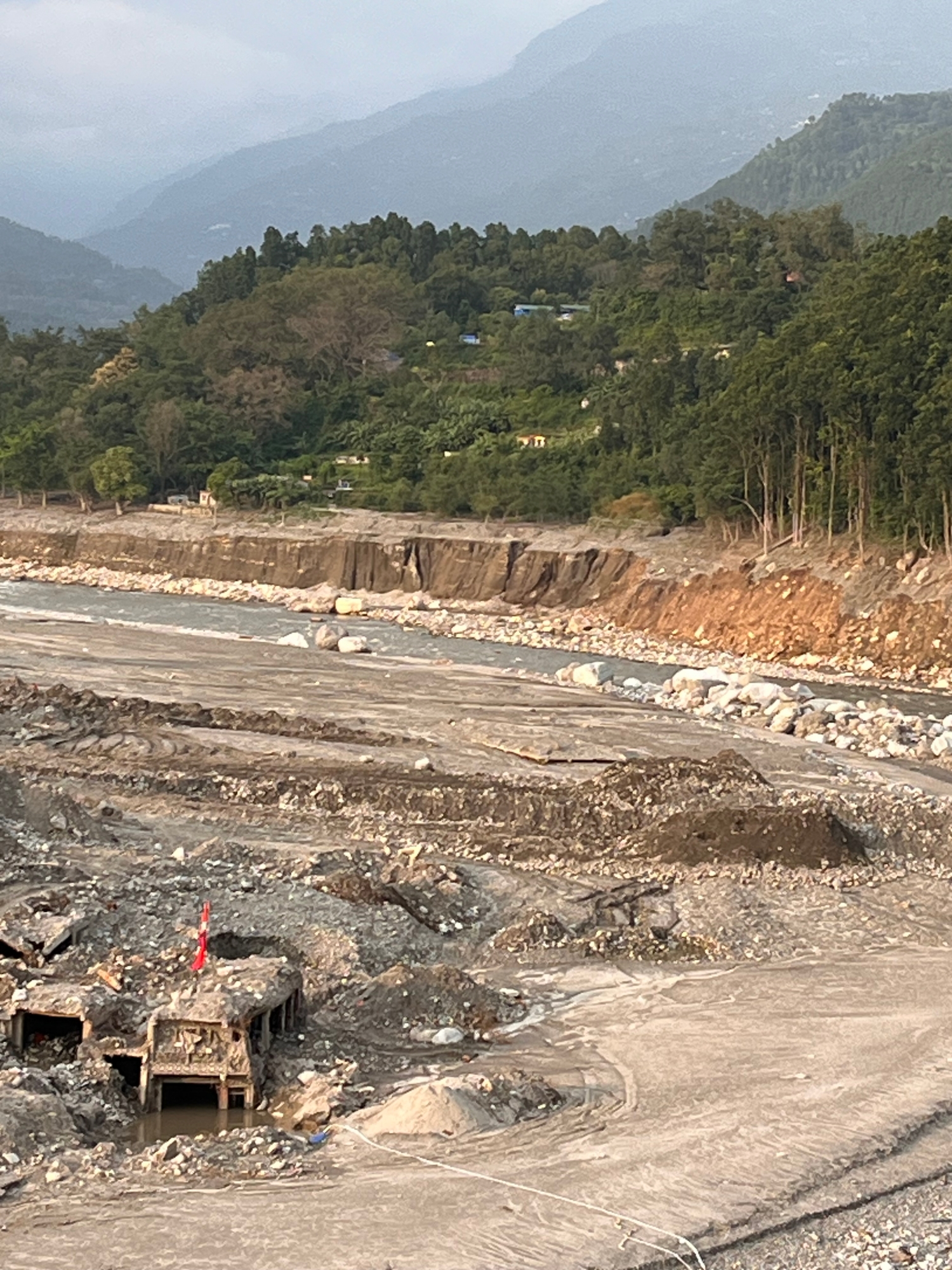
My father, Baa, stood on the debris field of what used to be Trisuli Bazar in Nuwakot. The expanse of the mud, bouldersand grey silt spread all the way down to the river, which had shrunk to its regular autumn flow.
I put my arms around Baa to comfort him. “Everything is gone,” he sighed. There was a catch in his voice.
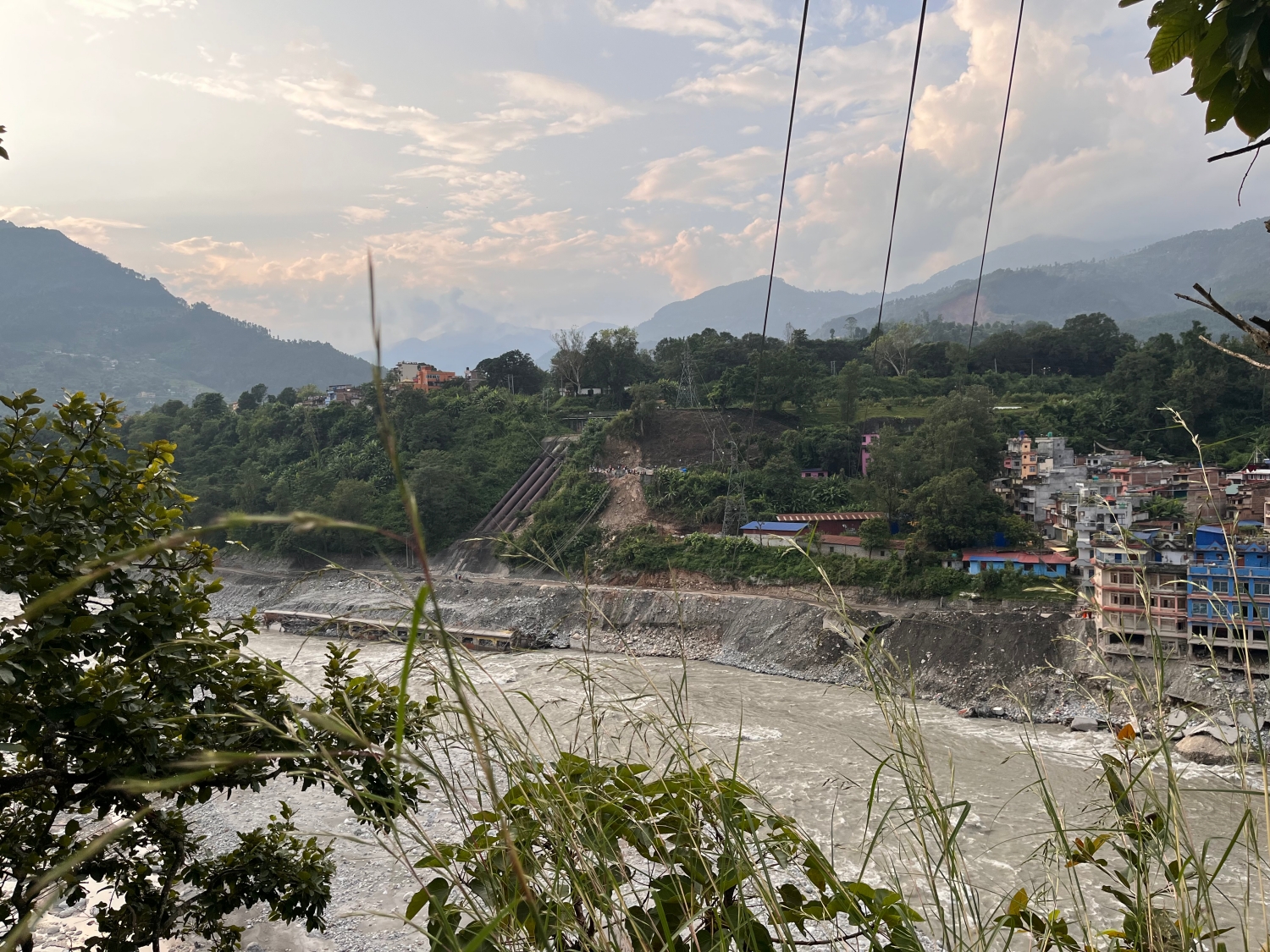
On 26 August, the river had surged over the town, swallowing everything in its path, making it one of the worst days in recent times. It wiped out several towns and villages, killing over 1,457 people, while nearly 5,500 people remain unaccounted for.
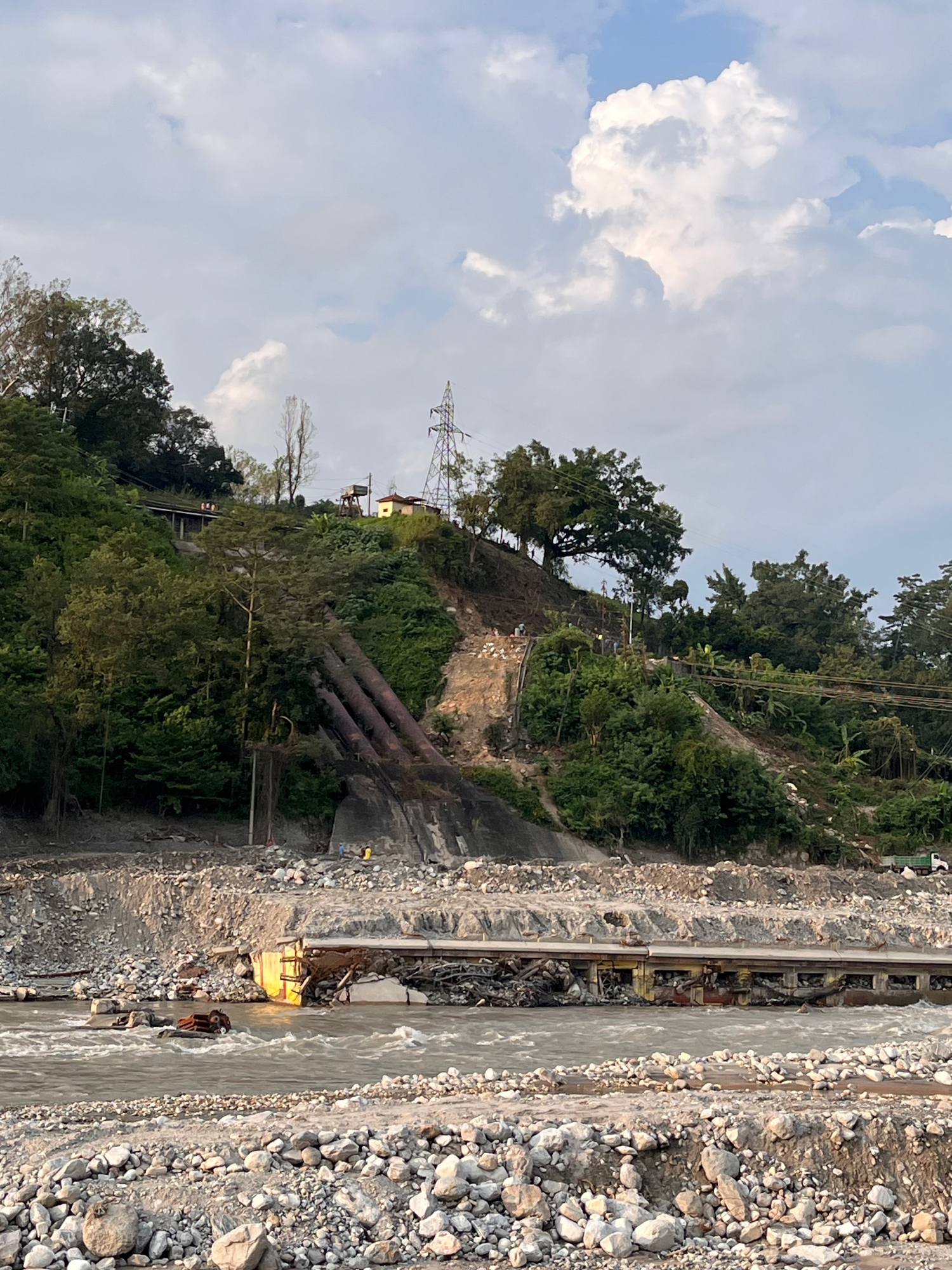
My grandfather worked for three decades at the Trisuli hydropower station, the first large electricity project in Nepal. Its three storey powerhouse is now buried under sediment, and the river is flowing 30m above its former bed.
During a visit in March, Baa had walked through Trisuli Bazar, entering shops, greeting passersby, shaking hands with past schoolmates, childhood friends and acquaintances. He was visiting after over five decades since finishing high school there.
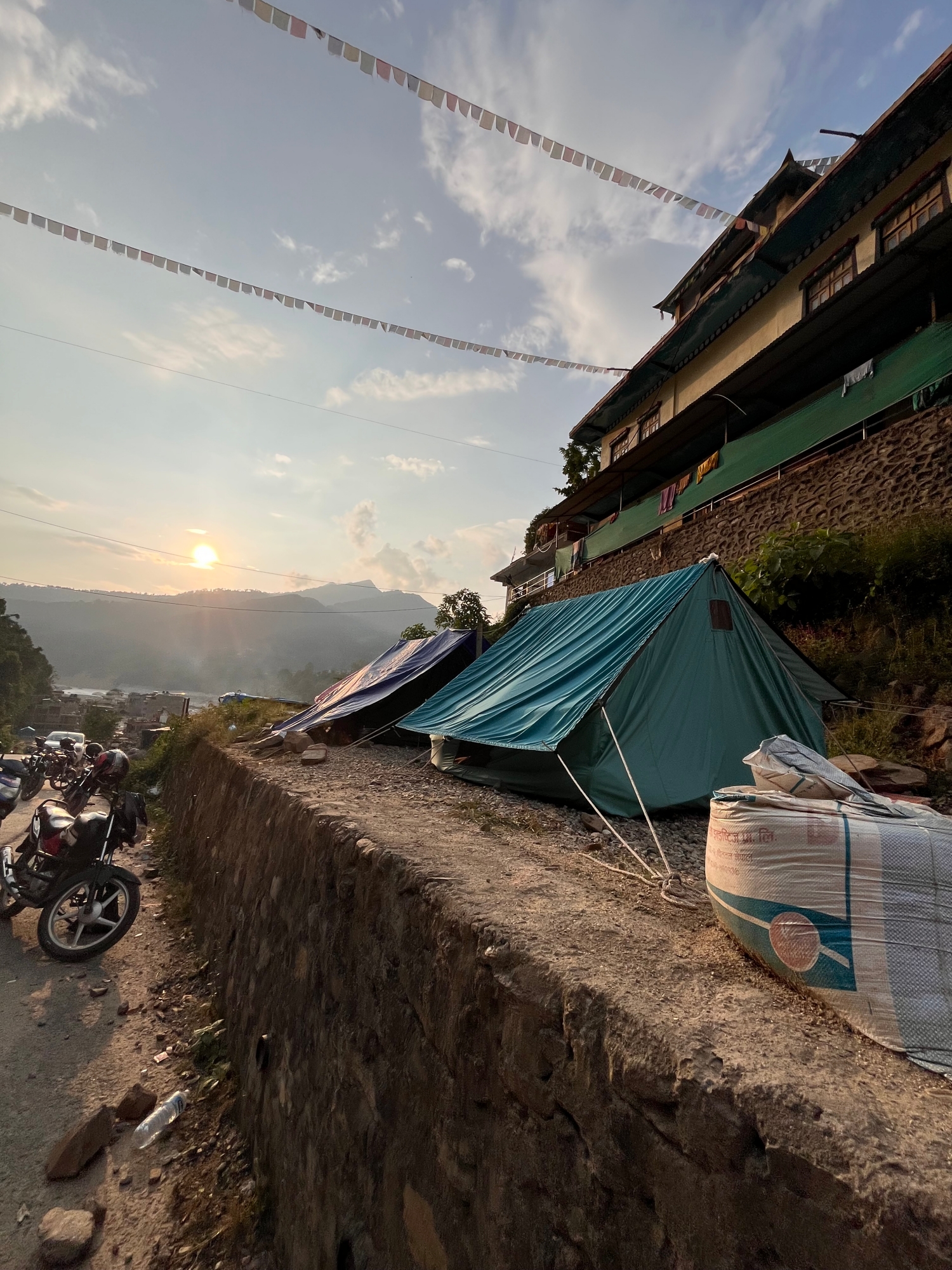
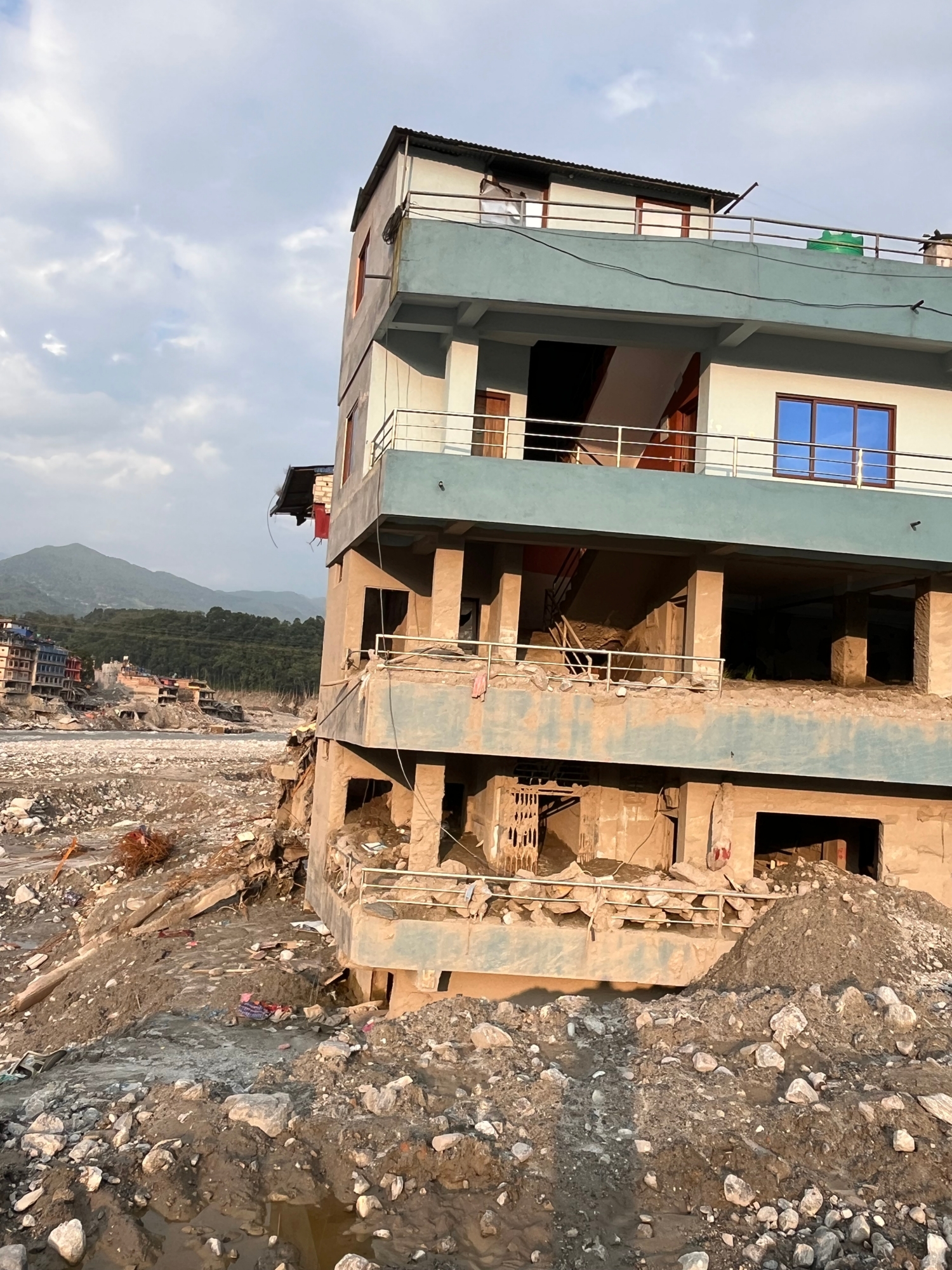
But standing there recently it felt like Baa had suddenly aged by a decade. His shoulders were slumped and there was a deep emptiness over his face. As we walked through the lost town, we saw families clearing the rubble from homes. Tired of living in tents, they were hoping to make it liveable for now.
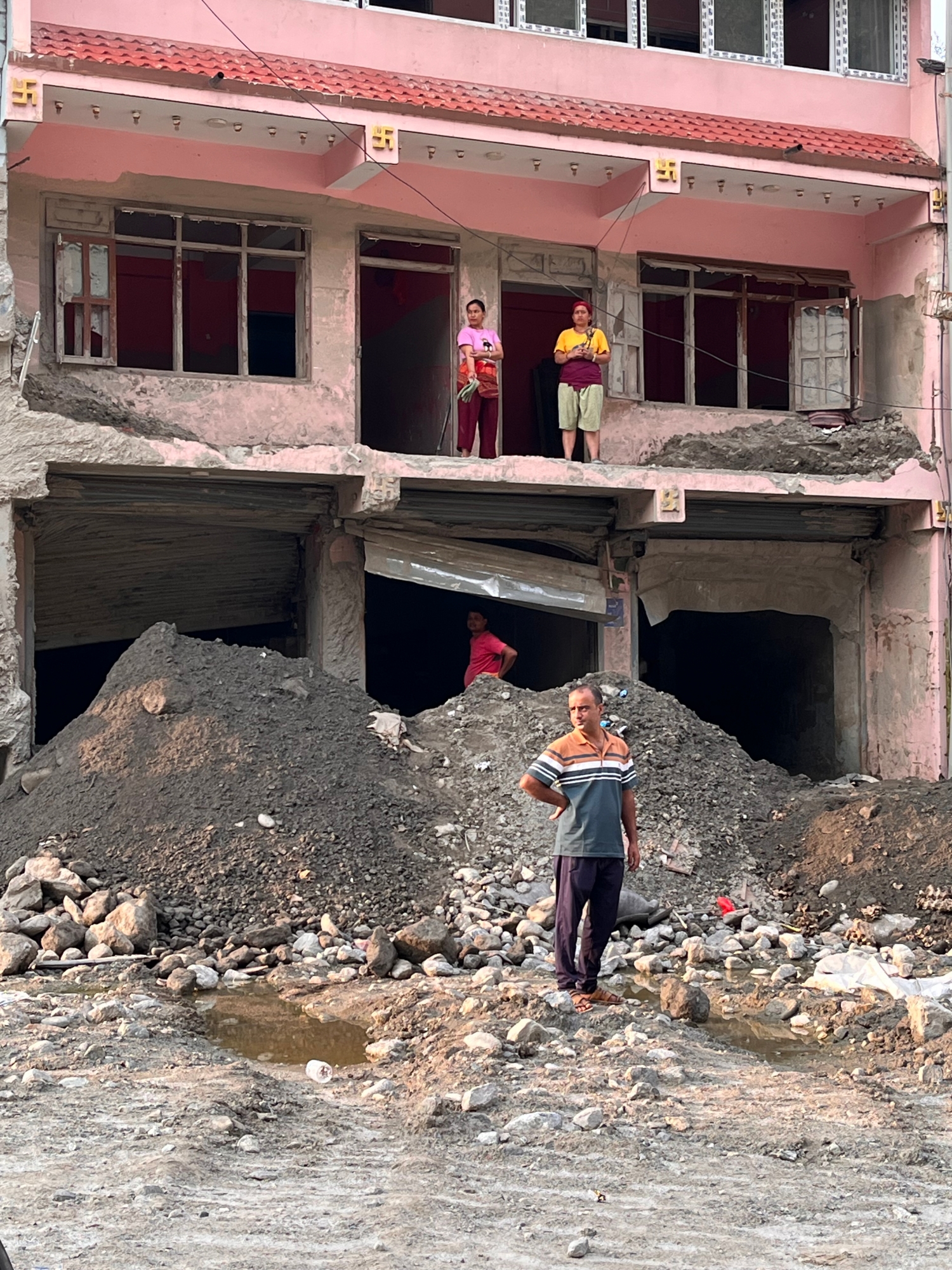
Trisuli was the playground of Baa's childhood. It was where he first saw mangoes growing on trees. In Kathmandu, he had only seen them in the fruit shops.
When reports of the flood first came, Baa spent the entire day on the phone, trying to locate his friends, but to no avail. He lost many of them. Some were from Muslim families. The residents of Trisuli celebrated festivals together, joining Buddha Purnima processions and the jatra, and eating together during the iftar.
In March, Baa had sat down with some of them, holding hands, saying he would come back for a longer visit, not knowing at the time that his next visit would be one to hold the town in memory and in grief. And when we arrived at his school he had bowed his head at its gate.
During this visit, Baa pointed at what used to be Trisuli Tribhuvan High school. Only a cornice was still visible, the rest flattened below the debris. Nearby, someone had planted the national flag.
“Who put that there?” I asked Nabindra Pradhan Kaka, who has always been socially active in the town.
“Some people did, once it became possible to walk on the silt,” he said. “It gave some of us hope.”
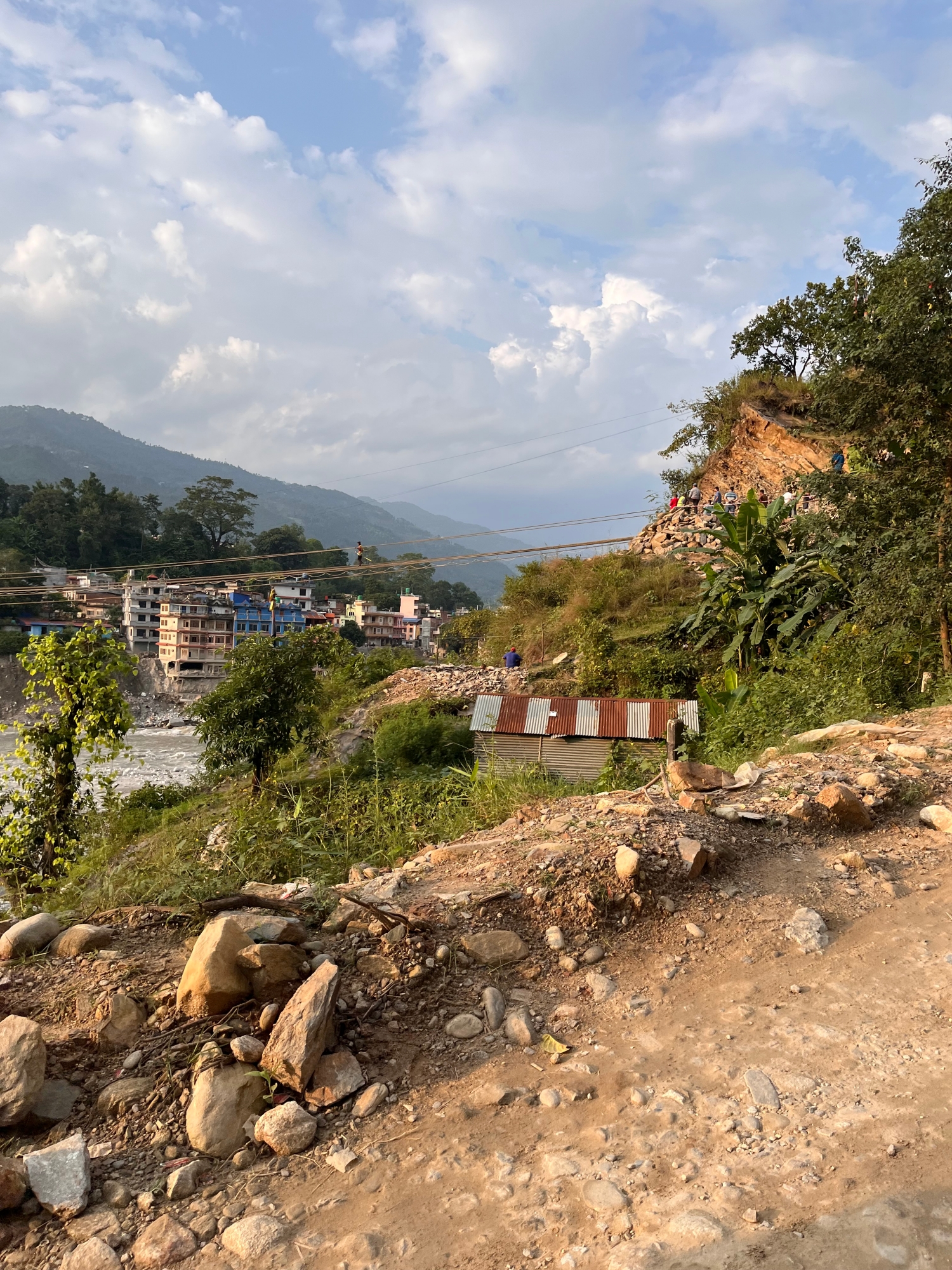
It was Nabindra Kaka, who had first called the school that morning, when he heard from his cousin in Rasuwa about the flood hurtling down. He had said: “Get all the children out and run uphill!”
His own mother, my Nini-Aji, an octogenarian on a crutch, was literally dragged away by her daughter-in-law, past the bazar, up a nettled cliff, once stopped by the rush of schoolchildren and teachers who were running uphill and blocked the entire path, and then dragged and lifted again in a car by neighbours.
“The river came at us. I had no hope for anything that day, but my daughter-in-law saved my life,” she said, motioning at Shanti Kaki, who later told me, fear is a strange thing. “I could not weep or talk. We just had to keep moving.”
As we stood at the gumba, looking out at the debris, we were joined by many others who were also there to recall the day of the flood and to take pictures. Some had come to the monastery to pray, some, to for disaster tourism. A man, emitting the stench of stale alcohol, came and stood next to me and said: “My house used to be there.” There was only the river there.
Nabindra Kaka tried to keep him from getting too close to me, and that was when the man shouted at him: “You have enough to afford to live elsewhere. Look at me! I lost everything. Do you know how it is to have to sleep in a tent and not know where your meals will come from?”
Then he turned to me and apologised. “Sorry, bahini,” he said. “I have been drinking these days.”
Suburban Tales is a regular column in Nepali Times.