
|
|
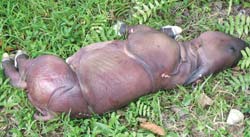
The sun was about to set on a recent evening at the Trisen Community Forest in the buffer zone outside Chitwan National Park as the pregnant rhino wallowed lazily in the mud at a watering hole.
Suddenly, a shot rang out. The bullet pierced the rhino's armoured skin. She writhed in the reddening mud and even though she was mortally wounded, went into labour. The calf was half out as the mother died.
Villagers, soldiers, and national park employees arrived three hours later. There was nothing they could do, only add another rhino to the grim count of the number of these magnificent endangered beasts that have been killed.
After being hunted nearly into extinction in the first half of the last century, the number of rhinos in Chitwan in a census seven years ago had risen from less than 100 to 612. But since then 150 rhinos have been killed by poachers in Chitwan alone. Another 72 have been killed for their horns in Bardia National Park.
A few weeks after the Trisen incident, another rhino with a bullet wound was spotted at the Panchakanya Community Forest in Chitwan. It was obviously in great pain as it splashed across rivulets and into fields, trying to flee a rescue team from the park. Having lost much blood, and too tired to run anymore, the animal lay down on its side and died. Five days previously, a village in Nawalparasi was overwhelmed by the foul smell from the rotting carcass of a rhino electrocuted to death. Fourteen rhinos have died in Chitwan between July and December, most of which are believed to have been killed by poachers.
The Maoist insurgency and scaling back of army protection in the tarai national parks have contributed to an increase in poaching in the last six years, though most rhinos have been killed in the buffer zone, which is not patrolled by the military.