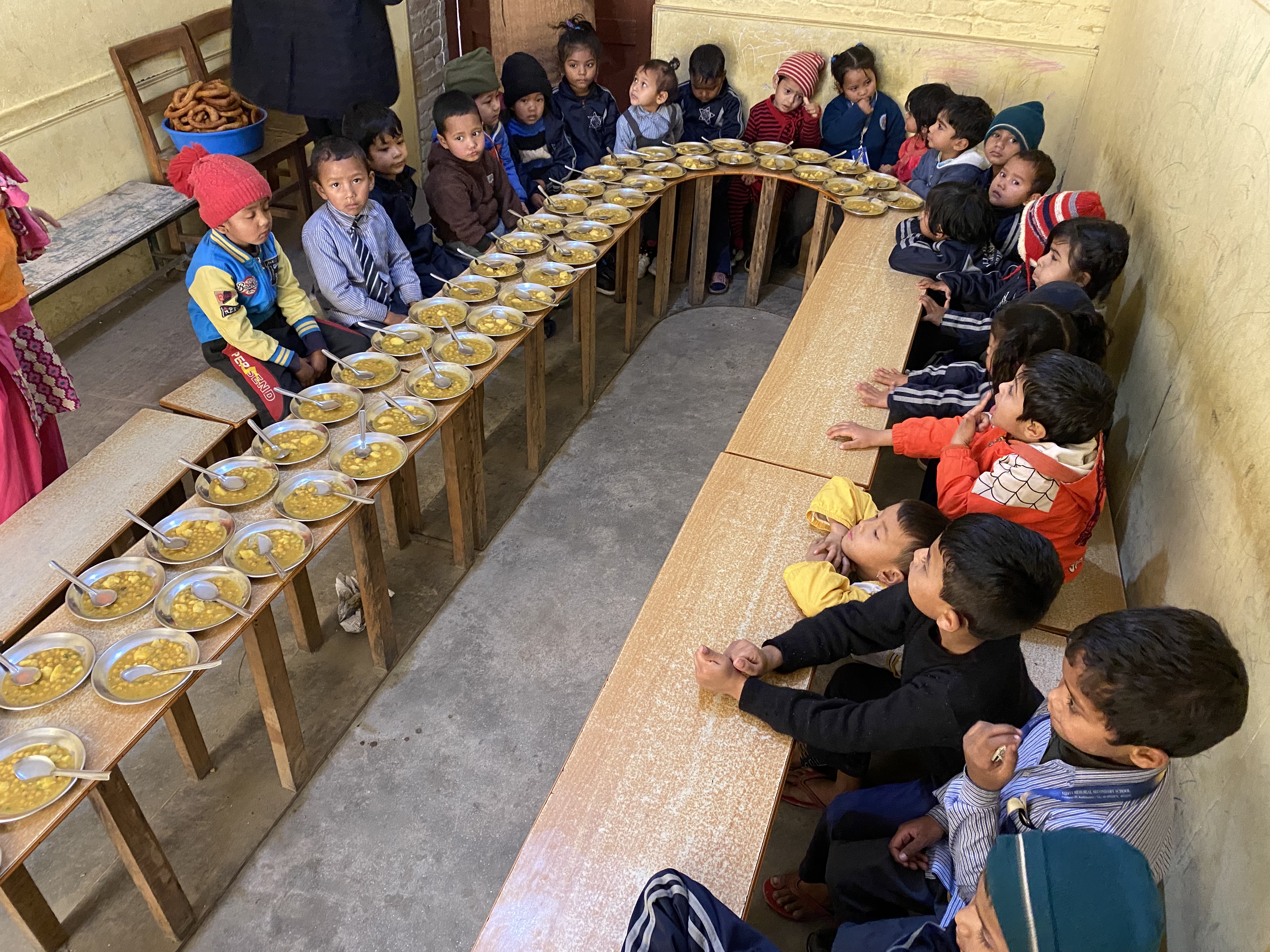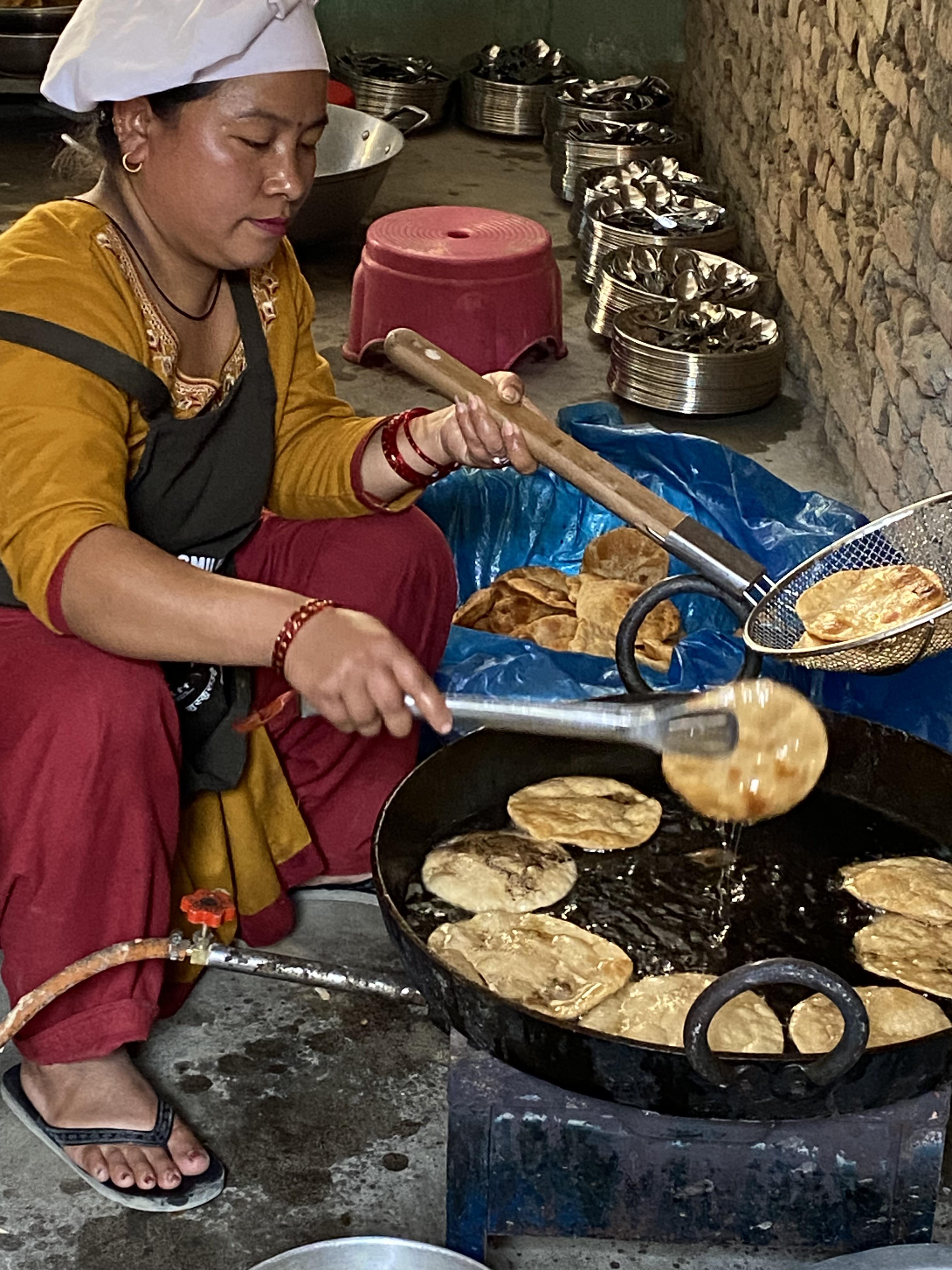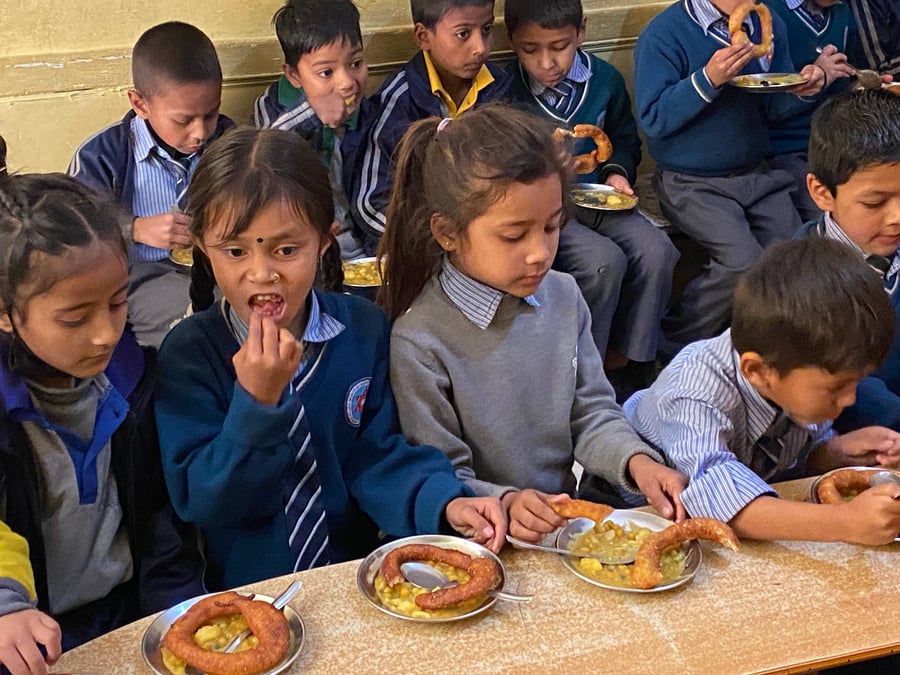
After the Nepal government announced it would provide Rs15 per meal for community schools to serve lunch (दिवा खाजा) to students, headmasters in Kathmandu took a stand.
“Rs15 is not sufficient, we demanded additional money. The municipality also realised that Rs15 was not enough,” says Dilli Prasad Sharma Khanal, principal at Vijaya Memorial Secondary School in Dillibazar.
Last year, Kathmandu Metropolitan City (KMC) responded by topping up the Rs15 with another Rs10, and also said it would provide the full Rs25 to feed students in Grades 7 and 8 in its 89 community schools. The central government program provides meals to Grade 6 only. The total cost to Kathmandu is Rs90 million in the current year’s budget, says Rukmila Itani in the city’s education office.
KMC joins Tokha and Budhanilkantha as local governments in Kathmandu Valley that have concluded that the central government’s funding is insufficient to feed students a nutritious meal. While other local governments outside the valley have done the same, the move raises the question of equity for those students whose meals remain limited to Rs15, an amount roundly criticised as inadequate to cook a filling and nutritious meal.
According to a report in Setopati, Beg Bahadur Thapa, headmaster of Palanchoki Bhagwati Secondary School in Kavre, turned to local organisations after the school decided that Rs15 could not provide an adequate meal. He collected enough to add Rs5 to each meal.
“Even with Rs20, it was not possible to provide a balanced lunch as per the instructions,” said Thapa. Other needed resources were also missing. “The school lacks classrooms, there is no space to manage the kitchen. The role of school helper is also varied.” In the end, the school bought meals prepared outside the school.
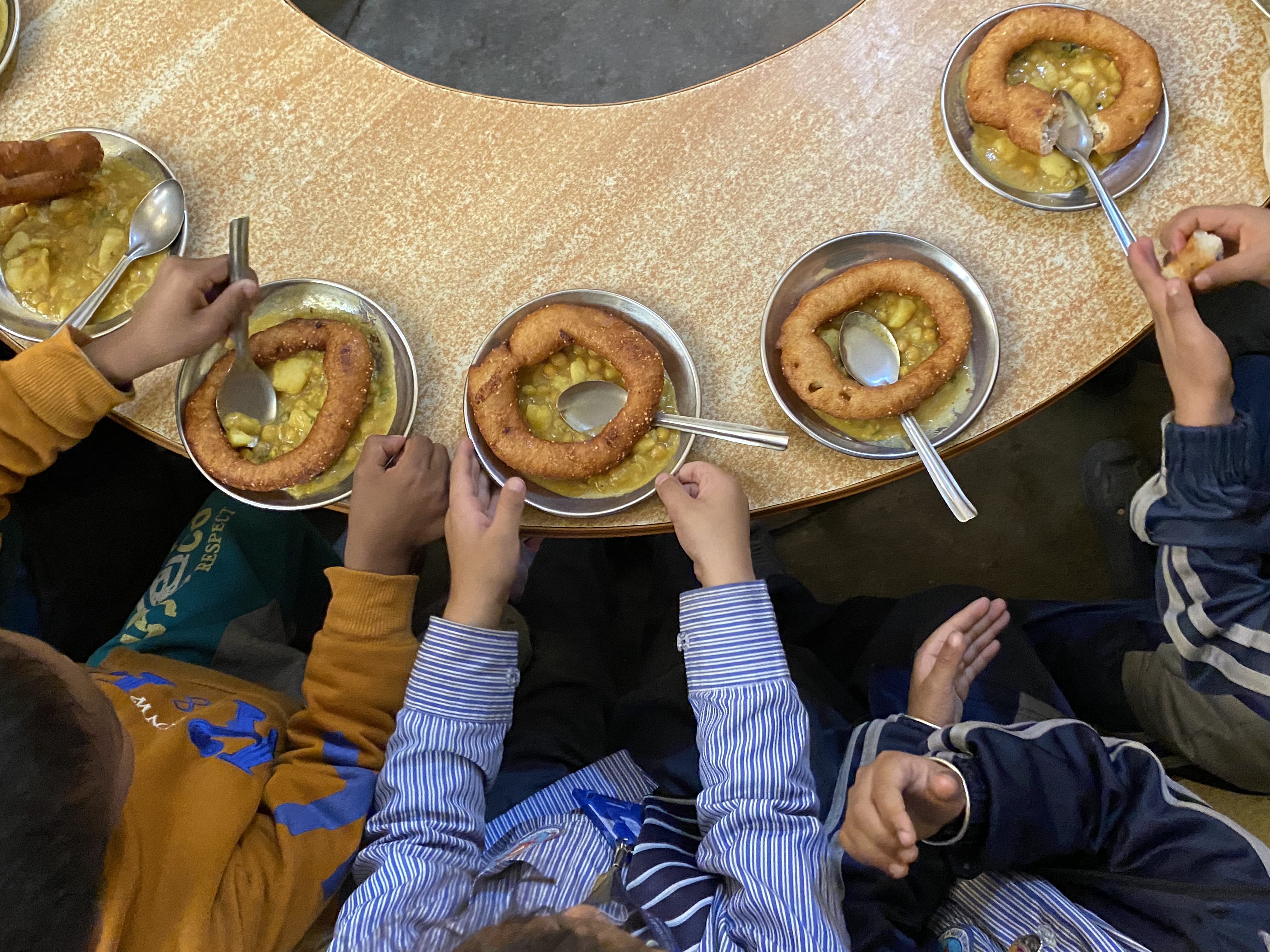
It is no surprise that some schools are ‘topping up’ their meal budgets. In 2022 the Nepal government official leading the program told Nepali Times that funding was his greatest challenge. The bill for school meals was nearly $70 million in 2020, the highest cost in the education budget after teachers’ salaries.
“Each child is allotted only Rs15, this is the main challenge. This amount is very low—prices are increasing day by day and there are management costs. How can we survive?” said Centre for Education and Human Resources Development (CEHRD) Director Ganesh Poudel.
The World Food Programme (WFP) has been providing food for Nepal schools in various forms for 46 years, and has partnered with the Nepal Government as the latter has gradually assumed control of the programme in the last decade. From 2017 to 2020 the diya khaja budget almost quadrupled (from US$20 million to nearly $70 million), and external support fell from $4.2 million to $2.8 million in 2020, according to a WFP report.
In a 2022 interview WFP Representative and Country Director Robert Kasca said participation of communities in school feeding will be essential as WFP transitions from being a provider of food to focusing on technical assistance, by 2024. “The most important thing to me is that we get complete buy-in from the local communities… they (local representatives) do have money, it’s not that they don’t have it. It’s how they allocate and spend it.
Itani says that KMC decided to top up the government’s meal budget to address malnutrition and a high drop-out rate in community schools. KMC has a system for checking the quality of the meals, and cleanliness, she adds, but with the programme barely six months old, data is scarce.