 |
Now that the trekking and mountaineering season is about to start, the worry for tour organisers as well as tourists is how to keep in touch while on the trail.
In the past year, Nepal's mobile phone providers have built base stations at the base camp of Mt Everest, and along sections of busy trekking routes. The jury is out on which provider has the best coverage, but phones that take multiple SIM cards of NT, Ncell, and Hello would be the best bet. CDMA phones and modems have more coverage in remote areas, but work mostly in and around the district capitals.
But there are still large parts of remote Nepal that are out of reach of GSM signals, and this includes the increasingly popular Budi Gandaki Trail, Rolwaling, Langtang, and Dhaulagiri. Here the only way to keep in touch will be through satellite phones.
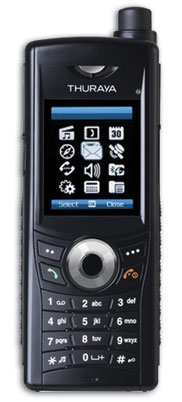
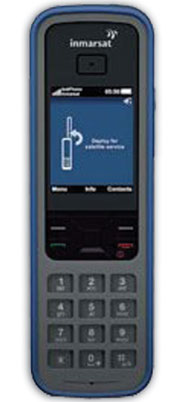
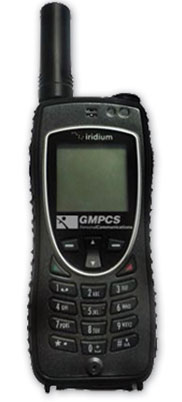
Among satellite phones, there are three choices: Inmarsat, Iridium, and Thuraya. Here, too, people have their favourite phone systems, and all three have their pros and cons in terms of cost, reliability, and signal quality. Most people still choose satellite phones by their looks, and as with human beings, this can be deceiving since beauty is only skin deep.
Thuraya and Inmarsat provide coverage through geo-stationery satellites that orbit the earth 36,000km out in space above the equator so that they are always above the same point on the earth's surface. Iridium, on the other hand, links handsets to a fleet of 66 or so low-orbit satellites only 600km above the earth's surface.
Unlike mobile phones, satellite phones need to be pointed at the satellite and you need to be outdoors-sometimes they don't even work inside tents. Iridium has a shorter time lag, while geo-stationary satellites have up to two seconds lag during conversations.
In terms of coverage, Thuraya specialises in the Asia and north-Africa region, while Inmarsat phones work all over the world although both don't work as well at the poles (which shouldn't affect us here in Nepal). With Iridium, there are always three satellites within range no matter where you are in the world.
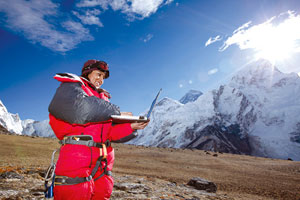
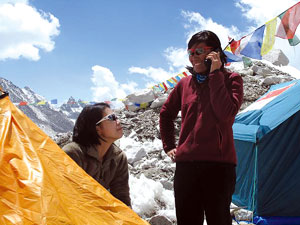 HELLO HOME: Members of a Singaporean women's expedition call home on an Iridium satellite phone from Mt Everest Base Camp in 2009. |
Cost-wise, Iridium phone sets tend to be more expensive, and the subscription and cost per calls are also more. Iridium tends to drop calls more often as it switches satellites, and this adds up the cost of calling.