
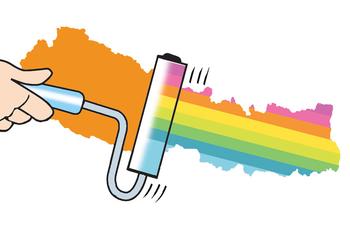
This week I found myself trying hard to think back to better days. Days without civil outcry, killings and blockades, when fuel was in ample supply and load-shedding wasn’t really a problem.
I thought long and hard about those ‘glory days’, even attempting to revoke what few memories I had of my childhood in Kathmandu. I went as far back as I could, through the years leading up to the conflict after the fall of the Panchayat. Alas, at nearly 30 years old, it is impossible to find better days. For my generation, there seems to have been no 'better days'. It is a generation which has survived on only the hope of better days to come.
Even today, more than 150 days since the beginning of protests in the Tarai, months of a border blockade that is squeezing the bloodline of the capital and far beyond, and with a political deal always at least at arm’s length, the word on the street is still of better days to come.
“The blockade will end and when things ease in the Tarai, it will be better,” is the general line of argument. There is also the “This government is the problem” one-liner, which has been said about literally every other government that has been in power in Kathmandu. There is a feeling that this government with its oversized Cabinet and umpteen DPMs, is indeed worse than all the others. But, we all know deep down that the problem is far more complex than that, and the eternal hope for a better tomorrow will need to be matched with action.
Nepal rules the roost when it comes to multiple and drawn out whammies. Nearly a decade in the constitution writing exercise, which was preceded by another decade of violence, has, in reality, led to very little more than an immeasurable sense of loss — of time, lives, growth, progress.