


For over 16 months during the pandemic, businesses have been going through transformative change with a steep learning curve. They have had little time to prepare for how the Covid-19 crisis has irrevocably altered customer behaviour.
Many people are unwilling to make visits deemed inessential, which has impacted older small businesses that have always relied on footfall and traditional retail presence to make sales. As the pandemic stretched from weeks to months to years, emergency funds have worn thin. Many businesses have shut shops, unable to handle the overheads, staff salary, among others.
Without government help for digital literacy, local businesses are having to take matters into their own hands and use social media and online platforms to maintain their presence, as more people seek services from the safety of their homes.
Businesses with family members of the younger digital-savvy generation can cope with the change better, with children helping them set up or managing their online presence. But most businesses used to the traditional sale methods are grappling with somewhat outdated establishments that would have done just fine, if not for multiple lockdowns.
Businesses that spent years sticking to hand-written bills and paying vendors by cheque have now been forced to switch to digital substitutes and online payment systems like mobile wallets (eSewa or Khalti), Connect IPS and banking apps.
Facebook and Instagram stories are now daily staples for posting updated menus of services, products and business timings that tend to change as the government issues new Covid-19 safety policies, in response to the evolving health crisis. If there is a sudden lockdown, some businesses find ways to cater to their customers, but many are forced to go on hold until further notice.
Small businesses now are seeing up to 25% of revenue generated directly from their Facebook and Instagram pages. Many of them are active on Messenger and use DMs to answer customer queries, confirm orders and coordinate delivery, using casual yet highly effective language styles (most commonly, typing in Roman Nepali) coupled with genuine pictures and videos to clinch sales.
With thousands of Nepalis engaged on WhatsApp and Viber every day for both personal and professional purposes, small businesses are also able to use these communication platforms to stay in touch with repeat customers. Most do not even use the WhatsApp Business app because regular WhatsApp does the job without having to upgrade to the proper channel WhatsApp has launched for business inquiries, complete with fancy features such as an automated chatbot and a product catalogue.
Technology is already at our fingertips, but user behaviour and audience willingness to adopt new methods of sales and marketing communication stand in the way of digitalisation of traditional businesses. The audience may already be comfortable with e-commerce websites and apps, but business owners often are not, because they are not familiar with the technology and its possibilities.
Not to forget, that setting up a website alone requires a team of people to handle online orders, and with that comes logistics to sort out the entire sales process.
Moreover, low literacy levels mean that many small business owners do not feel confident handling customer care online by typing words on a virtual keyboard. WhatsApp, Viber and Messenger are ideal training wheels for such small business owners because, besides text messaging exchanges, they also offer audio-visual data (voice notes, phone calls, image and video sharing) for free.
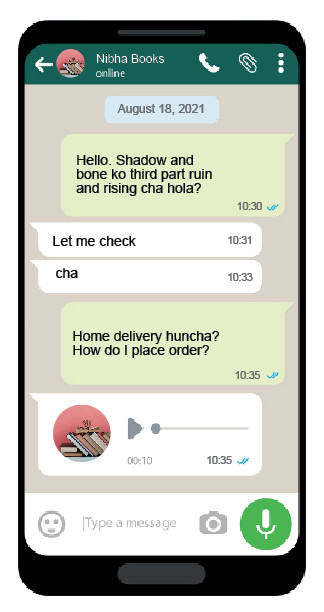
Let us take a look at some traditional businesses that could do with a beginner level digital transformation:
Pharmacies: Drug stores are important during the pandemic, yet these small family-owned shops struggle when Viber could very well be their virtual shop counter. While some shops have switched, many have yet to start selling medicine via messaging apps, sending photos of tablet strips without having to type out complicated names, as well as having delivery to residents within a 3km radius.