The global environment crisis caused by human activity is leading to a loss of biodiversity worldwide, and one of the most serious the loss of birdlife.
Among birds, it is migratory species that are most vulnerable because breeding areas along their routes like forests and wetlands are being converted into farms, and pollution of the air, soil and water harms them.
But putting a price tag on the loss of ecosystems is not a simple matter. Calculating the cost in dollars and cents of the loss of nature is complicated because it benefits more than one country. For example, conserving migratory bird species alighting in wetlands in Nepal on their long-distance international flights will save them for humanity, not just for Nepal.
“We undervalue the services that are provided by nature,” explains Cristi Nozawa, Regional Director of Bird Life International (BLI). “Environmental conservation is not seen as something with economic value.”
Because of a vertical topography that rises from 80m above sea level in Jhapa to the nearly 9,000m summit of Mt Everest within a horizontal distance of 100km and a climate that ranges from tropical to arctic, Nepal has enormous avian diversity. Indeed, with 876 species identified, Nepal has more types of birds than North America. But of these, 39 species are on the endangered list.

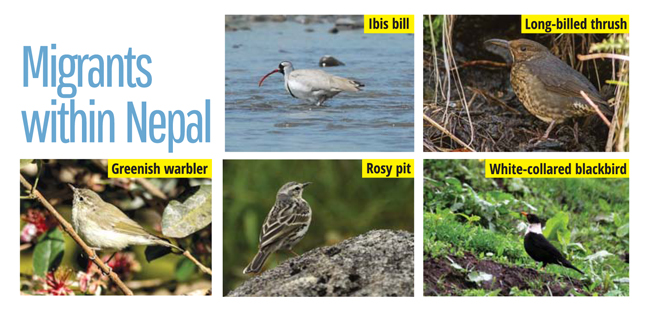
Of these, more than 100 are migratory species, and they tend to be more vulnerable to the threats along their flight paths. Nepal serves as a stopover for migratory birds flying down from Siberia, Mongolia and Tibet in September, and returning to their breeding grounds in April. The really adventurous ones migrate from Europe, Africa and Southeast Asia.
Even the Himalaya are not a barrier, and the birds have found routes along the river valleys that traverse the mountains. Some species of bar-headed geese have been found flying at more than 7,000m over the mountains.
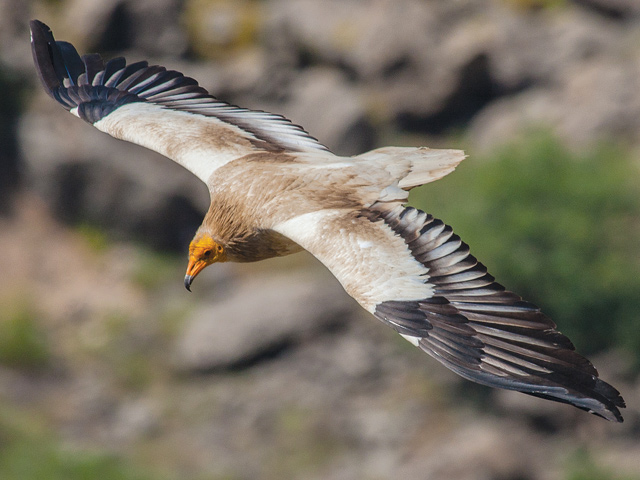
Nepal’s geographic location at the boundary between Asia’s two eco-biological domains makes it a prime stopover point for birds on long-distance migratory routes. Examples of wintering birds are waterfowl and birds of prey, while species like sunbirds and cuckoos migrate to spend the summers in Nepal.
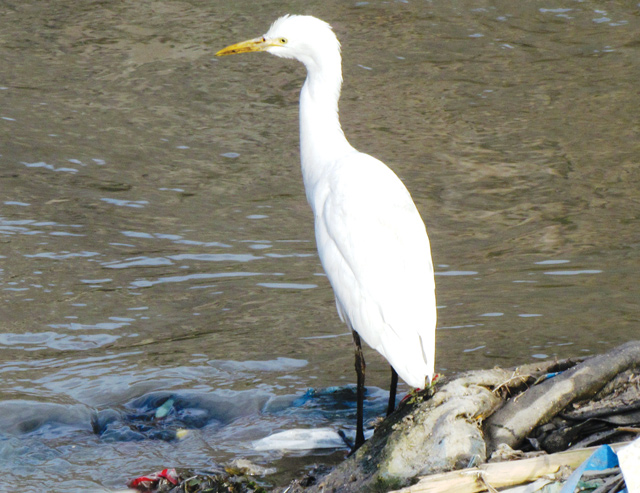
Near Kathmandu, Taudaha Lake is one of the best places to observe migratory waterfowl like wintering mallards and ruddy shelduck. Just 8km southwest of Kathmandu, the quiet lake and surrounding greenery attracts up to 126 bird species.
But across the country and the world, such havens for birds are increasingly harder to find. In Nepal itself, migratory bird stopovers are suffering human encroachment and pollution.
“Conservation is not just about saving birds, but helping the community,” said Jyotendra Thakuri, Conservation Officer at Bird Conservation Nepal (BCN), “people don’t care about the environment until they realise the benefits it brings to them.”