Arthur Jan 6, 2010
"Watching Invictus, you wonder when we will get a neta who will say, “The past is the past, we look to the future now”, as Mandela does, and really mean it." This would not have happened in South Africa if the leadership of the minority elite ruling that country had not been forced (by an armed struggle) to accept the reality of a new regime not run by them. In Nepal the past is still the status quo with politicians from the past still clinging to office. Prolonging that will not make the transition more generous.
Ujjwal Acharya Jan 6, 2010
First: the movie is a great movie and I am surprised to read this a day after I watched the movie.
Second: The problem with Nepal is that we have leaders but not the statesmen; Mandela cared more about his country and people than anything else. Our leaders' priority list reads: me (of my), party and maybe the nation!
Richard Jan 6, 2010
With regard to the south-african transition, very worth reading is this short book "Solving-Tough-Problems" by Adam Kahane. In it he talks about the Mont Fleur process of using scenario analysis to get a very wide range of stakeholders to come up with possible stories or outcomes for South Africa (which were free of party dogma). Is a fascinating read. The time was clearly perfect for this style of process to work there, in Nepal this is probably not the case.
http://www.amazon.com/Solving-Tough-Problems-Listening-Realities/dp/1576752933
I have a copy if you want to borrow.
Salil Pradhan Jan 7, 2010
I agree to Mr Kunda Dixit. He has rightly grasped the essence and writes what is true in Nepal among the political fraternity.
He seems as helpless as a general man like me in Nepal, caught amongst a pantheon of fools - our leaders of course. He is right in telling that they do not lead, they follow; they are only reactive, not proactive.
When do they start looking to the future? Isn't it time enough?
Budabaaje Jan 7, 2010
Who put these "pantheon of fools" in power? Salil Pradhan ji, have you forgotten the events and results of JA II? Didn't the "general" Nepali men, led by more famous ones like Mr. Dixit, Pandey, Pahadi etc etc, themselves propel these leaders back into parliament to create a "New Nepal"? Is that what you call "helpless"?
Even if they are helpless now, it's because they choose to be so!
Satyajeet Nepali Jan 7, 2010
Right. An important element of the South African experience was 'forgiveness' and true 'reconciliation' as Kunda Dixit observes. There was none of this in Nepal. The monarchy and Army were not forgiven or reconciled even though their crimes probably pale in front of those of the Whites of South Africa. The monarchy was bitterly eliminated, and efforts to humiliate the Army continue. I have always held that the Peace Agreement of Nepal should have been 3-sided i.e. including the monarchy and/or Army. Only then would the Nepali peace process have mimicked the South African experience.
And why just fault the politicos for our unillustrious peace process? What has Mr. Dixit, as a journalist and intellectual, done to rise above vindictiveness and promote 'forgiveness' and 'reconciliation'? In fact, as far as I can tell, this newspaper, under Mr. Dixit’s stewardship, has instead taken every opportunity to vilify those institutions. Enough sermonizing, Mr. Dixit. Practice what you preach first!
May Jan 7, 2010
Waiting for a saviour in the shape of a Nepalese Mandela may itself be relying too much on fate, and what's worse, it may be a long, long wait. If the people are strong and united, they can force the so-called leaders to listen.
Arthur Jan 7, 2010
A characteristic feature of the english speaking middle class writing here is that you are incapable of being masters of your fate, and even that you blame fatalistically on others. Nepal's anti-Maoist politicians are themselves caricatures of people commenting here. The Maoists are in fact proactive, not reactive and exactly that is the complaint by people who want to preserve the status quo as a "consensus".
Karma Jan 8, 2010
The Moists are really proactive, proactive in extortion, murder and plunder. Some navel gazers just can't say anything without resorting to a class-based analysis on Nepal's English-speaking middle class. Nepali pani nabolne haru sanga ke kura garne...
hange Jan 8, 2010
While it may have been necessary for the Maoists to wage war to finally get the state's attention, what they don't realise is that continuing their violent approach to politics only works against them and further hurts the nation. For what it is worth, I neither believe in fate nor blaming others fatalistically. However, being proactive can cut both ways if the "proactiveness" involves extortion, murder, and plunder as elegantly pointed out previously.
What is sad is that the very issues that should be raised - equality, land rights, unequal treaties, employment, civil supremacy, etc - are all being voiced by those who are proactively extorting, murdering, and plundering, i.e. the Maoists. We, as Nepalis are faced with a terrible choice: "diplomatic politicians" who are carryovers and do nothing but attempt to keep the status quo to maintain their power OR "violent politicians" who say all the right things but do nothing but damage state infrastructure and intimidate/beat-up/kill those that disagree with them. Fate would have us say, "Ke garne?" But, frankly, fate is overrated. I think what Dixit is trying to say is that a Mandela-like neta would have the "resolve" of the Maoists, the "diplomacy" of the pre-JAII politicos, and the vision & statesmanship of - well, a Mandela.
Arthur Jan 8, 2010
hange, if South Africa's minority elite had tried to cling to power and prevent change by threatening to unleash the old army despite knowing that they could not win, Mandela would have been far less flexible than Prachanda. Fortunately their Western allies encouraged them to accept losing power and seek minority guarantees instead. If instead those allies had behaved like India in backing the losers, South Africa would be an even bigger mess than Nepal. Repetitive chanting of "murder, looting, extortion" instead of accepting the change that resulted from revolutionary violence would have been as pointless in South Africa as it is Nepal. Mandela won world fame as a prisoner accused of "terrorism" for the armed struggle against the old regime. He always rejected claims that the minority could be overthrown without violence and his party led the violence that defeated the minority. Nepal's minority elite should learn from South Africa's and India should learn from the South African elite's allies in the West. Apartheid and minority rule has no future anywhere.
May Jan 8, 2010
“murder, looting, extortion” “murder, looting, extortion” “murder, looting, extortion” “murder, looting, extortion” “murder, looting, extortion” “murder, looting, extortion” “murder, looting, extortion”
It is going on, Arthur, accept it. Nepal's revolution, however well-intentioned at one time, has gone sour. The descent of the Maoists into a nationwide network of criminals is something that even people inside the party now admit and are worried about.
Lila Jan 9, 2010
Having read the review and all the comments, I must say Arthur is the only one in this lot who seems to have any clue about South Africa's anti-apartheid struggle. Even a cursory read of Mandela's famous autobiography reveals the tremendous importance of armed struggle in South Africa. Is the reviewer familiar with Mandela's famous line that "it is the oppressor who defines the nature of the struggle"? Violence is not a simplistic, black and white concept like Kathmandu's suave elites like to believe. The reviewer needs to read up more before drawing faulty conclusions about one of the most important struggles in the history of the world.
बाबुराम Jan 9, 2010
यो लिला र आरथर लाई मारकाट त्यस्तो मन पर्ने भए आफ्नै देशमा गर्नु नि, यार।
Arthur Jan 9, 2010
Thanks Lila. I think it is literally true that others here have no clue about the violence of the armed struggle that liberated South Africa and led to a peace in which the new <a href="http://en.wikipedia.org/wiki/South_African_National_Defence_Force" rel="nofollow">South African National Defence Force</a> was formed from the integration of the ANC and Communist Party led <a href="http://en.wikipedia.org/wiki/Umkhonto_we_Sizwe" rel="nofollow">Spear of the Nation</a>. It is inconceivable to them that the the whole world could be praising a notorious "terrorist" just as it is inconceivable to them that the Royal Army and the PLA will be integrated under a PLA commander as in South Africa. Hopefully these wikipedia links will provide more useful background than the film review. If not, please just lookup wikipedia direct to learn something from the South African experience.
pranaya Jan 10, 2010
what arthur and lila both seem to have misunderstood is that no one here is downplaying the importance of the armed communist struggle is getting us to where we are. what most commenting here seem to be pointing out is that the violence didn't end when the struggle ended. because our maoists chose to enter the mainstream and function as a legitimate political party, we expected them to act like one. you can't have it both ways. either continue the armed struggle that you espoused so fanatically or operate within the parameters of a society where law and order are the names of the game. as a political party, you can't extort, loot, cheat, steal or strongarm your way through everything. every time things don't go your way, you can't jump ship, you can't threaten to go back to war, you can't operate under a my-way-or-the-highway coda. concessions have to be made, deals have to be struck, cooperative party politics is how the maoists need to function. yes, maybe the violence was necessary for a change and it was the armed struggle that lead to a massive change. but it has to end somewhere. just like mandela turned to politics, so need the maoists to do the same.
and arthur, please get off your high horse. we're not fools.
Arthur Jan 10, 2010
pranaya, I do not think that either Kunda Dixit or you are fools. I do think the comparison Kunda Dixit made indicates cluelessness about South Africa. Is he complaining that MKN, GPK and the rest are not acting like Mandela? That would be like complaining that the old apartheid leadership did not act like Mandela. As I pointed out in the first comment above "In Nepal the past is still the status quo with politicians from the past still clinging to office." The armed struggle was launched long before Gyanendra and it was launched against the status quo that these people represent. They cannot be expected to lead the reconciliation. Is he complaining that Prachanda is not acting like Mandela? Mandela was able to initiate reconciliation from a position of being in power as President with the old army having accepted civilian authority, so the comparison is equally absurd. The losers have to be willing to accept transition in order for there to be reconciliation. Concessions were made, deals were struck, but the peace agreement has not been carried out with the losers still refusing to democratize their army and integrate the two armies. The whole point of that refusal is to threaten a return to civil war (though not very seriously since the old army knows it could not win before, it knows how useless the status quo politicians are and knows that its opponents are stronger now). Despite that threat, perhaps because it is so empty, the Maoists have not themselves threatened to return to civil war but are openly engaged in the very democratic activity of mobilizing the majority to take power. What you call a "legitimate political party" and want the Maoists to become is the system that reduced Nepal to the levels of sub-saharan Africa. They remain instead a "revolutionary" party and that is the new mainstream. It may take years to establish a "rule of law" in Nepal. That process is prolonged by maintaining the old corrupt system of looting, stealing and cheating protected by the strongarm of the old Army. It would have made more sense if Kunda Dixit had compared the KTM middle class with the South African minority and suggested Nepal's "elite" should learn from their South African counterparts to stop pretending the status quo can be prolonged and instead find a useful role in the New Nepal. Just as the skills of whites were needed in South Africa, there are surely more useful things educated Nepalese could do than living off the international development aid that was intended to help Nepal develop while shouting about "looting" etc.
बाबुराम Jan 10, 2010
प्रनयले भनेकोमा मेरो पुरा सहमती छ। माओबादीलाई चिचीपनि पापापनि खान परेको छ।
pranaya Jan 11, 2010
arthur,
the whole point here that everyone seems to be trying to make is that once you give up your arms and pledge yourselves to competitive party politics, you cannot go back to violence again. if a "revolutionary" party is the new mainstream then is this what we must expect from the mainstream from now on: forceful politics where the majority vote means nothing, where strongarming and thuggery are acceptable means of raising "donations", where lockdowns, bandas, closures, rostum-gheraos are not only common but integral to the political process, where militant youth gangs rove the streets carrying out vigilante "justice." i don't think any of us middle-class want the status quo to be prolonged. the middle-class has always a positive role in the democratization of nepal, from the first jana andolan to the second one, the thrust has always come from the middle-class. without the middle-class, there would've been no jana andolan and gyanendra shah would still be king. the middle-class isn't the elite. you seem to be confusing the two. just because we are able to converse and express ourselves properly in english doesn't make us elite. the elites are the bahuns and the chettris who still hold much clout in kathmandu. the middle-class comes not just from kathmandu, but from pokhara, from dharan, from cities all over the country. while nepali elites may be mostly based in kathmandu, it would be foolish to assume that every middle-class nepali who speaks a little english and lives in kathmandu is part of the "elite."
if the maoists had wanted to remain a "revolutionary" armed movement then they should never have come out of the jungles or never have given up their weapons. like i said before, you can't have your cake and eat it too. they chose to give up their violent ways by making commitment to party politics. of course, maybe party politics is what has reduced nepal to such a lowly state of affairs but what other option do we have? military rule? a dictatorship? we've already seen both of those and they sure didn't work. are you going to argue that prachanda would make a better dictator than gyanendra? besides party politics, what other route can nepal take? the maoists realised this and hence, came into the mainstream and now need to follow the rules of the mainstream. bush screwed up america but you don't hear americans calling for the scrapping of the party system do you?
and i happen to agree with kunda dixit, nepal does need a statesman like mandela. someone with vision enough to see beyond the petty advantages of immediate present, someone with enough integrity to push for real change and not worry about lining their pockets each time. prachanda could've been that person but he went the way of every other politician, whether it be GPK, MKN or anyone else. i can't speak for everyone else but my animosity towards the maoists stems not from conservatism or a desire to uphold the status quo but from bitter disappointment. i had expected better. like the saying in nepali goes: jati jogi aye pani kanai chireka.
Budabaaje Jan 11, 2010
O common, of course, Dixit is trying to compare Mandela to GPK. Mandela took the bloodthirsty, militant blacks and reconciled them with the oppressor whites. To match that, GPK should have been able to build peace between the militant Maoists, and the ruling class of royals, feudals, Army etc. But Dixit is a fool to have such a hopeless expectation!
What will it take for Nepal's intellectuals to realize that GPK is just an opportunist? In 1990 he aligned with the royals and buttkicked the (then) Maoists, because the monarchy was more powerful then, and it offered him the power. In 2005, he did the exact opposite because Maoists offered him the Presidency (but did not give it to him later, haha). The man has no capacity to rise over petty interest and make peace for the benefit of everyone. He only thinks of himself. Mandela and GPK, hahaha...
Devendra Pant Jan 11, 2010
The key debate is what is the essence of being "Master" of one's own fate'? To me it is above all the extrordinary quality of leadership for determination, passion and the will power to be liberated from the 'oppressive reality' of the status quo-- one contests one's own conscience and one even practices the moral courage to go counter current of the common belief. It is almost like a transcendental attribute for self-transformation from within. Leaders like Gandhi (Swaraj), Mandela (Long Walk to Freedom), Martin Luther King Jr. (I have a Dream) put that into action to bring positive changes through liberating not only the oppressed but also the oppressors for both are the products of the 'oppressive reality' (Freire). A state like that could perhaps be possibly attended through sustained self-discipline and the will power for inner contest with oneself (Sartre). Such leadership can change the destiny of a nation-- ultimately the locu of power is returned to the people. Isn't that a tall order to expect from our current leadership?
Arthur Jan 11, 2010
Thanks for the thoughtful response pranaya, I hope we can continue the discussion in this topic and other topics and also future issues of Nepali Times. Unfortunately I cannot respond for a few hours so for now I will just mention that I agree it is wrong for me to mixup the concepts of "middle class" and "elite" and also that it is not just kathmandu (but I dont agree that "Bahun-Chettri" would be a better description of elite - many are very poor). More on other comments and disagreements later.
Arthur Jan 12, 2010
pranaya, it seems that what you expected was that in by joining in competitive multi-party politics the Maoists would cease to be a "revolutionary" party and become the sort of party that middle class people can be comfortable with. In the comments on "Ultimate revolt" Budabajee mentions that this expectation that the Maoists would become "mainstream" was spread by the Seven Party Alliance and the media (in order to use the Maoists for the old parties, dismissed as useless by Gyanendra and the Army, to get back to business as usual). I have the impression, especially from Nepali Times, of a sense of helpless disappointment that such expectations have not been met. There seems to be a perception that the peace agreement was to provide the Maoists with a "safe landing" from their (unsuccessful) revolt and that the middle class were the heroes who in 19 days ended the old Nepal and ushered in what should have been, but perplexingly has not been, an era of harmonious reconciliation and nation building. Since your expectations have not been met, it would be wise to reconsider your assumptions and work out what you misunderstood about reality. Instead there is this sort of fatalistic bewilderment while the old politicians continue making empty speeches insisting that "consensus" requires that nothing much actually gets done. As a foreigner who only speaks english it is impossible for me to understand the history and reality of Nepal in depth. But it seems obvious that most of the english language middle class in Nepal has even less grasp of that history and reality and does not want to actually think about it. The overwhelming majority of Nepalese are not middle class and live on less than USD $2 per day. Much of that comes from remittances and most of the development budget comes from donors and is absorbed by the english speaking middle class writing empty reports. The Maoists took up arms more than two decades ago to end that reality. They do not intend to become a party the middle class can be comfortable with but to be a party that represents the poor who have had no say at all until now. The peace agreement offers the old parties a "safe landing" of multi-party competitive politics but requires land reform, restructuring of the state, democratization and integration of the two armies etc. Those are the agreed "rules of the game". But you want to have your cake and eat it. There has been no land reform, no restructuring of the state and no democratization and integration of the two armies - the old parties have refused to carry out the peace agreement, yet somehow you expect the Maoists to act like Mandela! You know the status quo is unviable and wonder what other route Nepal can take. The route is clearly spelled out in the peace agreement. There will be land reform, the state will be restructured, the old army will be democratized and the PLA integrated. This is not optional. Whether it will be done by a one party dictatorship or a multi-party democracy is very much up to people like you. If you are incapable of accepting that Nepal will be run in the interests of the poor, and find a place for yourselves within that reality then it will have to be done without your participation and input. But it does have to be done and there is a party, organized throughout Nepal that will never be persuaded not to do it.
Budabaaje Jan 13, 2010
Arthur, some of the things you say I agree with, and others I don't. But one thing intrigues me. As a non-Nepali you still seem to know a helluva lot about the intricacies of Nepali society and politics. You must have read some good books and have other good sources of information. Do you mind sharing what are some of the important books or other sources you have used to learn about Nepal? Could be helpful to some of us too.
Arthur Jan 13, 2010
Thanks Budabaaje. The most useful english language books I have read on Nepal are "Fatalism and Development: Nepal's Struggle for Modernization" by Dor Bahadur Bista and "The Nature of Underdevelopment and Regional Structure of Nepal: A Marxist Analysis" by Baburam Bhatterai. Other sources are mainly internet browsing and (perhaps like you) thinking carefully about what lies behind things that people I don't necessarily agree with are saying.
Sargam Jan 14, 2010
What is this cavernous voice emanating from beyond the grave? A twerp is venting his spleen on the middle class of Nepal. We are in the 21st century and still there are some mentally retarded people who waste their precious time in hearing such idiocies with neither head nor tail.
Because the Communism with all its sisters 'isms' are dead and buried when the Berlin Wall fell throwing all their hypocrisies on the trash heap of history.
Why are there still the 'morons' in Nepal who go on lapping up the rhetoric thousand and one times harped back by the purported zombies of Communism in the past century? Those who know all the ropes of this dead ideology, do you still remember anything good done to humanity by it other than millions and millions of victims of its atrocities perpetrated all over the world? This is proclaimed to be the failed ideology of the 20th century, maybe soon followed by the next a high roller cultivated cut-throat capitalism inspired by Adam Smith but largely deviated and practiced by present China.
A rough rule of thumb, in order to prove our worth it is high time that we had promoted holistic approach to fixing to go ahead with determination paying no heed to the well trained rhetoric of Communism like feudal, status quo, old regime, elite bourgeois, and whatnot. These are the words finely honed by commies to destabilize the middle class people to make them feel guilty of just being good citizens who pay taxes to promote democracy in the country where although it is impossible to be born all equal yet with prompt goodwill we try to promote equality of opportunity by propping up maximum of opportunities to the less favored until now to allow them to get access to higher knowledge and education.
If there are still those mentally retarded zombies of Communism who go on uttering these meaningless words means they remained stuck in the vortex of a time warp. It falls to other inhabitants of Nepal to understand the need to not paying the slightest heed to the story tales of these zombies of the past 20th century of some ancient communist countries coming over to Nepal with malicious intent to make Nepal their experimental ground of political hazards. Those new brand of zombie-sermonizers who are all tinged with self-interest must not get chance to spread their malign influence by any ways and means in this country.
As of now, we are on a firm footing with the facts and are on a straight line. All political parties have signed together the new memorandum in order to draft the Constitution with the precious helps from those countries which have already certain experiences of dealing with the Constitution drafting.
I am aware of the fact that I don't really sympathize with the communist ideology of this incumbent government but what really counts for me is that this government follows the accurate path to draft the Constitution by the stipulated deadline date, and then follow the democratic polity with multiparty agenda to establish rule of law in this country.
By the deadline date of May 28, 2010 people of Nepal will definitely possess the ad hoc committee's consent to the Constitution making and will follow suit with the backing of the 2/3 rd of majority votes of the members of the constituent assembly the New Constitution of Federal Republic of Nepal shall be promulgated for the better good of Nepal and its inhabitants.
I'd have preferred a referendum but they haven't as yet mapped out the definite contour of the aforesaid draft.
Which is why no siren of panic should hinder the smooth resolve of Constitution drafting process.
pranaya Jan 14, 2010
arthur,
you seem to be making assumptions about me based solely on the fact that i happen to speak english. you have labelled me middle-class and bourgeois. that is not so. i might not live in rural nepal but i have travelled enough and talked to enough rural nepalis to at least have an idea of what the situation is like. i have made an effort to step out of the kathmandu bubble and actually make contact with those who live beyond the reach of the valley.
maybe you're right in saying that i had expectations from the maoists to act more like a mainstream party. maybe that was expecting too much. and i agree with every thing you say needs to be done: land reform, army integration etc etc. these are important issues that need to be addressed. i'm not debating that there is need for drastic change in a lot of things. but you seem to be missing my main point. my main complaint is not with all that needs to be done. i agree with all of the maoists' goals, i only object to their methods. there is a time for war and a time for peace. all that has been accomplished through armed struggle, i dont deny. but i dont understand what you have against the middle-class. is it your wish that there be no middle-class? that only the lower-class and the peasantry be "good" and progressive while the middle-class, always caught between the upper and lower, are bourgeois and only serve to prolong the status quo. the middle-class has always been primed for revolt, for protest simply because they have the means and the education for it. you vastly underestimate the role of the middle-class. and you seem to forget that the leaders of the maoist party itself: pushpa kamal dahal, baburam bhattarai, both were middle-class. they did not rise out of unimaginable poverty brandishing the hammer and sickle of communism. they were well-to-do middle-class who read, learned and understood that things weren't right and that it was time for a change.
but to come back to my main point, i disagree with the maoists' methods. they went to war for a cause and ultimately, were successful. they were able to get rid of the monarchy and establish themselves in power. is there really need for the looting and killing? the old political parties may have been corrupt and unreliable but at least they didn't stoop to murder and killing. you seem to think that the death of a few people is necessary for the good of the many. you seem to espouse the popular maxim: the ends justify the means. they never do. violence only leads to more violence. as a revolutionary party, they did what they started out to do. nepal has turned into a federal democracy and i understand that much still needs to be done. nothing much has changed in the lives of the poor and the disadvantaged. but it is precisely at this time, now that nepal's and the world's eyes are on them, for the maoists to show that violence is only the last resort. the absolutely last resort. war, murder, rape and looting cannot be justified, no matter how noble the cause may be. the cause is simply sullied by the means.
mandela gave up violence once he saw what needed to be done. the maoists have fallen in everyone's eyes, even all those of us who voted for them in the CA elections, as they chose to go the base, evil way. they have shown us that they will always rule by the gun, or the stick, or the stone. there is no space in their vocabulary for peaceful politics. we chose them to run the country because we believed in their power to change. we voted for them because we wanted a voice for the poor, the disadvantaged, the marginalised.
lastly, please don't lump me in with your very broad understanding of what the middle-class represents in nepal. i resent the assumptions you have made about me. despite my attempts at articulating my ideas and structuring this debate, you seem to have some preconceived notions about what the middle-class is. throughout my life, i have struggled to come to terms with the vast inequality that is present in nepal and i realised that there is no coming to terms with it. it is a reality that needs to be changed. and i am going to be part of that process of change. i am just a student now but when my time comes, i intend to make it count. i am not a mindless fool who is complacent and conservative, wishing only to perpetuate my own privileged existence. nepal needs to change, i know that. and it is us, the next generation, who are going to accomplish that change. and it is not going to be through violence. it is not going to be through murder.
this is all i have to say. i think i've made my points pretty clear here, although i might have rambled more than necessary. but this debate has gone on for far too long.
May Jan 15, 2010
That explains it, Arthur is a fatalism fan. That outdated bible of all naive expats in Nepal who want to slot Nepal's problems neatly with a catch-all explanation. Even Dor Bahadurji, if he is still alive, would today not agree with most of what he wrote 30 years ago. Yet, these goras cling to it. God save us from these from these donor do-gooders.
Arthur Jan 17, 2010
pranaya, earlier you said "without the middle-class, there would’ve been no jana andolan and gyanendra shah would still be king. the middle-class isn’t the elite. you seem to be confusing the two. just because we are able to converse and express ourselves properly in english doesn’t make us elite." I agreed that it was wrong for me to mixup middle class and elite.
Despite using the word "we" (middle class) to describe yourself, now you complain that you resent my assumption that your description of yourself was accurate. Your comments do not strike me as those of a "mindless fool" or "complacent and conservative" (unlike some others here). But you do say "we chose them to run the country because we believed in their power to change. we voted for them because we wanted a voice for the poor, the disadvantaged, the marginalised." That seems consistent with my earlier comments describing what I understood to be your attitude.
The reason you ga e may be the reason why many middle class people also voted for the Maoists, hence the disappointed expectations of some. But like it or not it is not the reason they won. The Maoists are not a party that seeks merely a "voice" for the poor, the disadvantaged, the marginalised and they would be betraying most of the people who support them and fought for them if they settled for that. The Maoist party intends for the poor, the disadvantaged and the marginalised to actually take power and change the existing reality. This means abolishing the poor more than abolishing the middle class and it certainly will need middle lass people who are willing to use their skills in helping to actually change Nepal's situation (not just those already leading the Maoist party but all those who really want to do something useful with their lives regardless of their political views). A "voice" for the poor has already been achieved, but as you know that has not resulted in much else changing, and in particular the essential preconditions of such change, spelled out in the peace agreement, have still not been met. There has been no land reform, no restructuring of the state and no integration of the two armies. Instead we get this continual bleating about Maoist"violence and looting" while the actual looting by the elite still goes on and reports of Maoists being murdered by their opponents are still much more frequent than the opposite (which was also true throughout the People's War). PS May has a reasonable point about Bista's "outdated" book seeming to provide a neat catch-all situation. Its uncanny how one keeps being reminded of it when reading the english language press and seeing discussions in which the fact that most Nepalese still live on less than $2 per day and have to seek work in other poor countries is treated as though it was simply "fate". Unfortunately I doubt whether donors have already drawn my conclusion that there is no point trying to "do good" until a different class actually holds power.

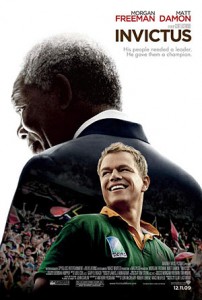 It is rare that you start taking notes furiously while watching a movie.