 PHOTO: SITA MADEMBA
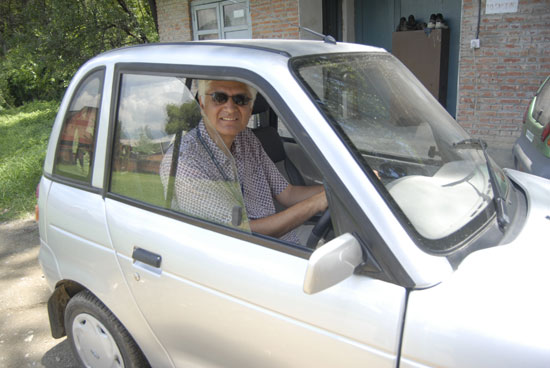
It’s been three years since I started driving my electric car in Kathmandu. In the beginning, it dented my ego as school kids laughed at the tiny car (“Herta, herta, katro sano taxi!”), motorcyclists gave contemptuous glances as they overtook me at great speed, even bicyclists would swerve to cut me off in traffic.
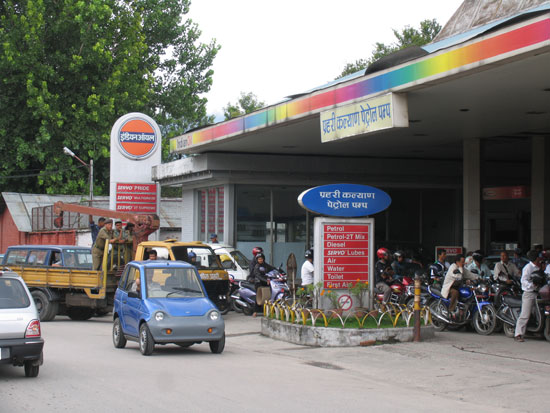
However, I had the moral high ground. After all, I was saving the planet and I thought I looked like one cool dude. Today, the sense of moral superiority has been replaced by necessity. I mentally thumb my nose at those unfortunate SUVs queuing for gas at the Nepal Army’s pump in Lagankhel. My Reva can be parked anywhere, and I skip the bits in the newspapers announcing yet another tanker strike, or a hike in fuel prices.
I sold my WagonR in 2006 and bought the Bangalore-made Reva even though the tax on the car was 125 percent. The government was trying its best to make it expensive to be green. The logic was illogical: Nepal can’t afford to import petroleum because it can’t cut subsidies for political reasons, so it didn’t want to give electric cars a tax break because Maruti sales would go down. When I asked our learned finance minister then about why electric vehicles were taxed so high his reply was “If everyone starts importing electric cars where is the government going to get its revenue?” Calculations show that even by cutting the import tax, the government would more than make up for the loss in five years just from savings on the petrol. Earlier this year, the government finally slashed the import duty by half and electric vehicles are now exempt from paying the annual road tax. (Even so, a cop stopped me on the Ring Road the other day asking why I didn’t have a green emission test sticker.)
In the past four years, the petroleum shortage has worsened. The lines at the gas stations are sometimes two kilometres long. That’s no worry. The Reva doesn’t pollute. It doesn’t take up space on the road. In a city where right is might, I feel benign. I don’t suffer from road rage anymore, and my hypertension is cured.
I am often asked how I charge my car with a 12-hour power cut. The Reva needs a 15-amp plug at home that goes into a socket where the petrol cap would be. My average daily commute is 20km, and the car can run 80km when fully charged. It takes five hours for a full charge and costs only Rs 30, which is cheaper than running a motorcycle. The car has regenerative brakes and it helps if you are doing a lot of downhill with a tailwind.
I have never run out of juice. All 35 of Kathmandu’s Revas took part in an e-car rally last year to Banepa and back without charging. This year’s rally is on the World Environment Day on 5 June and proceeds from sponsorships will go towards the treatment of poor patients at the Spinal Injury Rehabilitation Centre in Sanga.
On the downside, it is a bit cramped inside and my wife says I look like Mr Bean. Since the car is so quiet, pedestrians can’t hear it coming so the Reva garage in Bhatbhateni has fitted a siren-type horn.
But the smiles from strangers on sidewalks makes up for it all. Traffic police at Sat Dobato wave me through. The car doesn’t have gears and has been described as a golf cart with a stealth fighter design.
It may be too much to ask our bankrupt government to cut the tax further on private electric cars. But the prototype Electrobus and Hulas’ MiniEV are already available and could easily replace the micro-buses and Tempos. Kathmandu already has charging stations, and we just have to be careful about the battery disposals. The new e-vans carry more passengers than Tempos, they are Made in Nepal and their manufacturer could downstream to batteries and motors, and generate employment. The bonus would be that we’d reduce our crippling dependence on India for oil imports.