
As he looks down at another nearly lost half-decade of development in Nepal, Toni Hagen
must be shaking his head
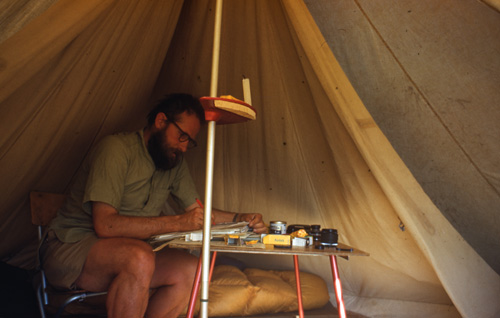 Swiss geologist-turned-development guru first came to Nepal in 1950, travelled 14,000 km criss-crossing Nepal on foot over 12 years, and produced books and charted out Nepal’s development pathways. Just about everything he said we should do, we didn’t. Everything he said we shouldn’t do, we did.
Among the books Hagen wrote, the multiple editions of ‘Nepal’, are still a classic – both as a geography text book of Nepal and a sustainable development blueprint for Nepal. Ten years before he died in 2003, Hagen had started working on another book, Decentralisation and Development, to record the lessons learnt from his long acquaintance with Nepal’s march to modernity and to compare it with Switzerland.
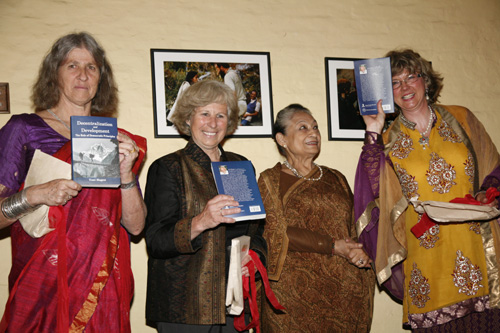 After his death, Hagen’s daughter Karin and other friends put the book together, putting together half-finished chapters. Harka Gurung gave it a final edit and wrote a preface before he himself was killed in the tragic helicopter crash in Ghunsa in 2006. Because it has gone through multiple hands, the book is understandably disjointed. It reminds one of Hagen’s own stream of consciousness conversations towards the end of his life, as he tried to leave behind as much wisdom as possible.
Hagen came to Nepal 62 years ago because it was felt landlocked and mountainous Nepal had a lot in common with Switzerland, and could be made in its image. Since then, Nepal’s leaders, kings, kangresis and krantikaris
have all aspired to “turn Nepal into Switzerland”. Hagen’s book is not about how mould Nepal into a Switzerland, but to learn lessons from Nepal’s own mal-development and look at how democracy, federalism have delivered decentralised development in Switzerland.
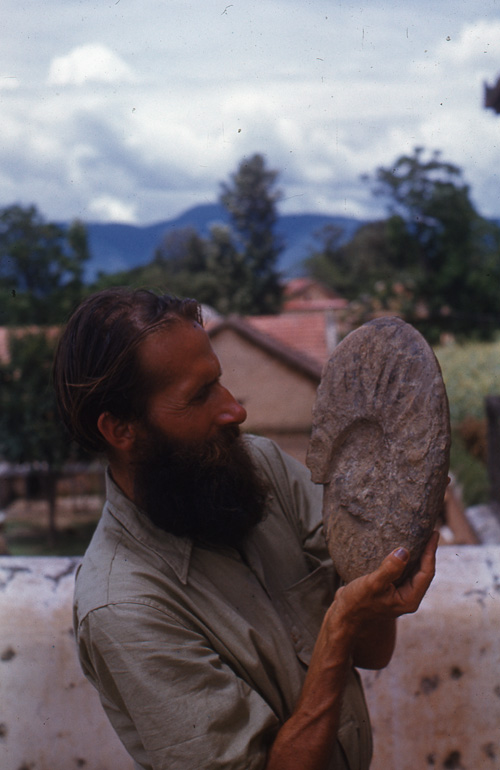 In his preface, Gurung points to the little-known fact that the first Nepalis to visit Switzerland were ‘Gurkhas’ who acted as guides to British mountaineering expeditions in the Alps in the late 19th century, and after
whom Piz Gurkha and Gurkha Pass were named (and later renamed by the Swiss because it smacked of ‘colonialism’). What an irony that 50 years later, the tables were finally turned, and the Swiss arrived on Kangchenjunga to start climbing in the Himalaya.
Toni Hagen made a detailed geological map of Nepal, plotted sites for hydropower projects like Kulekhani and the Karnali Bend, proposed a east-west electric train artery, ropeways for mountain transport, and
advocated rural eco-tourism. He was against the World Bank’s paradigm that “development follows roads”, arguing instead that road should follow development, and they should create maximum employment during their construction, be integrated to improved agriculture production. Wonder what Hagen would have thought of the mindless bulldozer roads that now scar the mountains through which he walked.
The geologist soon found the development needs of Nepalis so overwhelming and urgent, he wrote: ‘I found the people more important than the rocks.’ Hagen’s book continues with his earlier works to deal mainly with transportation, hydropower and decentralised planning. It is E F Schumacher’s small-is-beautiful approachthat leads him to advocate small run-of-the-river hydropower schemes, green roads, community-managed infrastructure and eco-tourism. We have ignored much of his advice.
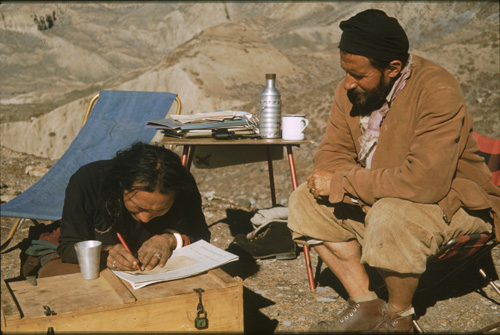 But not everything has gone wrong. Hagen was proud of the success that Nepal’s community forestry program achieved, he would have approved of the small hydro-power projects for rural electrification, local trail bridges, the green roads being built under the Rural Access program, the village homestay tourism now being promoted in Lamjung, Dolakha and Rasuwa. He was an ardent advocate of community development through grassroots democracy.
But on balance, Nepal’s modern leaders have not been very smart. Not even as smart as Chandra Sumshere, who was way ahead of his time when he built a cargo ropeway to service Kathmandu in the 1920s. Hagen’s book has a photograph taken in 1959 with Jawaharlal Nehru, B P Koirala and himself during the Indian leader’s visit to Nepal. Nehru doesn’t look very happy, and one has to read M P Koirala’s memoir, ‘A Role in Revolution’ to speculate why.
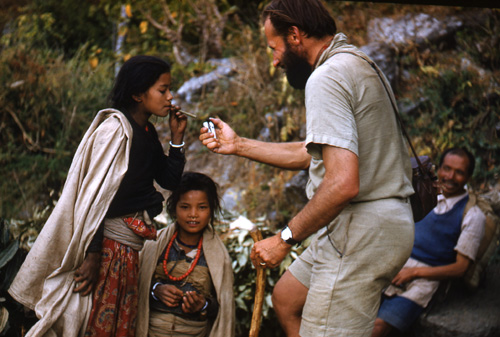 Nehru repeatedly warned BP’s brother and predecessor, MP, in long handwritten letters about letting in foreign experts like Hagen, saying they could not be trusted. One finds out in ‘Decentralisation and Democracy’ that after Swiss experts advised tunneling under Chandragiri near Pharping and building a shortcut to the plains via Kulekhani where a dam would be built, the Indians opposed it. Instead, they pushed through the circuitous Tribhuvan Highway that was ten times longer. Needless to say, 60 years later the ‘fast track’ from Kathmandu to the plains still hasn’t been built.
Decentralization and Development:
The Role of Democratic Principles
Toni Hagen
Ratna Pustak Bhandar, 2012
374 pages
Rs 1,000
Read also: