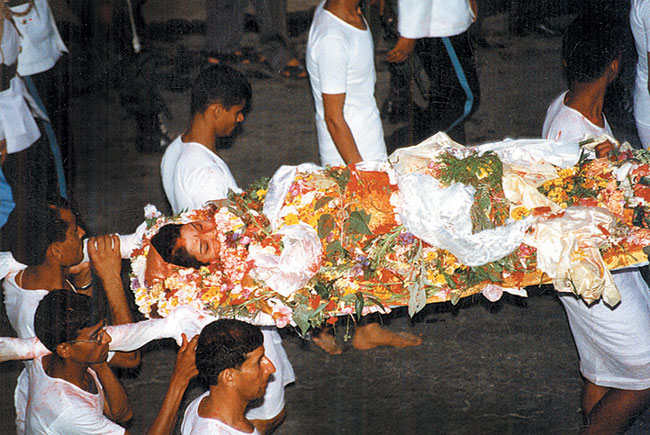
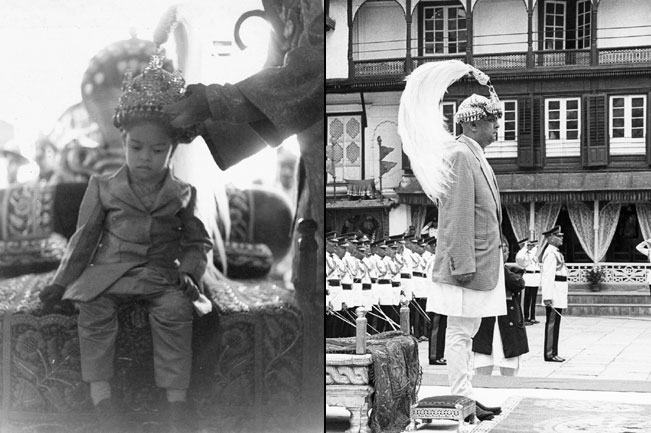
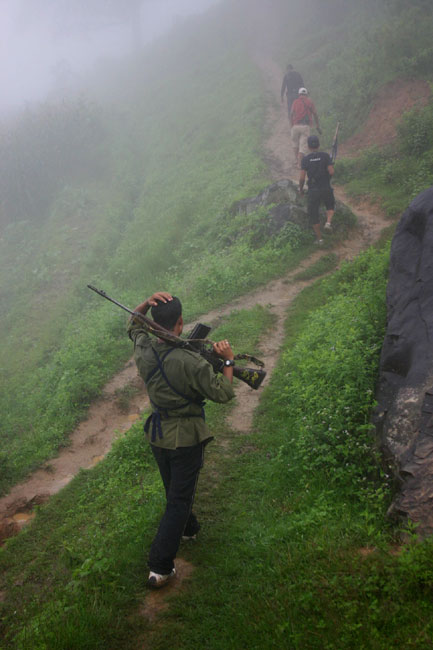
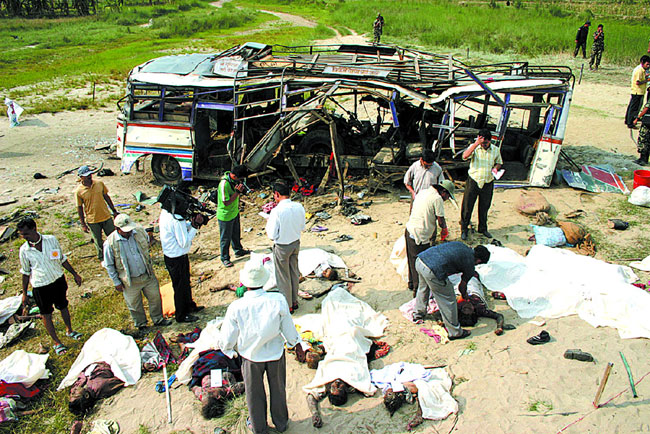
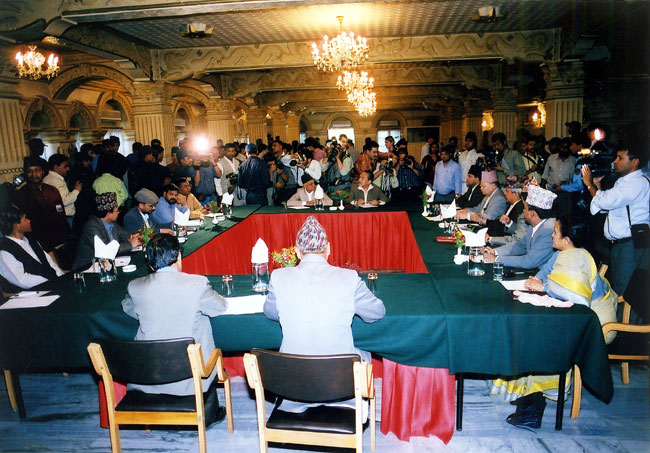
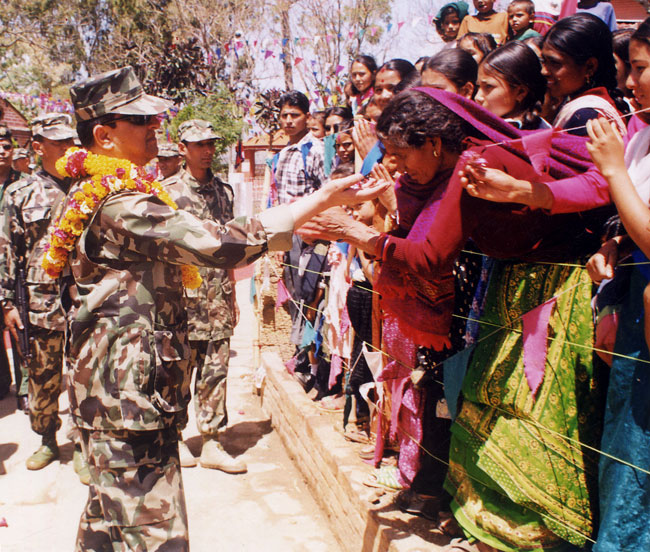
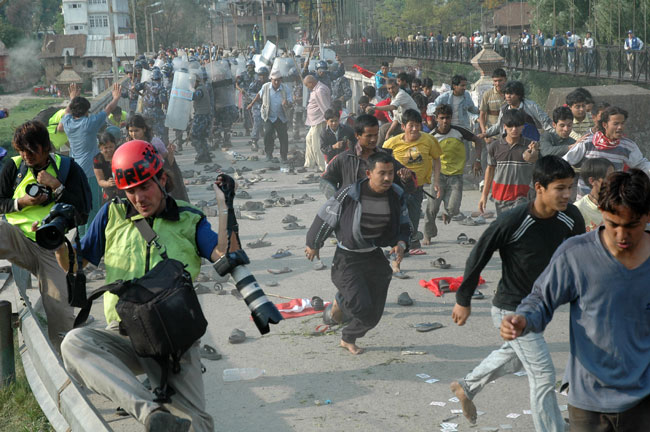
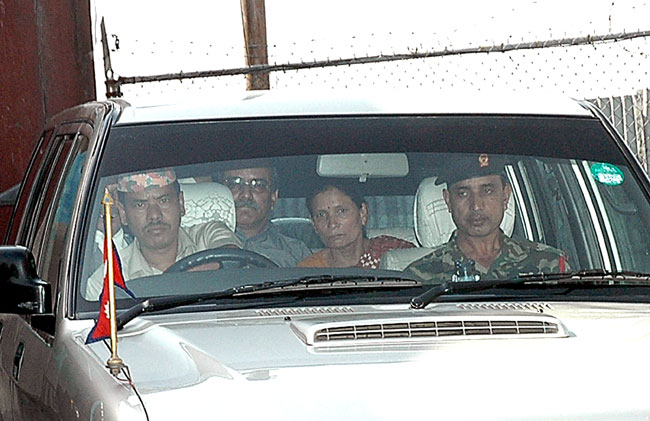
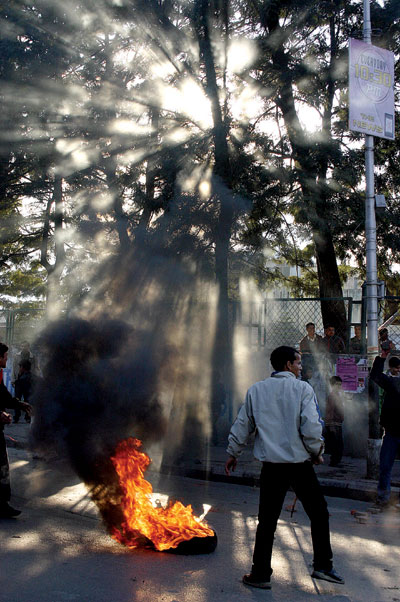
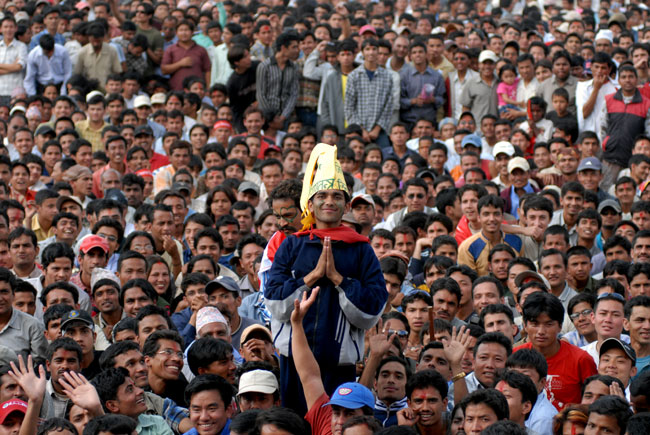
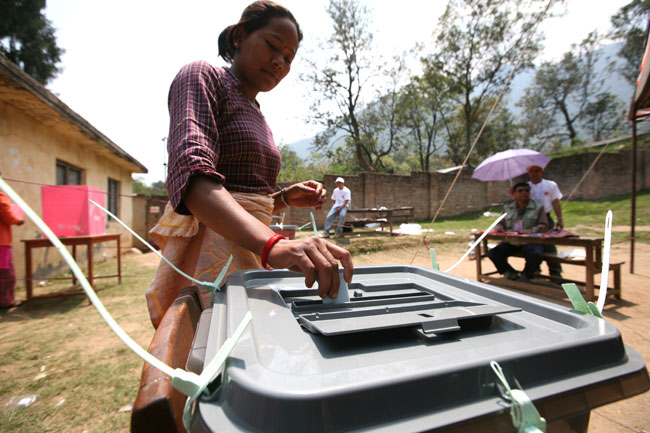
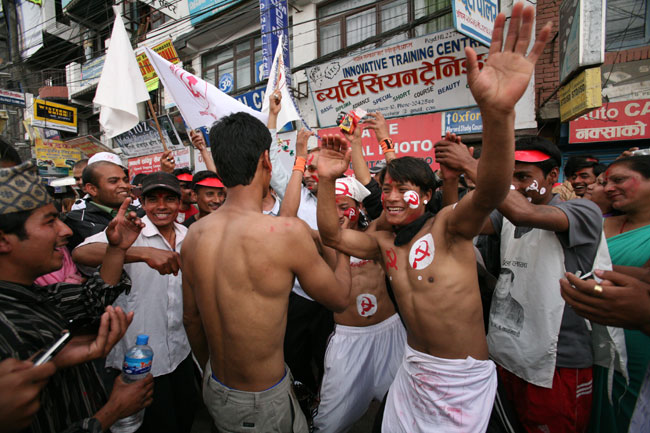
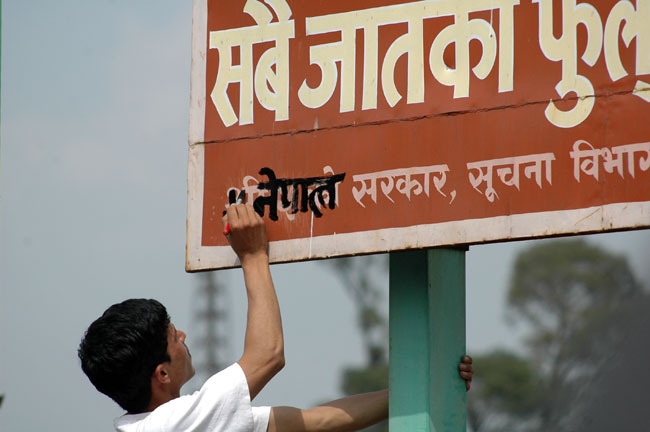
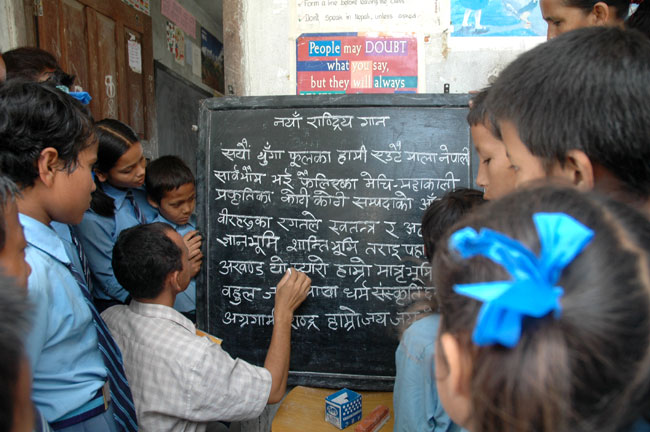
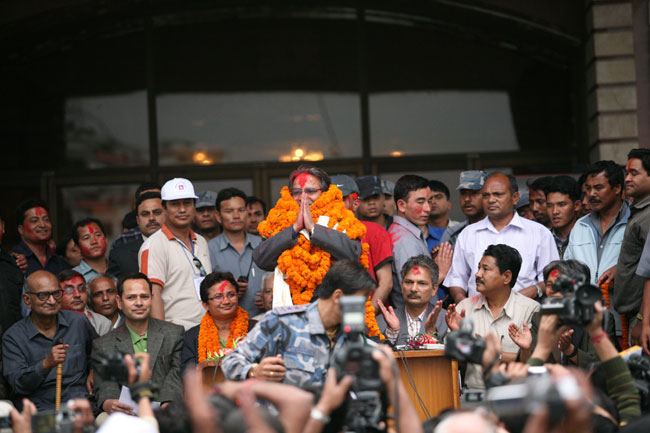
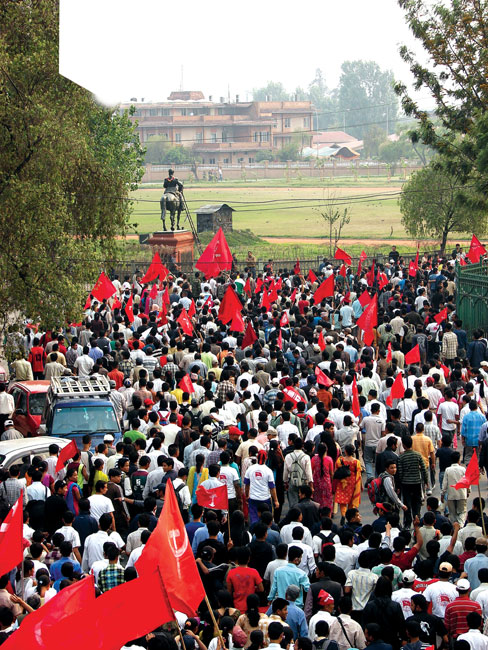
At the very beggining of the decade, King Birendra’s family members were killed in a shootout in Narayanhiti Royal Palace. The entire country grieved the death of 10 royal members killed during a family feast on the night of Friday, 1 June 2001. PHOTO: KIRAN PANDAYKing Gyanendra was crowned the king of Nepal after Dipendra died in a coma. It was the second such ceremony for him having once been conferred the crown during the Rana regime. PHOTO(R): MIN RATNA BAJRACHARYAThe Maoist insurgency had been going on for almost five years when the royal massacre took place. In 2001, they attacked the Royal Nepal Army base in Ghorahi, dragging the army into a war that till then was fought by the police. PHOTO KIRAN PANDAYHuman rights violations were rampant on both sides. The biggest loss of civilian life took place in Chitwan when the Maoists ambushed a passenger bus on 6 June 2005. At least 36 people were killed. PHOTO: KANAK MANI DIXITThe Maoists and the government first met for talks in 2003 . When these broke down, the rebels went underground again. PHOTO: KIRAN PANDAYOn 1 February 2005, King Gyanendra dissolved parliament and took complete control of the government, blacked out the media and even switched off mobile phones. PHOTO: DOIViolent protests erupted all over the country in opposition to the king's move. PHOTO: KIRAN PANDAYOn 22 November 2005, rebel leader Pushpa Kamal Dahal and the Seven Party Alliance signed a 12-point agreement brokered by India to struggle against the king’s rule. Here, Dahal is photographed during his first visit to Kathmandu after the party decided to join mainstream politics. PHOTO: KIRAN PANDAYTogether the seven parties plus the Maoists launched the pro-democracy street protests on 6 April 2006.PHOTO: KIRAN PANDAYIn 19 days, Gyanendra was forced to reinstate parliament and step down. Ten years and over 16,000 lives later, the Maoist insurgency finally drew to a close with the signing of the Comprehensive Peace Accord on 21 November 2006. PHOTO: AJAYA JOSHIThe CA election on 10 April 2008 was “largely peaceful” although there were reports of intimidation and booth capturing. PHOTO: KIRAN PANDAYThe Maoists emerged as the biggest party, winning 240 out of 601 seats. PHOTO: KIRAN PANDAYThe newly formed Constituent Assembly passed a resolution with near total unanimity to declare Nepal a democratic republic on 28 May 2008. PHOTO: KIRAN PANDAYThe new CA introduced a new national anthem but major issues regarding the new constitution - including the forms of governance, modality of restructuring the state on federal lines and preamble - remain contested. PHOTO: KIRAN PANDAYAfter months of haggling over the post of president and prime minister, the Maoists finally formed the government on 16 August 2008 under the leadership of party chairman Pushpa Kamal Dahal. PHOTO: KIRAN PANDAYThe Maoist led government lasted for nine months until their failed attempt to sack the army chief. The party resigned from the government on 4 May and launched protests demanding 'civilian supremacy'. PHOTO: KIRAN PANDAY