
BHRIKUTI RAI
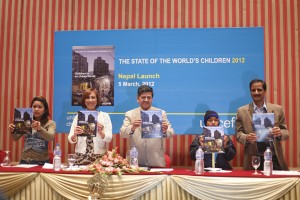
UNICEF’s flagship report The State of World’s Children 2012: Children in an Urban World which was launched in Kathmandu on 5 March, reveals startling statistics about the conditions of children in cities and towns who are excluded from vital services.
According to the report, 19 per cent of the total Nepali population already lives in urban areas. While urban areas offer unprecedented economic opportunities for many, the enormous gap between urban rich and urban poor and rapid population growth mean that access to services is becoming increasingly difficult.
A survey conducted by Kathmandu Metropolitan City in slum areas of Kathmandu in 2009/2010 showed that there are 28 slum settlements in the valley in which the conditions are dire. According to the survey in Kathmandu's 28 slums, 40 per cent of the births took place without professional medical services and 50 per cent of pregnant women never sought pre-natal healthcare. Similarly, seven per cent of slum inhabitants do not seek medical help for any ailment and a staggering 32 per cent of the children in the slum areas are not immunised.
Hanaa Singer, the UNICEF Representative in Nepal says, "Increasing number of children living in urban centers are among the most disadvantaged and vulnerable in the world.” According to Tarak Dhital chairperson of National Coalition for Children as Zones of Peace and Child Protection (CZOPP) 20 per cent of commercial sex workers in Kathmandu are under the age of 16 and hundreds of children are exploited as drug peddlers.
The stark disparity in access to basic services in urban area is likely to widen in the future unless more development programs are targeted towards the urban poor. Says Singer: “Children in urban areas live tantalisingly close to essential services, but are deprived of most of them.”