
Forty seven year old Thundup Lama Dolpo (pic,below) of Dho-Tarap VDC in Dolpa district died this morning at Om Hospital in Kathmandu succumbing to injuries after being brutally beaten by police during a yarsa dispute in Dho-Tarap last week. He had sustained deep injury in his chest and lower body after Tuesday’s fight and was brought to Kathmandu for treatment on Sunday. 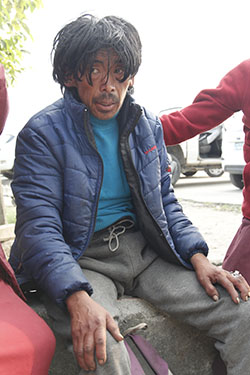
Competition between locals and outsiders to harvest a prized caterpillar fungus called yarsagumba had claimed a life last Wednesday in remote Dolpa district. The dead person in Dho-Tarap has been identified as 30 year old Phurwa Tsering, and locals said he succumbed to injuries after being brutally beaten by police. Ten people were injured after police opened fire on a crowd and beat victims at Dho-Tarap VDC in Upper Dolpa last Tuesday.
"We have called for a meeting this morning with all local stakeholders to decide what to do next since last week's dispute in Dho-Tarap has turned messy after another death," Sey Namkha Dorje, chairperson of Dolpo Concern Center (DCC) told Nepali Times.
According to local reports, the Dho-Tarap's people's demand for greater transparency over the use of fee collected by the buffer zone management committee escalated the protest which turned violent after police intervention. CDO Krishna Prasad Khanal admitted that police had fired in the air, but told Nepali Times: “There was a dispute over royalty collection at the buffer zone, and the fatality was not due to police firing, the person died at home.”
However locals suspect foul play after Phurwa Tsering’s body wasn’t sent for post-mortem and the district authority prepared reports of Tsering falling off a cliff while collecting grass. “We don’t have grasses growing in Dho-Tarap at this time of the year so how can the cause of Tsering’s death be believable to anyone?” asks Sey Namkha Dorje, who returned to Kathmandu on Sunday after visiting Dho-Tharap to look into the incident.
Phurwa Dhondup Gurung of Dolpa Concern Center who was also injured during the fight last Tuesday says that the local authority shouldn’t have used force in such a way . “We were there just to discuss more transparency over the use of fee collection by the buffer zone management committee and taking steps to protect local diversity when the fight broke out,” he says . “Many of us had to spend the night hiding in the nearby woods and neighbouring villages."
Khanal, however, said that three policemen were also injured, and said the police had to fire in the air to control the crowd. He said the wounded were lightly injured and were receiving treatment.
The police is said to have intervened after locals protested against pressure exerted by the local authorities to allow people from outside to harvest the yarsagumba in a protected area called Lang.
Reports of targeted attacks on the locals and mismanagement of harvesting fee by the buffer zone management committee have also surfaced after Sey Namkha Dorje, Dolpo Amchi, chairperson of Himalayan Amchi Association, and Constituent Assembly member from Dolpa, Dhan Bahadur Budha visited Dho-Tarap to investigate the incident.
Sey Namkha Dorje says that the dispute followed by the security force’s intervention resulted in gross human rights violation and was the most violent in the history of Dolpa. “There were never such firings and targeted attacks, not even during the conflict, which has left the locals of Dho-Tarap deeply traumatised,” Dorje said after arriving Kathmandu on Sunday.
For people in Dolpa harvesting yarsa is the most lucrative time to earn enough to help them get through the entire year says Dorje. “The resources are scare here and the root cause of the dispute needs to be resolved to avoid similar violent confrontation in the future,” he says. “The buffer zone committee needs to coordinate with the local community for the sustainable use and conservation of the biodiversity.”
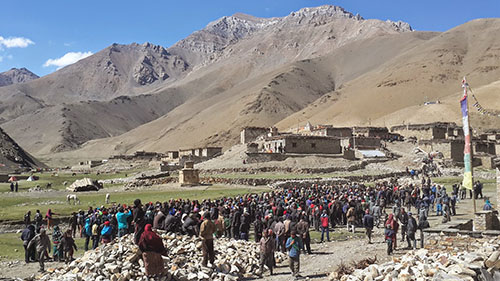 Locals of Dho-Tarap gather to put forward their demands to the local authority last Tuesday.
(Photo: Phurwa Dhondup Gurung)
Yarsagumba is worth its weight in gold across the border in China where it is regarded as having aphrodisiac properties. Every summer, entire populations of the mid hills of western Nepal climb to altitudes as high as 5,000 metres to pick yarsagumba (pic,right). Schools are closed, and the yarsa season resembles a gold rush. 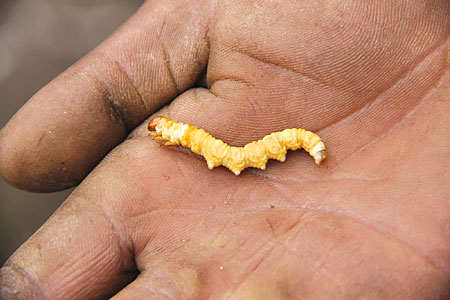
In 2009, seven people from lower down the Marsyangdi Valley were killed by locals in Manang after a dispute over yarsagumba harvests.
Bhrikuti Rai