
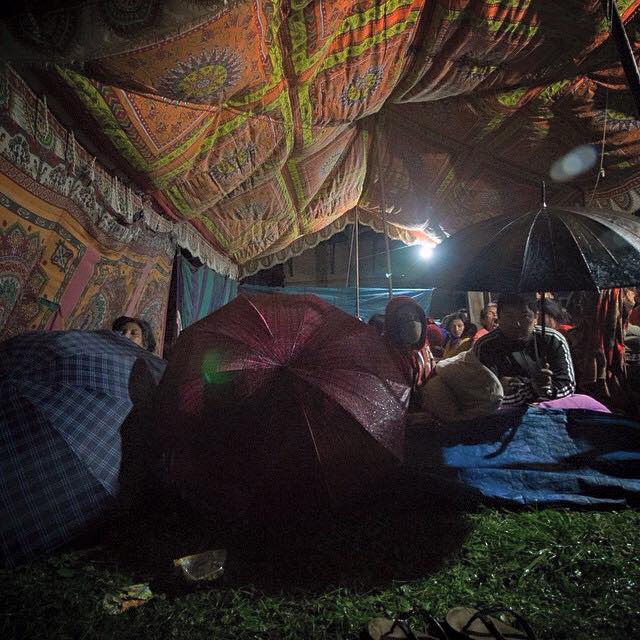
 The rain has made life more difficult for locals waiting out the shocks in temporary shelters Pic: Cynthia Choo
Two days after a deadly earthquake struck Nepal, the authorities are struggling to cope with competing demands for relief, as the confirmed death toll crossed 3,500 and was increasing by the hour.
The full scale of the disaster became apparent on Sunday when Nepal Army and Indian Air Force helicopters found village after village in remote Himalayan valleys completely flattened by the quake. Tens of thousands of people are without shelter and in urgent need of medical attention.
In Kathmandu, where there were at least 810 fatalities, almost the entire population spent a rainy night out in the open even as strong aftershocks rocked the city. Residents said they urgently needed tents, warm clothes, food, water and medicines.
Markets remained closed, but the government warned pharmacies on Monday that it would forcibly open them if they did open them themselves. There is still no electricity because of damaged transmission lines and power stations, but the NEA is said to be restoring power prioritising hospitals, the airport and other essential services.
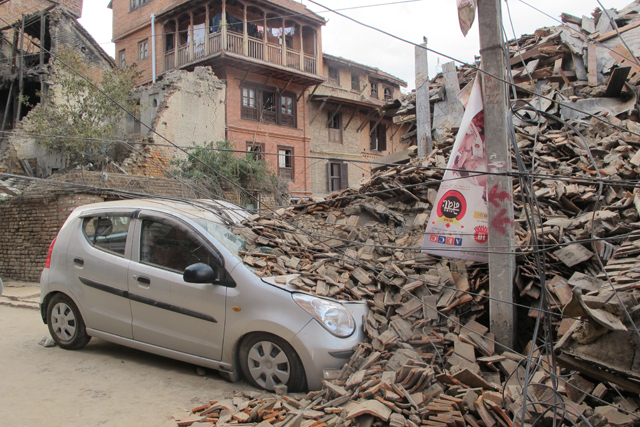
The main challenge remains getting rescue and relief out to remote and scattered villages, and evacuate the wounded. Although Indian and Nepali military helicopters made 100 sorties on Sunday, and brought 308 severely wounded to Kathmandu, there were overwhelmed by the sheer numbers of people living in spread out communities.
The logistical challenge was compounded because heavy-lift MI-17 helicopters could not land on steep mountainsides where the villages are located. So on Monday the MI-17s landed in the district capital, while smaller helicopters ferried the wounded from outlying settlements.
Besides Kathmandu, the death toll has been highest in Nuwakot, Dhading, Gorkha, Lalitupur, Bhaktapur, Rasuwa and Sindhupalchok districts -- all with more than 150 known fatalities. A multinational military cooperation is underway as India, China, Israel, Pakistan, Singapore, Britain, Sri Lanka and Bhutan have all contributed. Countries with Gurkha soldiers have brought them home for rescue and relief work.
Photographs taken by pilots of rescue helicopters showed villages precariously perched on steep mountainsides with very few of them left standing. Langtang Village is said to have been destroyed by a huge avalanche that fell off a glacier above the settlement. Many trekkers are stranded in Langtang, Budi Gandaki, Tatopani and other areas.
Meanwhile, Kathmandu airport is struggling to cope with the sheer volume of flights. Planes bringing in emergency relief are competing with regular flights for parking slots. The delays had a domino effect where some flights had to be diverted twice, while domestic flights resumed on Monday but with long delays because of congestion.
Reports from outlying areas of Gorkha, Dhading, Rasuwa and Sindhupalchok spoke of local people left to fend to themselves, sometimes digging out trapped relatives with their bare hands. In Sindhupalchok two people were rescued alive, and locals say digging equipment and specialised teams with sniffer dogs are immediately needed.
Chief Secretary Leela Mani Poudel told a press conference on Monday afternoon that the government was doing its best to cope with the crisis. He said what Nepal needed immediately were tents, specialised medical teams like orthopedics, and Collapse Structure Rescue and Search (CSRS) teams.
Kunda Dixit