
ERIC MUNCH in GORKHA
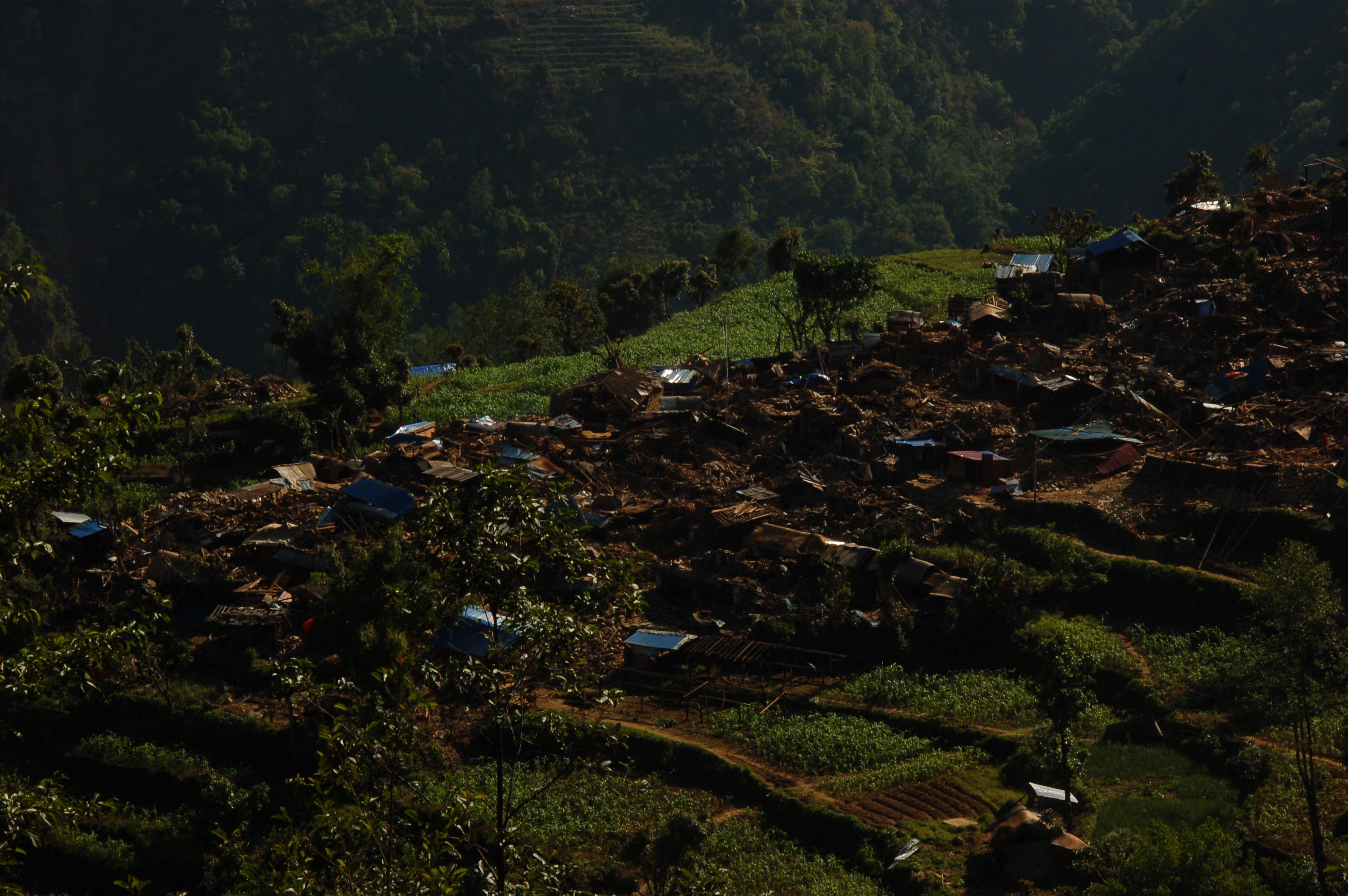 Barpak Village
Two weeks after the earthquake, global media attention is gradually losing its focus on Nepal. Although there has been some coverage of remote areas, the coverage of media and aid has so far focused on Kathmandu.
And as Sindhupalchok has dominated the headlines because of the sheer numbers killed there, Gorkha and Lamjung which were right at the epicentre remains in the shadows.
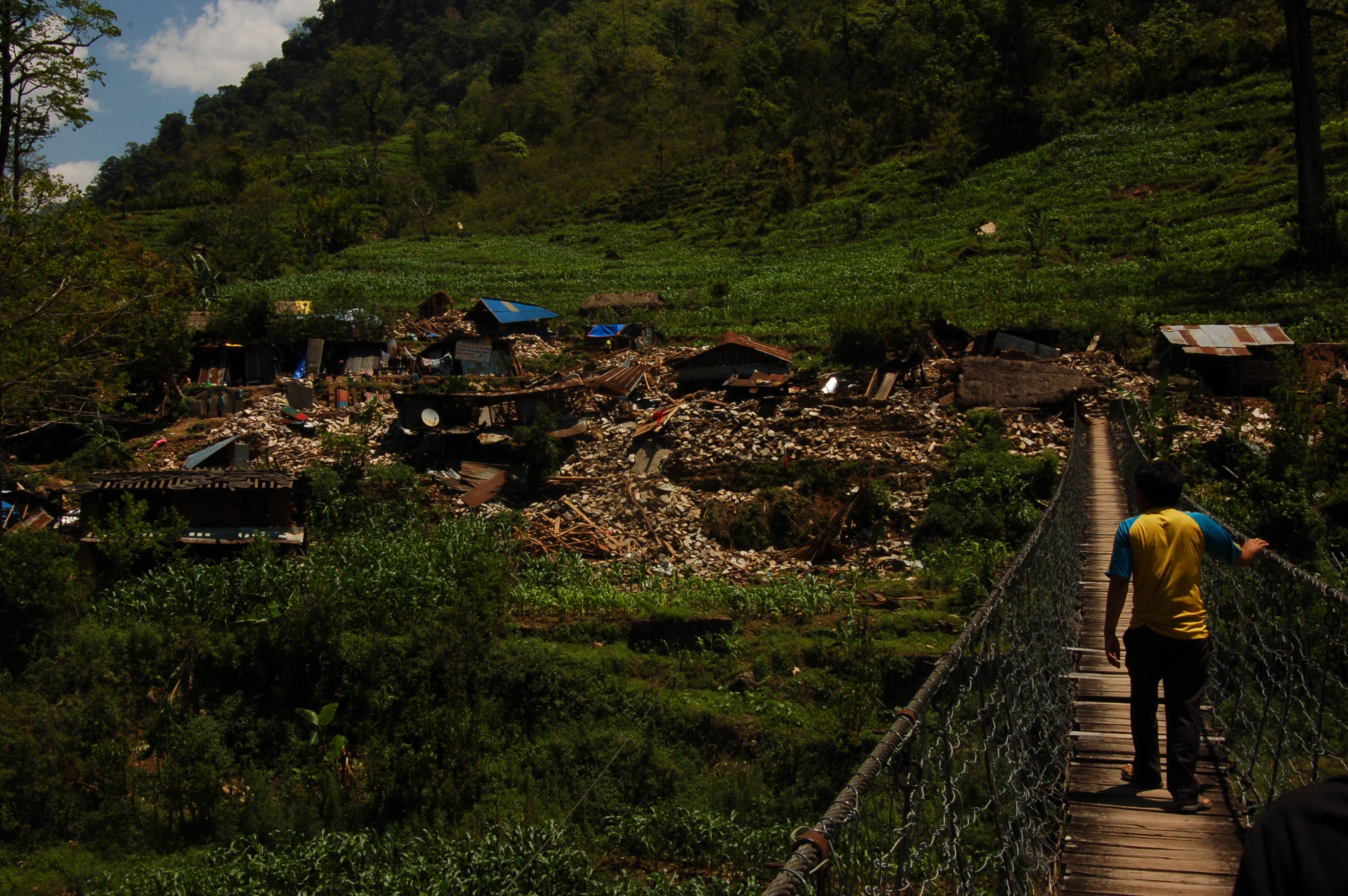 A settlement near Balua that was completely flattened.
On these mountains, villages after villages have been reduced to rubble. Everyone has lost a relative, a friend or a neighbour, or all of them. The villagers can tell stories about each landslide, each collapsed household and who lies beneath them.
In Kulgaun, Saurpani VDC, for instance, there is barely a house still standing. A close walk along the side of the hill away from it lies Pokhari, in the neighbouring VDC of Barpak where only tin roofs are visible among piles of bricks and rocks. Most of what remains from the school there is the door, still standing straight while the walls and the roof have collapsed all around it.
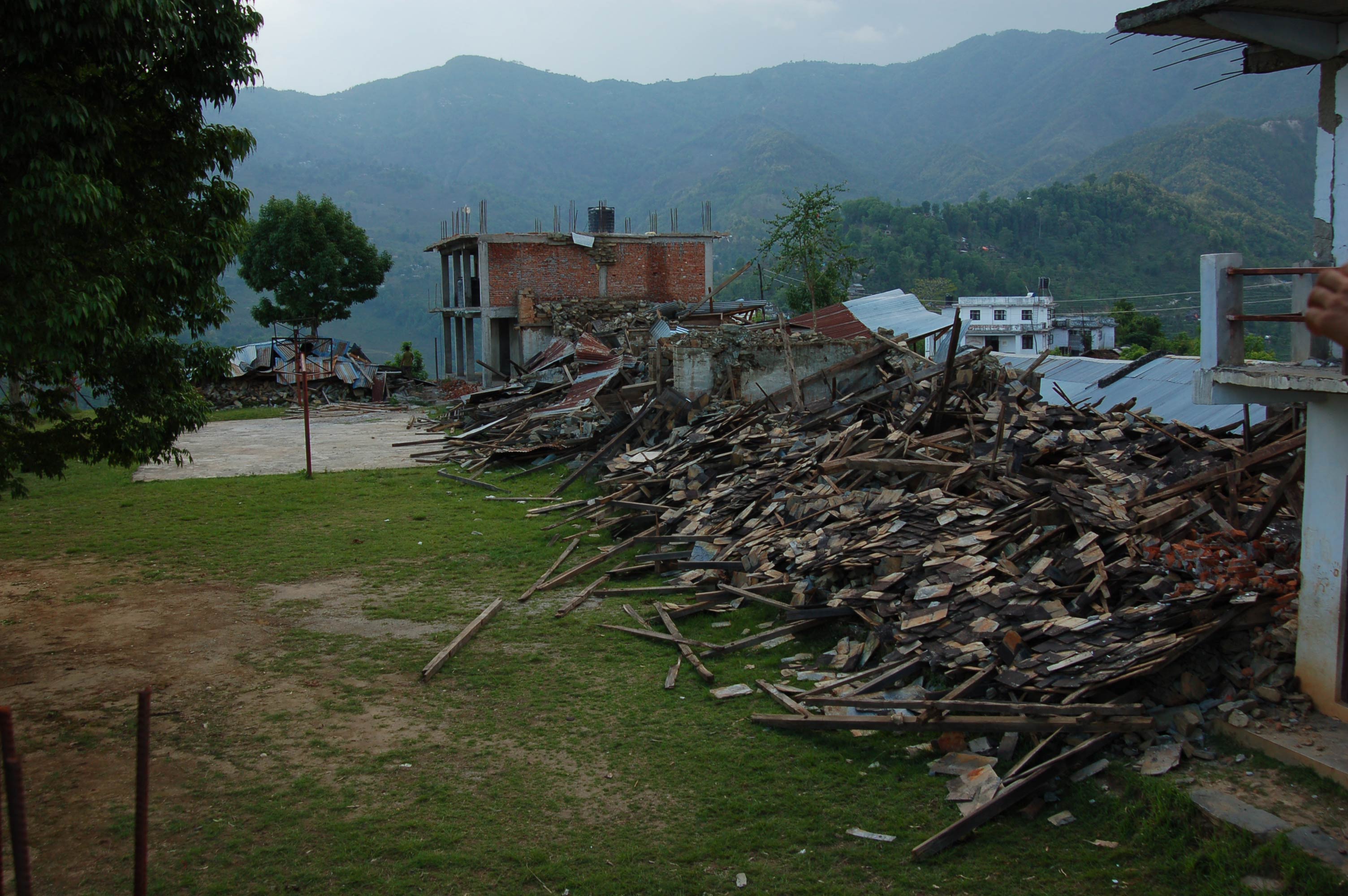 What remains of the Jaubari School in Gorkha.
The lack of help in this area can be explained by the topography, rendering almost impossible any form of large scale help. Landslides have badly damaged the roads, when they have not completely destroyed them, and even these roads don't go high enough to reach some of the most affected villages. Through alternative routes, several convoys carrying relief packages have managed to reach these villages, although irregularly. Most of them being the result of relatively small initiatives, they target small communities, often chosen with what can seem to be very arbitrary criteria, based on the results of a preliminary needs assessment mission and the insurance that the village in question hasn't already received sufficient help from anyone else.
The different actors of the help in the region all take part in this disparate and unorganised help effort. From down in the valley, it seems as if some organisations just picked a village at random and decided to help them, some villages receiving aid from multiple sources while others are simply left behind.
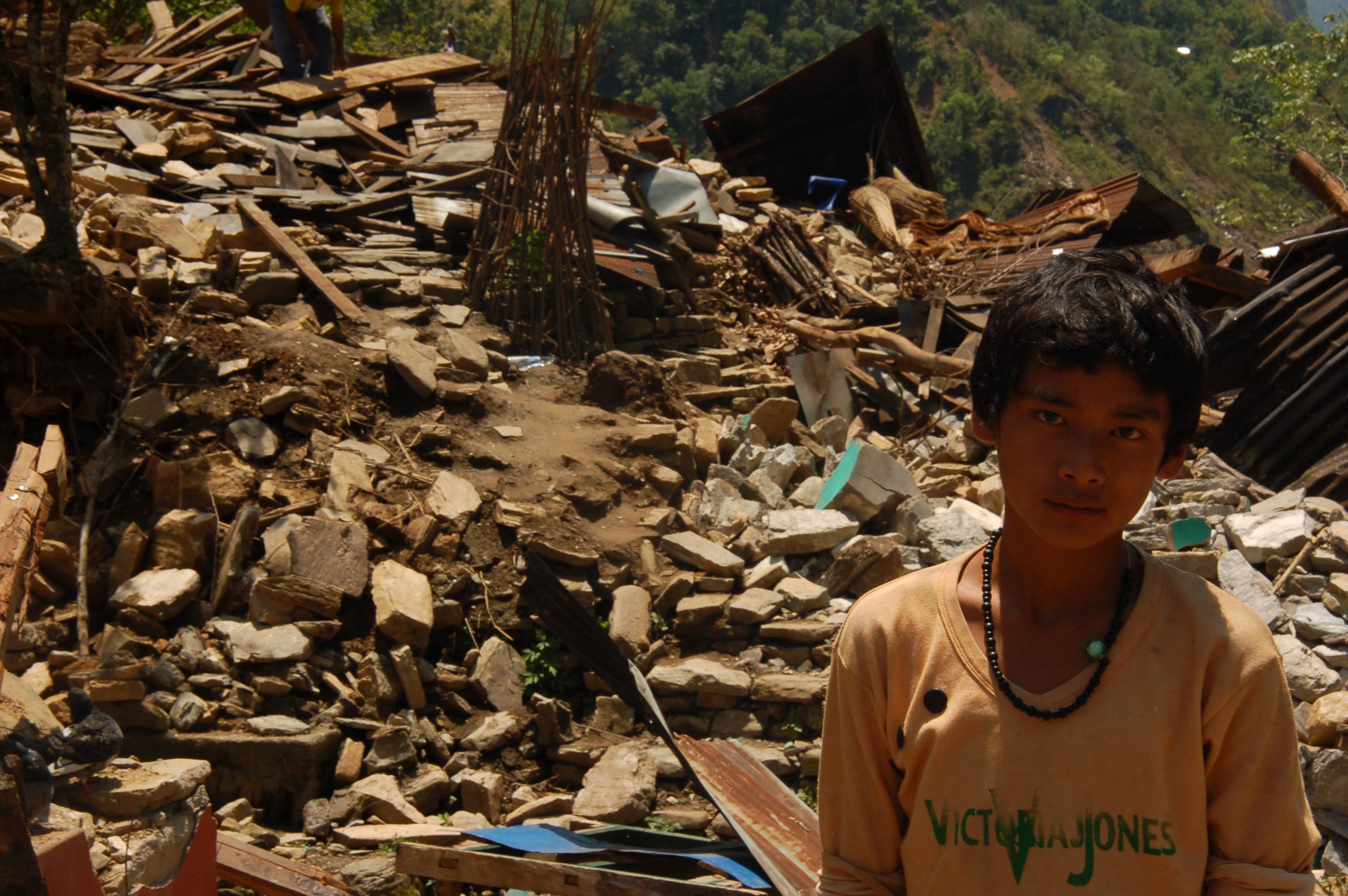 A boy stands infront of the rubble of his house where six people were buried.
The army occasionally drops care packages directly from helicopters, but it is far from bringing anything more than temporary relief to whoever gets to it first. Helicopters come and go incessantly, carrying out the same type of operations, only with more accuracy. Finally, non-governmental organisations, local or foreign, do their best to dispatch bags of rice, cooking utensils and blankets by land. The latter have the advantage of being in direct contact with the people they are helping, but their limited authority makes easy targets of their convoys, forcing them to coordinate their efforts with local armed police forces.
Local sources have reported several attempts by locals — frustrated by the lack of help —at diverting convoys from their initial target and take the supplies for themselves by coercion or theft. Armed forces personnel in Balua even mentioned a case in which villagers burnt down supplies when they were told that they would benefit another village. Also, it is not uncommon to see groups arrive with supplies that do not correspond to what the affected people need the most.
As time passes, attention will fade even more and those communities, which were already vulnerable before the earthquake might sink into oblivion if efforts to help them is not maintained and intensified. Attention tends to fade away, but problems remain, each passing day bringing its lot of new challenges to these people.
Read also: