
To revive tourism, let’s invite Indian Prime Minister Narendra Modi back to Janakpur, Lumbini and Muktinath
OM ASTHA RAI
Besides the death and destruction, last month’s earthquake has dealt the most devastating blow to Nepal's tourism industry. Hotels are damaged, trekking routes have been wiped out, Kathmandu’s World Heritage sites lie in ruins.
In the first weeks after the disaster, flights out of Nepal were full of tourists, then came the cancellations of booking, not just for May but for the rest of the year. Many hotels in Thamel have zero occupancy, although some of the bigger hotels have relief workers, aid agency representatives and crew of rescue flights.
Despite this, tourism entrepreneurs, experts and officials believe that the impact of the Gorkha Earthquake will not be long-term, and such is the draw of Nepal, its mountains and people that tourists will start coming back from the autumn season. In fact, this newspaper has started a social media campaign #VisitNepalAutumn2015, advising those who want to help Nepal to come here, go on long treks, use homestays and help create jobs.
#VisitNepalAutumn2015 Dhaulagiri from Mulde Peak, Myagdi pic.twitter.com/pTBbNSm7tU
— Kunda Dixit (@kundadixit) May 18, 2015
After the earthquake, several countries warned their citizens not to visit the country except if they were involved in rescue and relief. Today, Thamel wears a deserted look, the Everest Trail and other trekking routes are abandoned, and even Pokhara where there wasn’t much damage is largely empty.
Hotel owners, trekking companies and travel agents say tourism may actually start picking up even during the monsoon, since that is the ideal time to visit Manang, Mustang and Dolpo which are in the Himalayan rainshadow. Tibet-bound transit tourists would also be making stopovers, as in previous years.
"Nepal has a niche adventure tourism market and that category of visitors will not be deterred for long,” says Yogendra Shakya of the Hotel Association of Nepal (HAN). "We just need to spread the word that our infrastructure is intact and ready before the autumn season."
But he admits that there will still be residual hesitancy about visiting Nepal. "No matter how well we promote Nepal's tourism and say all is well here, they will still have their doubts,” he says, stressing the need for a creative promotion strategy.
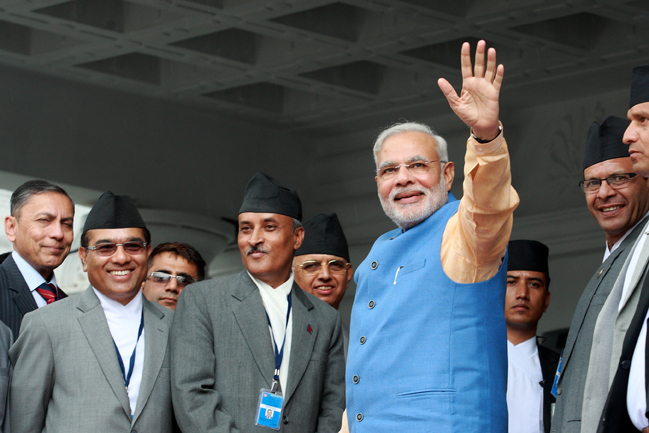 Photo: Bikram Rai
"For example, this would be the time for our prime minister to invite Indian Prime Minister Narenda Modi to visit Janakpur, Lumbini and Muktinath where he could not go last time,” Shakya says. “It would send a strong message to Indian pilgrim tourists and the world that Nepal is open for business.”
The international community has gone out of its way to help Nepal, and tourism entrepreneurs say that could be Nepal’s strongest selling point. We just need to convert that goodwill into a willingness to visit.
The government can actively promote trekking areas of the country not affected by the earthquake, pilgrimages, and conference tourism to get the industry back on its feet.
“Tourists should not be worried about Nepal, in a few months the hotels and infrastructure will all be restored,” says former HAN president, Shyam Lal Kakshapati. In fact, 90 per cent of the hotels are not damaged, and many that are can be repaired and retrofitted.
A government committee has inspected 15 hotel buildings, and only one of the wings of the Kathmandu Guest House in Thamel has a red sticker. All five-star hotels in the capital have got safe green stickers.
Amar Shakya, a member of the committee, says inspection was halted after the 12 May aftershock and will resume. "Our preliminary inspection shows most hotel buildings have not suffered structural damage," he says.
The government has already formed a Tourism Recovery Committee in partnership with HAN and Trekking Agencies Association of Nepal (TAAN) to repair damaged trekking routes, heritage sites and promote safe tourism destinations.
The earthquake was just the latest in a series of disasters to hit Nepal. Last year’s Everest avalanche killed 16 climbers, and the Annapurna blizzard in October left 80 people dead including foreign trekkers. Despite this, a record number of tourists visited Nepal in 2014, boosted by an influx of visitors from China and India.
Tourism has a capacity to heal itself, the only question is how will the Nepal tourism Board and the government deal with the necessary international promotion to bring visitors back in 2015 and beyond.
Read also:
Monumental loss Stéphane Huët
Extreme Everest Bhrikuti Rai and Matt Miller
After the storm Kunda Dixit