
 A meeting of the joint taskforce formed to prepare the framework of a deal between the Big Three parties and the Madhesi Morcha ended inconclusively even on Sunday, but leaders of the both sides claimed 'talks were positive' and a breakthrough was 'only a matter of time'.
After 150 days of Madhes unrest, four months of India's blockade and death of 50 people, the two sides have agreed to redraw federal boundaries by forming an all-party mechanism. A deal is now looking possible as the Morcha is no longer resolute about withdrawing protests only after creation of two federal provinces in Nepal's southern plains.
The two sides have also reached an understanding to give legitimacy to the all-party mechanism by getting it passed by Parliament. But differences persist over scope of the mechanism – and whether its recommendations will be obligatory.
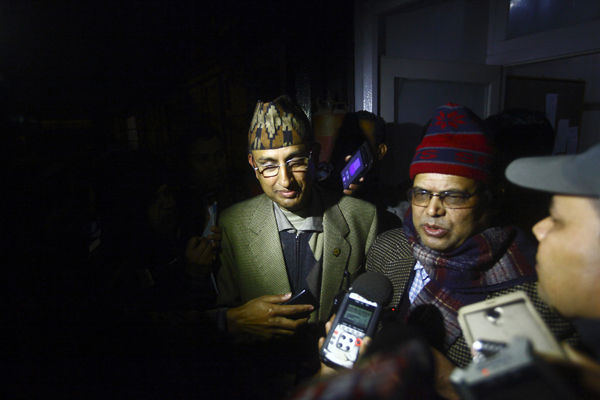
After Sunday's meeting, NC leader Mahesh Acharya, a member of the taskforce, told journalists: "The draft of Terms of References (ToR) of the mechanism is ready, but we are yet to finalise it."
Krishna Bahadur Mahara, who represents the UCPN (M) in the taskforce, said they were close to a deal and would hold further talks on Monday.
Hridayesh Tripathi, a Madhesi member of the taskforce, told journalists that they will brief their top leaders about the progress made so far and try to ink a deal at the earliest.
Sadbhavana Party, which had boycotted talks after its Chair Rajendra Mahato was thrashed by police in Biratnagar last month, also participated in Sunday's meeting, signaling that a deal is now within reach.
Mahato, who was in New Delhi for further treatment, also returned to Kathmandu on Sunday. He first went to the Indian Embassy and then met Prime Minister KP Oli.
Upon his arrival at Kathmandu Airport, he said: "I came to Kathmandu on a special request by Prime Minister. I hope an agreement will be signed soon."
After Madhesi parties began an indefinite strike in the Tarai in August, Mahato, a hardliner within the Morcha, had come to Kathmandu only once. He had spent most of his time leading Madhesi protesters, and visiting New Delhi for political meetings.