
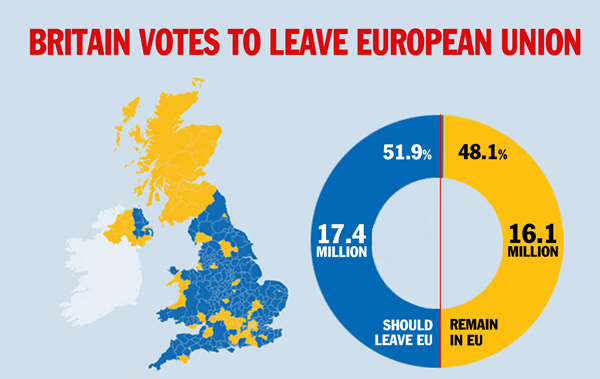
On Friday morning within hours of the ‘Leave’ win in Britain’s European Union (EU) referendum, the British pound had fallen by 13% and stocks plummeted in trading when East Asian bourses opened.
The result of the referendum will reverberate not just in Britain but will also be felt around the world, including in Nepal through remittances, aid, trade and tourism.
British citizens of Nepali origin — who number 95,000 — will see their earnings drop, and the British pound that they send home to relatives will have less value. There are many ex-Gurkhas and families who have moved to the UK, as well as other migrants.
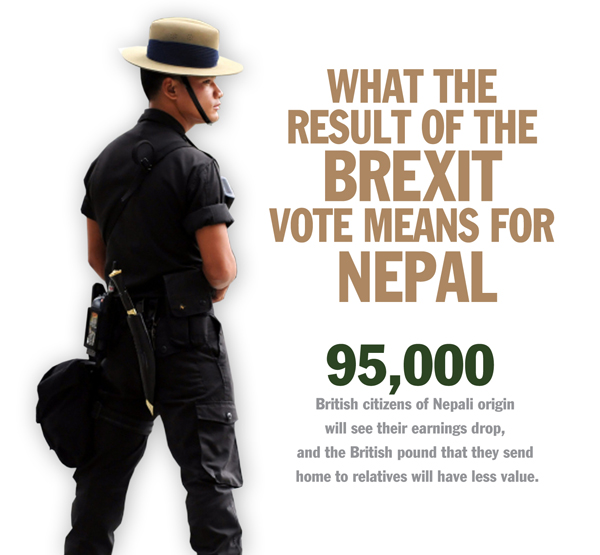
Rising xenophobia against foreigners will also impact on Nepali residents in the UK through greater social vulnerability, as well as through tighter immigration policies on new migrants.
The weakening of the EU as a result of UK’s exit will mean that effort towards regionalism elsewhere in the world, including South Asia, will also suffer. The European common market and European Parliament were pointing the way towards economic growth and equity through supra-nationalism. A weaker EU would indirectly mean a weaker rationale for SAARC and SAFTA, and therefore a diminished role for Nepal in pushing for regionalism.
Britain is the largest bilateral donor to Nepal, and also helps through multilateral agencies such as the UN as well as INGOs, including Oxfam, Save the Children, ActionAid, WaterAid. Any weakening of the UK economy and a rise of right-wing politics will lead to cutbacks in the official aid budget. A weakened EU may also be forced to reduce its own developmental outlays.
On foreign policy, Nepal may hope to benefit from greater focus by London, which had been forced to look at the world partially through European, American or Indian eyes. The takeover of so much of foreign policy by the EU and European Parliament — among other reasons — meant that London became less significant for Nepal.
Kathmandu has been irritated with the inability of Brussels to speak out during the Indian Blockade, and when Indian Prime Minister Narendra Modi went to London, Nepal figured in their joint communiqué. As Nepali officialdom saw it, with the rise of the EU, Whitehall seemed to give up its independent Nepal policy: becoming a part of EU and American strategy for Nepal.
Nepal could now demand more attention from the UK as a historical friend of Nepal, and in whose military Nepali citizens have served, and still serve. The hope in Kathmandu is that London has an independent focus on Nepal rather than through the prism of Brussels, Washington DC or New Delhi.
Manik Acharya in London