
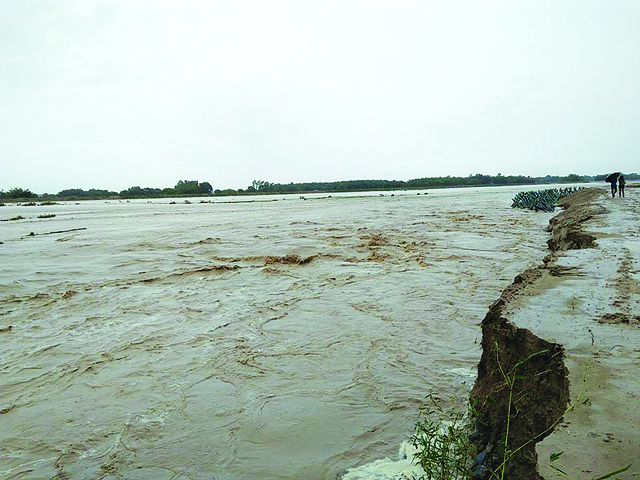
 Embankment destroyed by the flood in Khado river of Saptari district on 30 June. Pic: Shrawan Kumar Dev
Himal Khabarpatrika, 9-15 July
Every monsoon it is the same old story. The monsoon rains trigger landslides and floods, roads and bridges are washed off and villages in the plains get inundated. The media likes to call them ‘natural disasters’, they are natural but are disasters only because of man-made interventions. Encroachment into the floodplains of rivers, deforestation of the Chure, haphazard road excavation along slopes, growth and lack of priority for drainage, have turned what should be a predictable annual phenomenon beneficial for agriculture into a calamity.
Since April, 40 people have been killed in floods and landslides this year alone. Last year 257 people died, and more than 1,000 have perished in the past five years. According to statistics, August is the worst month for monsoon-related deaths because by then the soil is saturated with the previous month of rain. Due to the early rains, this year there are major landslides in July already. In fact, Baitadi saw a deadly landslide in April which used to be unheard of. The Met Department has explained the cloudbursts as being part of a westerly system that brought early rain. In other parts of the country the monsoon behaved erratically, after heavy pre-monsoon showers, the real rains started late and there haven’t been the prolonged light drizzles characteristic of monsoon precipitation. Such rain distributes rainwater more evenly, reducing landslide risk. Some scientists say this could be due to climate change.