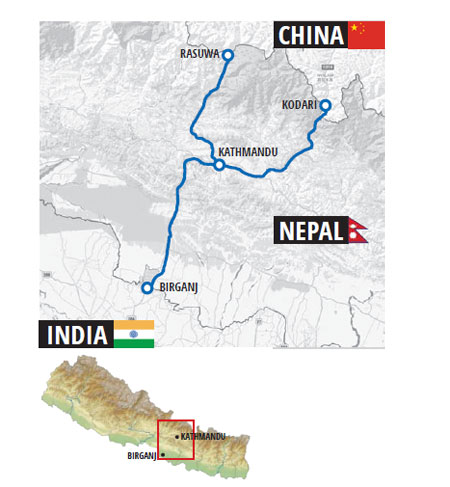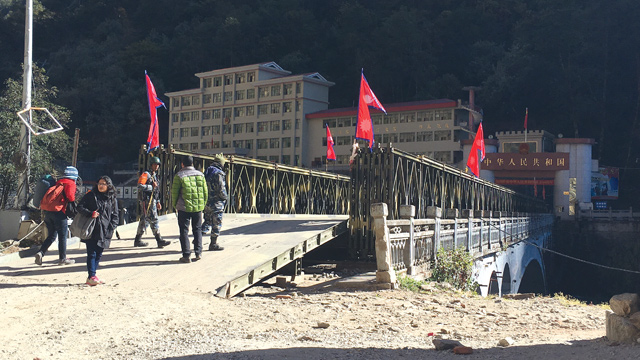
Time seems to have stopped at Kodari and Zhangmu, the once-bustling trading towns on either side of the border between Nepal and China ever since the April earthquake brought boulders the size of houses crashing down here.
The Friendship Bridge across the Bhote Kosi is damaged and lifeless. It is noon in Nepal, but 2:45 PM across on the Chinese side 25m away.
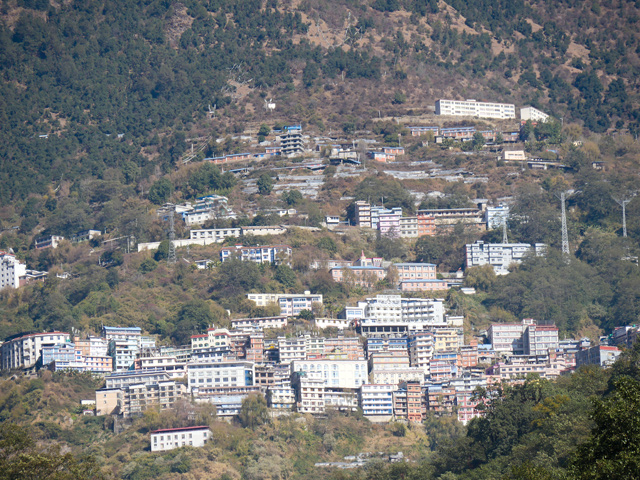
Khasa, the Nepali name for Zhangmu, was evacuated four days after the April earthquake, and seven months later the residents and businessmen still haven’t returned to this town with its multi-storey buildings clinging to the mountainside.
Khasa grew as trade between China and Nepal boomed in recent years. Nepali traders brought poultry, pork, vegetables, handicrafts and Buddha statues to Khasa, while Chinese consumer electronics, apparel and construction material flowed in the opposite direction to Nepal. Last year, bilateral trade at Kodari alone totaled Rs 171 billion.
Container trucks used to travel back and forth across the Friendship Bridge all day long. This week, there was only one Chinese border guard and one Nepal Armed Police facing each other at the bridge. The Chinese customs and immigration offices at Zhangmu are closed.
At the bridge, porter Lukman BK has brought a sack of grocery to deliver to a resident of Zhangmu, but the Chinese trader hasn’t shown up yet. That was the only Nepal-China trade going on at the border on Tuesday.
Seven months after the earthquake, most of the landslide debris has been cleared but the road from Kathmandu to Kodari is still rough. The highway on the China side is also badly damaged. There are ruins of homes, bent electric poles, dangling wires all along the roadside from Kathmandu to remind people of the ferocity of the quake, and the Nepal government’s lack of a sense of urgency in reconstruction.