Breaking the glass ceiling has never been easy for women anywhere. Nepali business women find themselves doubly disadvantaged: by the aggressive male-culture prevalent within corporate circles and the deeply-rooted patriarchal values of society. However, as more and more skilled and qualified women forge their way into senior management positions, they have become role models for younger females. Even then the women say they continue to feel discriminated and have to work much harder than their male counterparts just to prove their worth. Ramesh Kumar
Seema Golchha
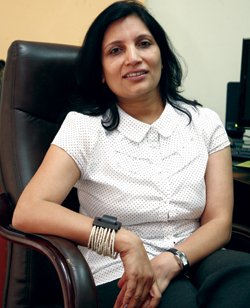
As a young marketing executive in India, Seema Golchha never pictured herself as a stay at home mom. But when she got married into a traditional Marwari family, where women working outside their homes is still frowned upon, Golchha quit her job and spent nine years as a housewife. In 2001 she began leading Him Electronics, a Golchha enterprise. “Family members were skeptical, but I didn’t lose heart,” explains Golchha. Today, Him is one of the fastest growing electronics company in Nepal selling international brands like Timex, Samsung, and Bajaj. Says Seema: “If my husband and father-in-law had not encouraged me, it would have been very difficult to make it to where I am today.”
Srijana Jyoti

Surrounded by a loving family, Srijana Jyoti led a life of comfort. But she was never quite satisfied being just a dutiful wife and mother. An MBA graduate from KU, Jyoti’s managed to keep her passion and business acumen alive even as she spent years taking care of her young children. Egged on by her husband and brother-in-law, she made a comeback to the corporate world three years ago and quickly rose to the rank of marketing director at Jyoti Group. “Working with family has definitely made the transition easier, but outside of my immediate office I have had to face difficulties,” she says.