
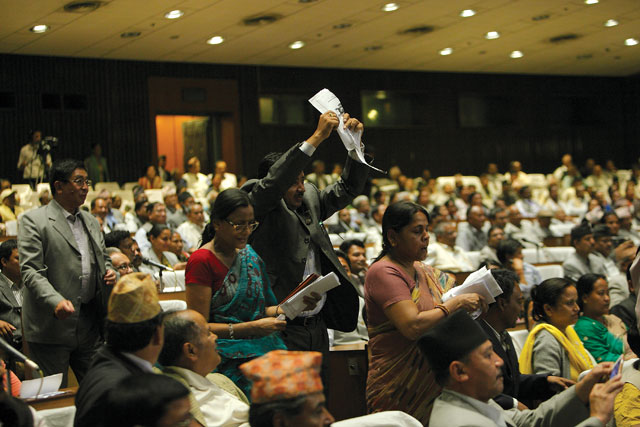
After seven years of enduring transition, when the Constituent Assembly of Nepal tabled the draft constitution this week, the entire nation should have celebrated. Instead, the document was torn to pieces inside the CA and torched in several districts around the country.
Going through the 120 pages divided into 36 chapters and 296 articles, one can safely say this is not a badly written draft. But it has some really dubious, if not objectionable provisions that reek of paranoia and xenophobia.
The good stuff first. There are elaborate directive principles of state policy which are motherhood and apple pie issues. Provisions like Article 35 boldly allow victims of environment pollution to sue wrongdoers. Article 36 makes basic education compulsory, while provisioning free secondary education for all. This must be matched by an equally bold education policy that guarantees high quality in public education, but first things first.
Sadly, the draft falls short on guaranteeing free quality state health care for all, escaping with the platitude of free primary health care. It is no secret that some of those involved in statute drafting are among the biggest investors in the country’s hospitals. The conflict of interest clearly shows.
But it is the second part of the constitution that lays out citizenship provisions that exposes the full paranoia of the drafters. For long women and the Madhesis have been treated as second class Nepalis, deemed unfit to acquire or unconditionally pass on citizenship to their children, because men in power cannot get over their obsession about the ‘purity of the Nepali male blood’. A third class citizenship provision that denies children of Nepali mothers married to a foreign national (read: Indians) from exercising equal rights in this land defeats the very purpose of the sovereign exercise.
The missing puzzle to Nepal’s citizenship debate is tied to the uncomfortable question of the open border, which even the victims of these provisions dare not raise. Ultimately, it is the state’s responsibility to identify and confer citizenship to those qualified and not punish legitimate citizens.
A stateless Madhesi citizen is disqualified from accessing public services including water, electricity, education, banking, etc. They are neither qualified for formal employment, nor can they apply for business loans or have land rights. The only thing they pass on to their children is their statelessness.