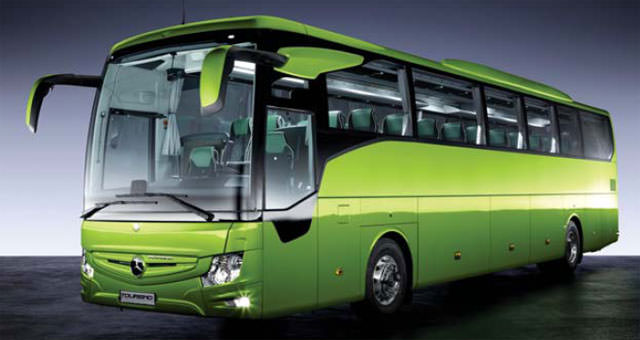
Many in Kathmandu fondly remember the green trolley buses that used to ply the 13 km Tripureswor-Suryabinayak route for nearly three decades.
They were clean, comfortable, convenient and way ahead of their time when introduced in 1975. Poor management caused the Chinese-built service to be scrapped, and all that remains are the rusting hulks of the buses in the Baneswor terminal.
But although Kathmandu’s iconic trolley buses are gone, and their electric poles uprooted, efforts have resumed to restore electric public transport. The government started looking at the possibility of battery-powered buses during the 2015 Blockade. Government officials visited China, while Chinese bus manufacturers and a European company specialising in converting diesel buses to electric came to Kathmandu to explore possibilities of working with Sajha Yatayat bus cooperative.
The stumbling block was the high upfront cost. But with improvements in lithium ion technology and the price of storage batteries plummeting, electric buses are no longer looking unaffordable. Sajha Yatayat, is working with the Global Green Growth Institute (GGGI) an inter-governmental organisation headquartered in South Korea, to prepare a pre-feasibility study of electric buses in Kathmandu.
Early findings show that although electric buses are expensive compared to the normal diesel ones, the operation and maintenance costs are significantly lower. If socio-economic and environmental benefits are factored into the equation, the total life cycle cost of electric buses is less than that for diesel ones. For example, the initial cost of a BYD Auto K-7 e-bus is about Rs20 million, but a similar sized diesel bus would cost only Rs3 million. However, fuel costs for the e-bus may be only about 10% and maintenance costs half of that for a diesel bus.
The study indicates that several full-size electric buses are viable for Sajha Yatayat’s intra-city routes, including those made by Ashok Leyland in India and China’s BYD Auto. The plans will be discussed at a workshop titled ‘Moving Forward with Electric Mobility in Nepal’ to be held on 6 February at the Himalaya Hotel.