
 |
In July 2009, the Liberian Truth and Reconciliation Commission published its final report in which Nobel laureate and country's President Ellen Johnson Sirleaf was listed as one of the accused. Sirleaf went on to fight her personal battle to convince the people and the court that her initial support for Charles Taylor was a mistake which she proved in the later years by contributing to his downfall.
In 2010, Newsweek listed her among the ten best leaders in the world, Time magazine counted her among the top ten female leaders and The Economist called her the best president the country has ever seen. The reason was simple: Sirleaf was honest and did what she could to reconcile a war torn nation by spearheading the formation of an empowered Truth and Reconciliation Commission which had the capacity to indict even the head of the state.
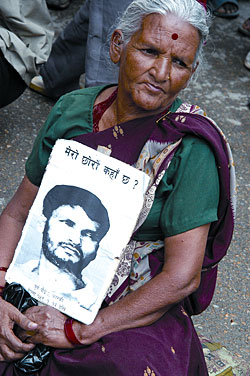
Presently, international attention is focused on two countries of the region which have recently emerged from devastating civil wars, Sri Lanka and Nepal. The Sri Lankan government has refused to admit its role in war crimes and set up a Lesson Learnt and Reconciliation Committee (LLRC) which absolves state security forces of all charges. In Nepal, there is hope that the proposed truth commission and another one that is designed to look into disappearances will have broader jurisdiction and investigations will be more transparent.
The commissions must account for crimes committed by both sides.Although the Nepal Army has argued that it has already investigated its soldiers in a military court, and that civilian casualties are jurisdiction of the state, cases must be re-investigated by a civilian body.
The mandate of the Truth and Reconciliation Commission and the commission to look into cases of disappearances should be expanded beyond the period of active conflict to include the last four years of transition, especially the Madhes movement.
The Maoist leadership must rise above partisan politics and their leaders must shed personal fears in order to establish their international credibility as a legitimate political force. They must form an impartial commission with a strong mandate. The opposition, for its part, must not use the reconciliation process to earn brownie points or start a political witch-hunt. Similarly, Madhesi leaders have an important role to ensure that incidents like the Gaur massacre and mindless killings during the Madhes movement are fairly investigated.