
Nepali tea may be making its mark in the world market, but coffee isn't far behind. 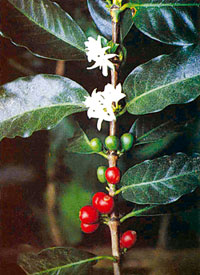 Unlike the British in Darjeeling or Ceylon Nepal never had colonial companies planting tea or coffee. Legend has it that coffee plants were introduced to Nepal only in 1938 by a certain yogi named Hari Giri who was fond of the caffeinated beverage, and brought seeds from Burma to cultivate coffee for his own use.
Commercial production, however, didn't start till 1976 with the import of Arabica coffee from South India. Nepali coffee is grown commercially in a scattering of over 17 districts in the midhills from 800-1,600m where the soil and climactic conditions are favourable.
Nepal is going for highland Arabica for the specialty coffee export niche market. Through private companies such as the Highland Coffee Promotion Company Ltd
(HCPCL), Everest, Plantec, Gulmi Cooperative Nepali coffee is now exporting processed green coffee beans for major coffee markets including the US, Japan and some European countries.
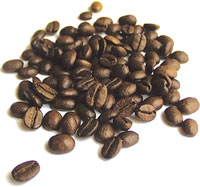 Last year, HCPCL shipped 23 tons of coffee to Holland Coffee in the United States which is a major supplier to the Starbucks chain. Production is still miniscule in proportion to the demand and Nepal's total exports of coffee beans in 2005 were only 65 tons but this set to grow with new marketing efforts.
Besides Gulmi in central Nepal, Kabhre is one of the major coffee-producing areas where Winrock International along with USAID and other partners are helping small farmers with market-led cash crops.
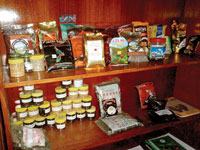 Subba and his colleague Ratna Bhuban Shrestha recently brought back coffee seeds from Sumatra for planting in Kabhre. Winrock also got coffee experts from El Salvador with Tekisic, Pacas and Pacamara seeds which are now available in Nepal through government-subsidised and private nurseries.