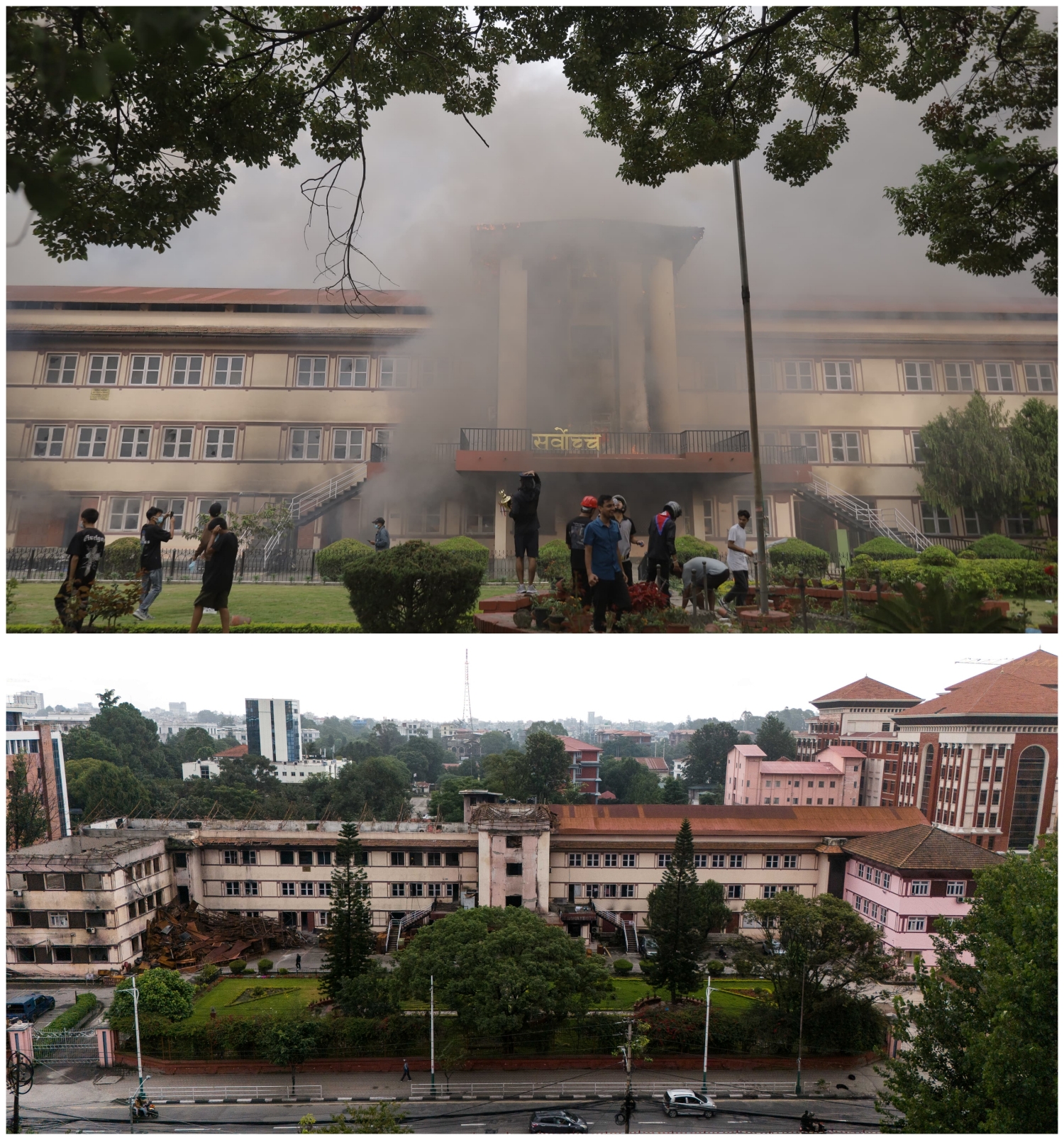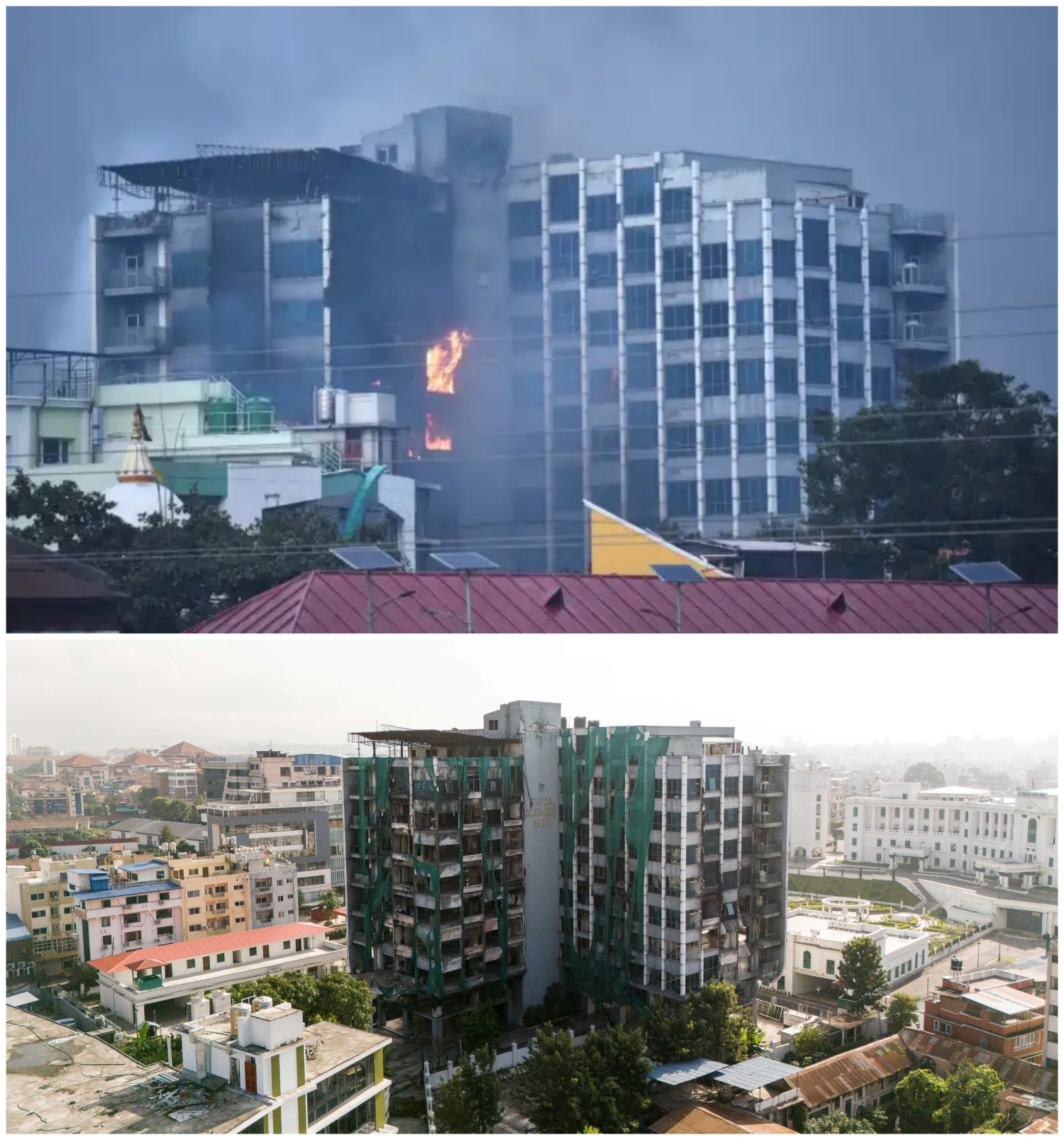
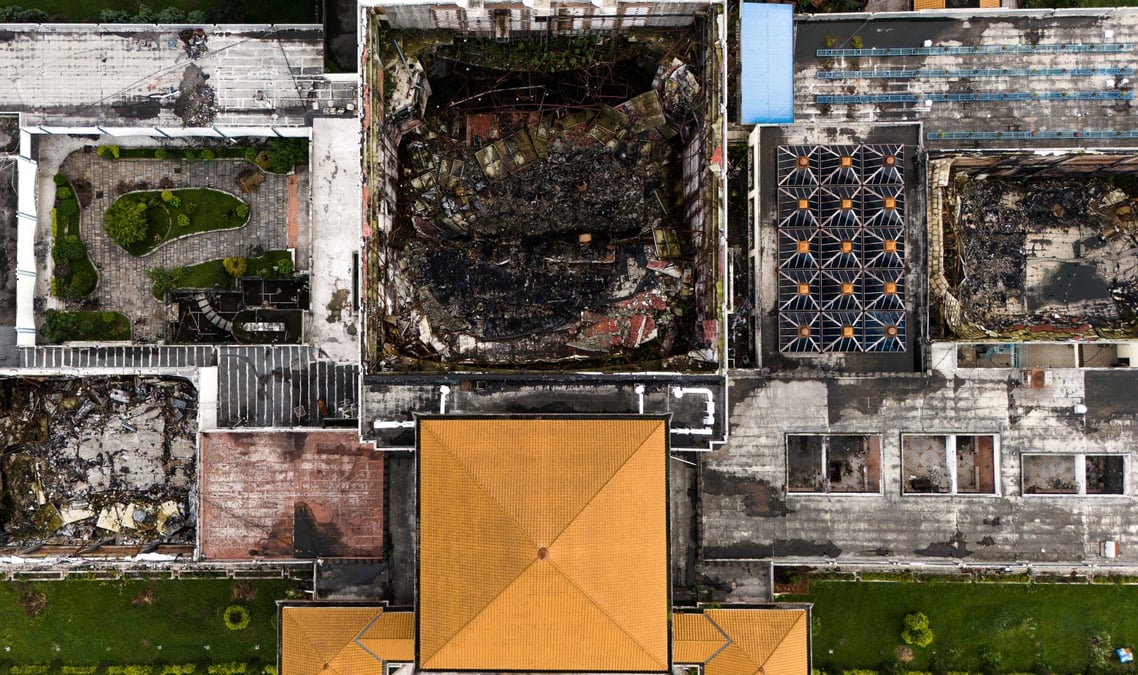
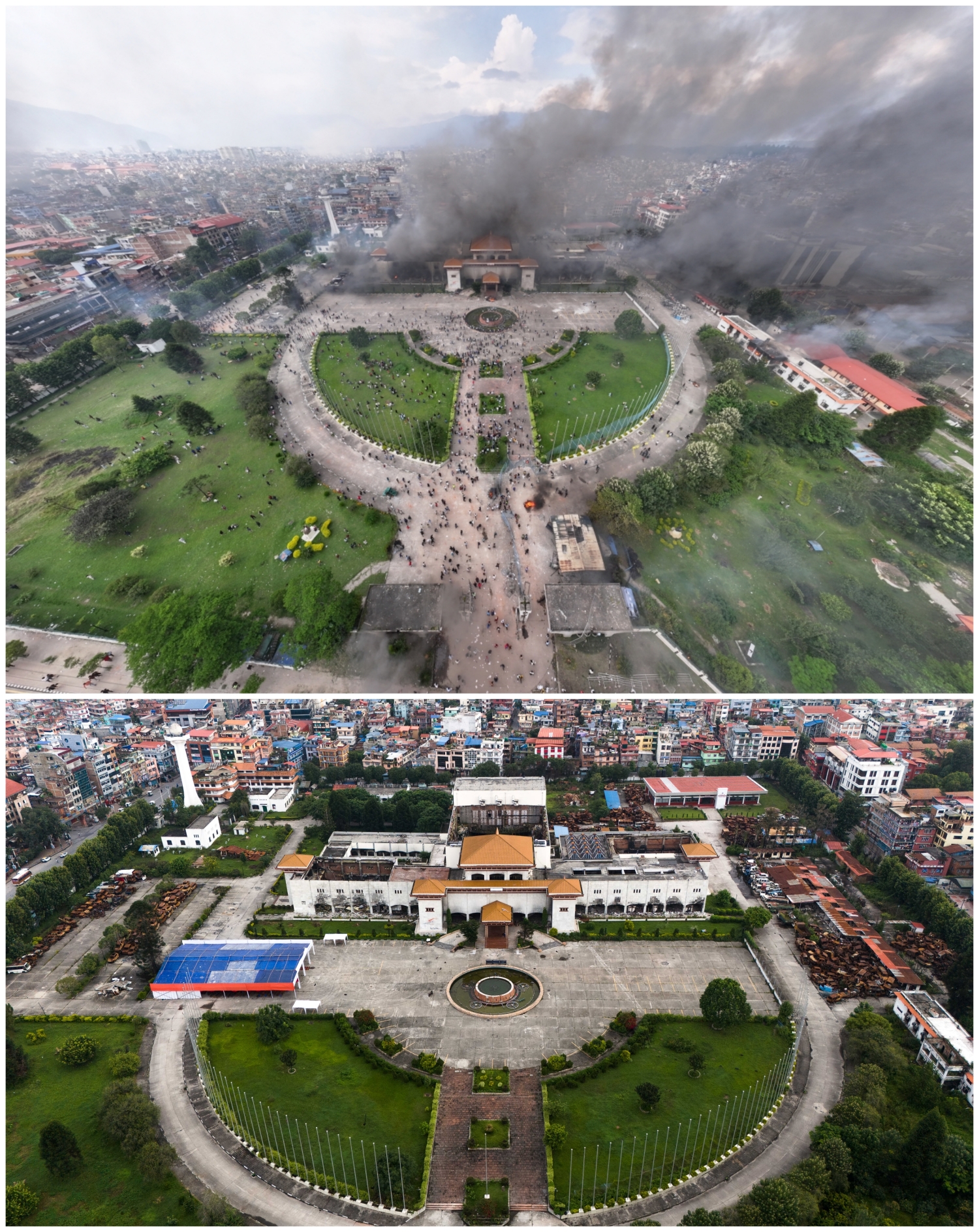
The massacre of 19 youth outside Parliament on 8 September 2025 ignited protests the next day that reduced to ashes all three pillars of the state: the legislature, judiciary and executive. The fourth estate was not spared, nor were schools and private businesses.
The report of the Inquiry Commission set up to investigate the two days of death and destruction detailed the first day, but did not bother with the second. Clips and photos of arsonists and looters of Nepal’s 9/9 can still be seen all over social media.
By the afternoon of 9 September, targeted arson gave way to class rage and mayhem with anyone with an axe to grind on the rampage. The buildings smouldered for three days.
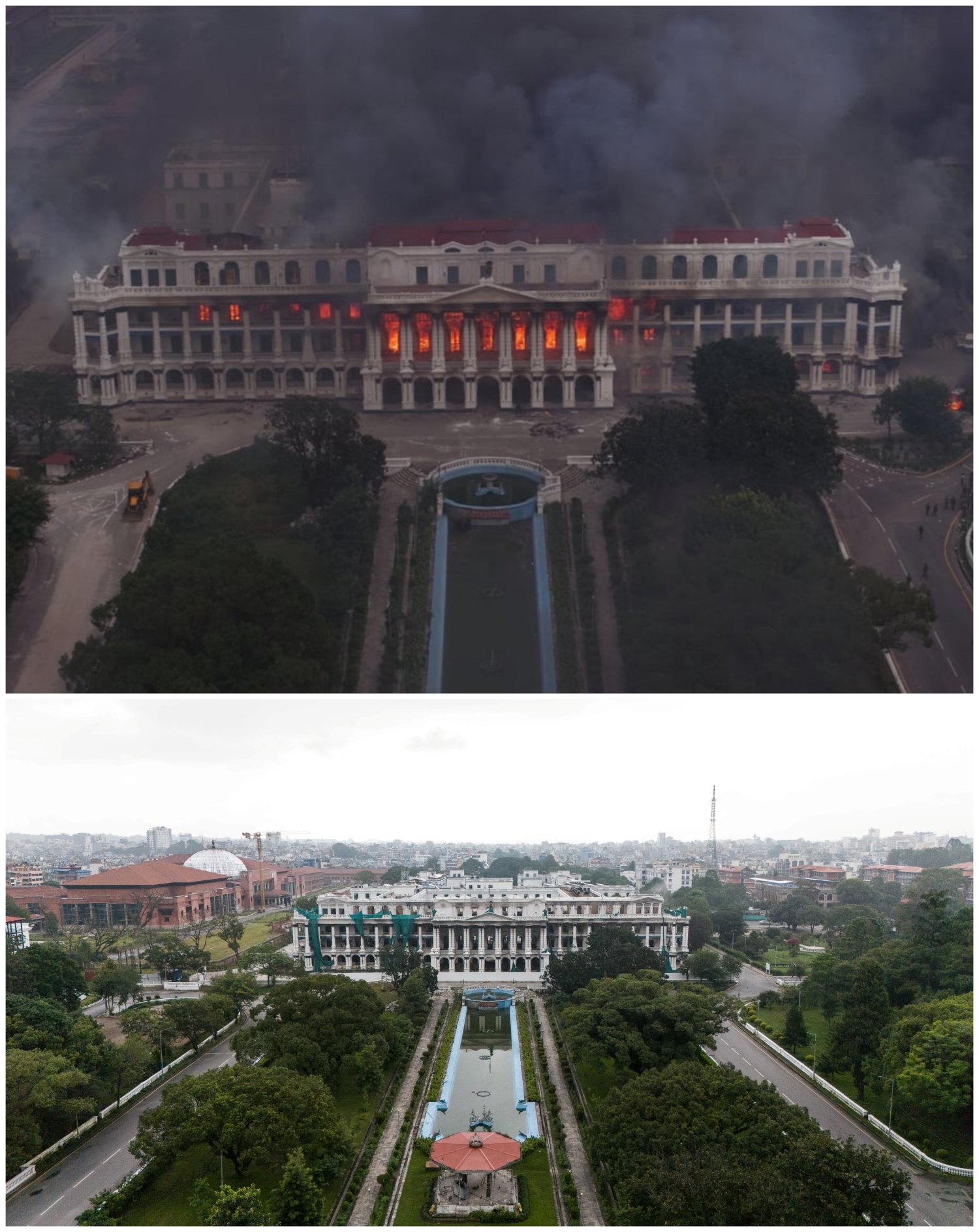
The September Storm led to an interim government and an election in which Prime Minister Balendra Shah’s RSP secured a near outright majority. It has not been an easy six months – the West Asia war set off a fuel crisis, the RSP was ridden with internal dissent, and then came the 26 August Trisuli Valley disaster.
One year after they were burnt down, we visited the ruined hulk of the old Parliament, Supreme Court, Singha Darbar and Kantipur. The new Parliament and Supreme Court buildings are nearing completion, Singha Darbar is being renovated for the second time after damage in the 2015 earthquake. Kantipur works out of newsrooms in Tinkune while its high rise in Thapthali is repaired.
The ruins are enduring symbols of unfinished business, administrative dysfunction and impunity.