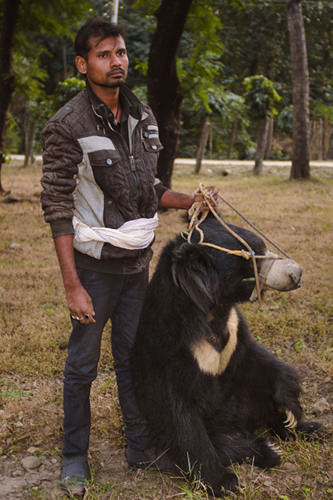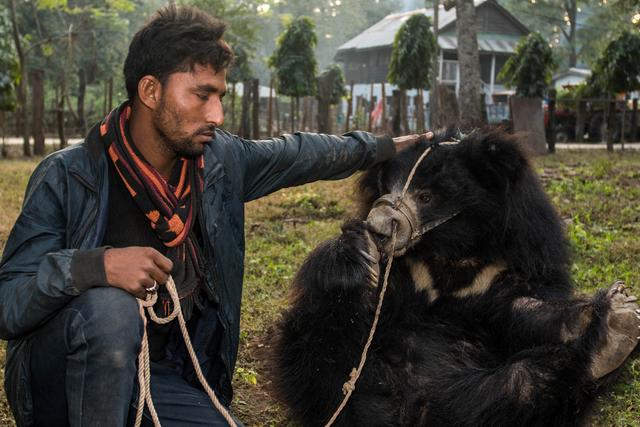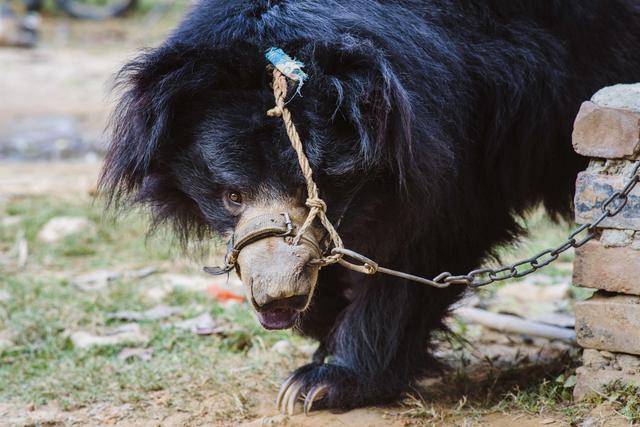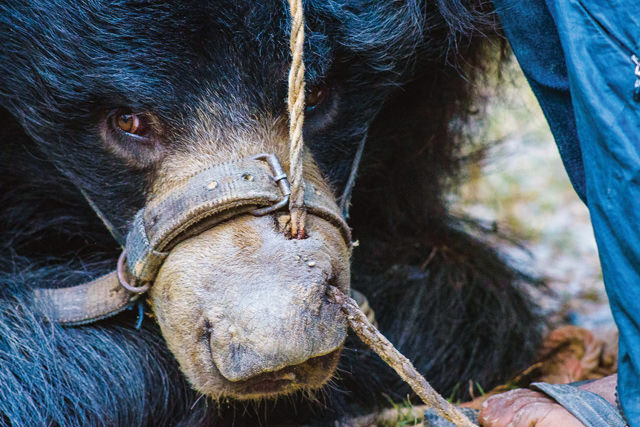
Sloth bears Rangeela and Sridevi had their noses pierced with a hot iron rod and a rope tied through the cavity when they were both seven months old. But thanks to the efforts of the Nepal police their years of torture and captivity have ended.
Authorities apprehended the last two known dancing bears in Nepal and their owners at 9pm on a foggy winter night Tuesday on the outskirts of Gaur. They had been on the run for four days, travelling 160km across the eastern Tarai from Sukhipur of Siraha District.
With the use of sophisticated cell-phone tracking by the Central Investigation Bureau and information from animal welfare activists, the Rautahat police in Gaur were able to geolocate the bears’ owners, before moving in to make the arrest this week.
The Jane Goodall Institute Nepal provided crucial ground intelligence on which the local authorities in Simara could act. Two trackers from the foundation had been following the bear owners from Siraha pretending to be buyers of herbal remedies. Gaining the trust of the owners, the trackers were able to obtain video footage of the dancing bears and maintain close contact with family members and the owners themselves.
Rangeela, a 19-year-old male, and Sridevi, 17, were fed a diet of milk and rice two times a day. They were controlled by the nose with a piece of rope while the owners carried sticks to keep the bears in check. Poached in the wild in India as cubs, the bears had their canine teeth removed, and suffered trauma and injuries throughout their lives because of harsh training methods.
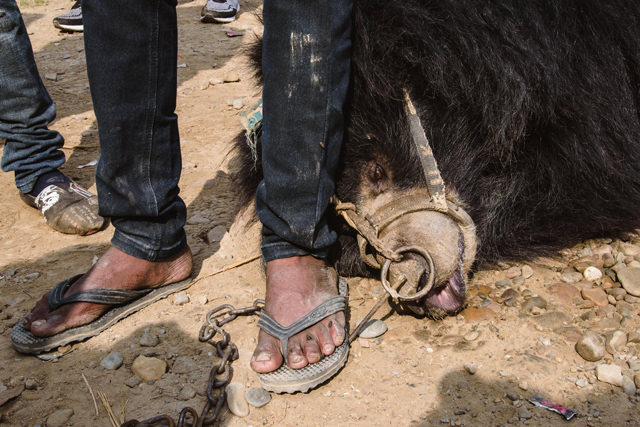
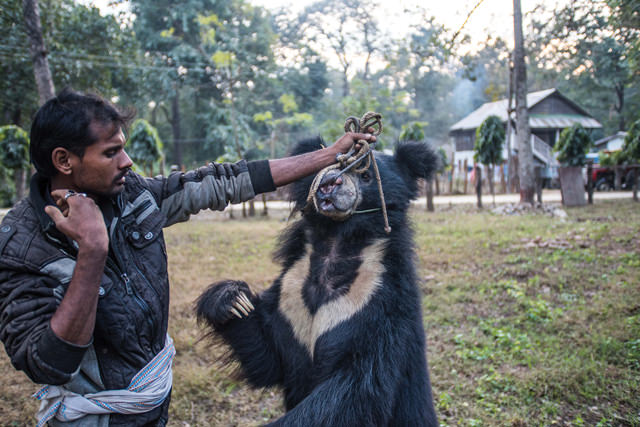
Dancing bears are forced to perform in front of crowds, standing on their hind legs and swaying left and right. The pace of the dance is controlled by tension on the rope through their nose.
Performing bears were banned in India in 1972, and in Nepal a year later. Rescued bears are often sent to sanctuaries in Agra and Begaluru in India.
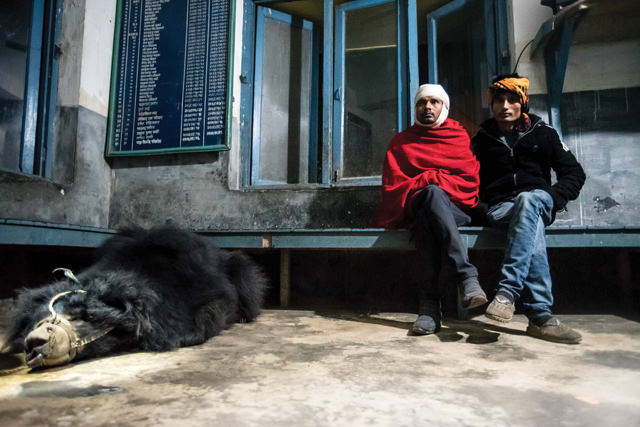
At the Gaur police station after being rescued, the bears showed visible signs of stress and aggression, cowering, pacing and sucking their paws. “They are clearly upset: pacing up and down, making noises and jumping on benches,” said Neil D’Cruze of World Animal Protection (WAP), an expert on captive sloth bears who has rehabilitated bears in India.
“It’s really tough, watching the condition of the bears. The only positive note is that very soon the bears will be off to somewhere they can live the rest of their lives happily,” he added.
Nepal's National Parks and Wildlife Conservation Act 1973 banned the possession of sloth bears for dancing, however on the fringes of society in Nepal and India the illegal practice continued because law enforcement turned a blind eye.
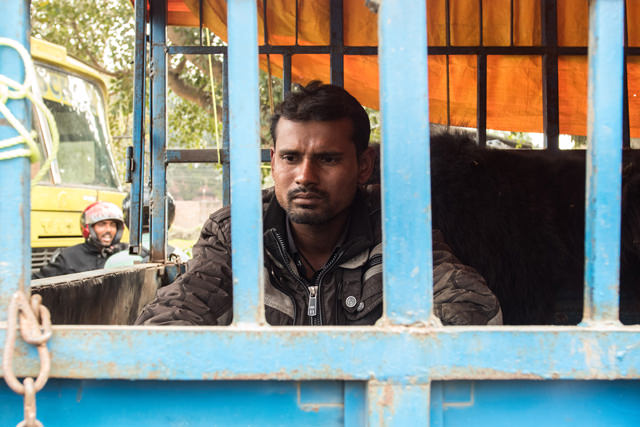
Anyone caught with sloth bears faces a Rs10,000 fine and Rs40,000 bail upon arrest, but in this case the bear owners cooperated with the authorities and were released. Rangeela and Sridevi were taken to Parsa National Park, where they will be temporarily cared for.
The two are believed to be the last dancing bears in captivity in Nepal. Said Police Superintendent Yagya Binod Pokharel in Gaur: “This is not a deliberate, organised crime, but rather the remnant of a practice that has been going on even though it was criminalised over 40 years ago.”
A dying practice
Along the porous, Tarai border between Nepal and India, owners of illegal dancing bears have been dodging the police ever since the practice was banned in 1973. Yet on both sides of the border, circus bears have been performing, moving from the cities to the hinterland.