
 BIKRAM RAI |
The lives of widely admired statesmen often don't get much attention in their lifetimes. The media tends to focus on the more insalubrious characters in the political firmament. This is particularly the case in developing countries such as Nepal, where political corruption is taken for granted.
When politicians are praised, it is often only when they pass away, and flaws are graciously overlooked and virtues extolled to the heavens. Inevitably, assessments depend as much on the milieu in which said politician existed as in their inherent qualities.
When Girija Prasad Koirala died, his many critics stood back for the most part. Others scrambled to praise him, if only for his political longevity. With Krishna Prasad Bhattarai, the tipsy 'saint' of years gone by, the accolades would have flowed easier, not least because he had expired as a political force some time ago.
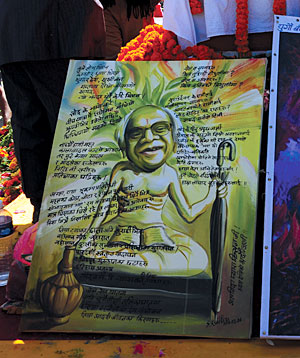
But of course Bhattarai, in his Gandhian guise, was an uncommon politician. He furnished a fairly unsullied link to the heady days of the first revolutions of Nepal. Whatever his shortcomings, he is remembered as the prime minister who brought together Nepal's interim constitution at a time when a quick transition to true democracy still seemed possible. In his spartan tastes (notwithstanding certain indulgences) he provided a stark counterpoint to every avaricious politician we have been forced to endure since.