The people in the mountains of Nepal do not know that the futures of their children and grandchildren are tied up with how the preparatory meetings for the international climate change conference next week in Copenhagen go.
Will the rich countries agree to cut back to 40 per cent of 1990 emissions in the next ten years (which scientists warn is needed to keep the average rise of global temperatures to within two degrees Celsius) or will they stall at the 13 per cent the Americans say is as far as they can go? The Copenhagen meet will also reveal whether the rich countries are actually willing to help developing countries make the switch from fossil fuel to renewables, and whether they will help to fund adaptation measures so the world's poor can cope with rising sea levels and receding snowlines.
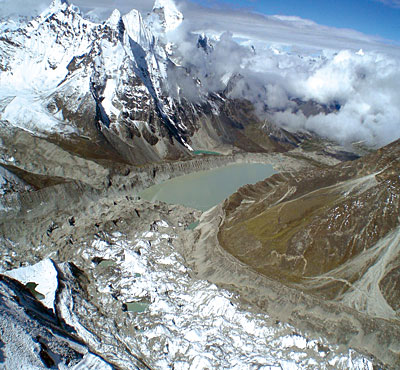
Maps of the Everest region from the 1960s show no water in the Imja Glacier below Lhotse. Today there is a lake here two km long, 500 metres across and 100 metres deep. If Imja Tso bursts, it will unleash a catastrophic flood downstream.
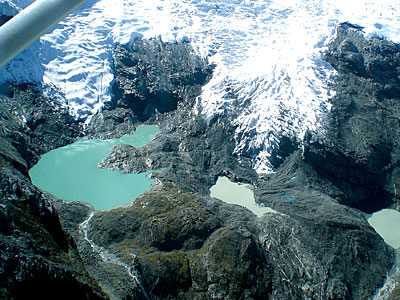
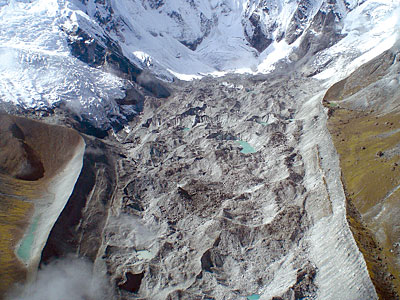
Melting glaciers and receding snowlines are the most dramatic visible proof of global warming. Nearly 1 billion people downstream in China, southeast Asia, India and Pakistan depend on the Himalaya and the Tibetan plateau for water.
But the focus on snow and ice takes attention away from the water. The Himalaya is also a gigantic sponge storing groundwater. In fact, scientists estimate that only nine per cent of the water in the Ganga is from melting glaciers. The rest is from monsoon runoff, and climate change is also affecting weather patterns, leading to extreme rainfall events and droughts.