

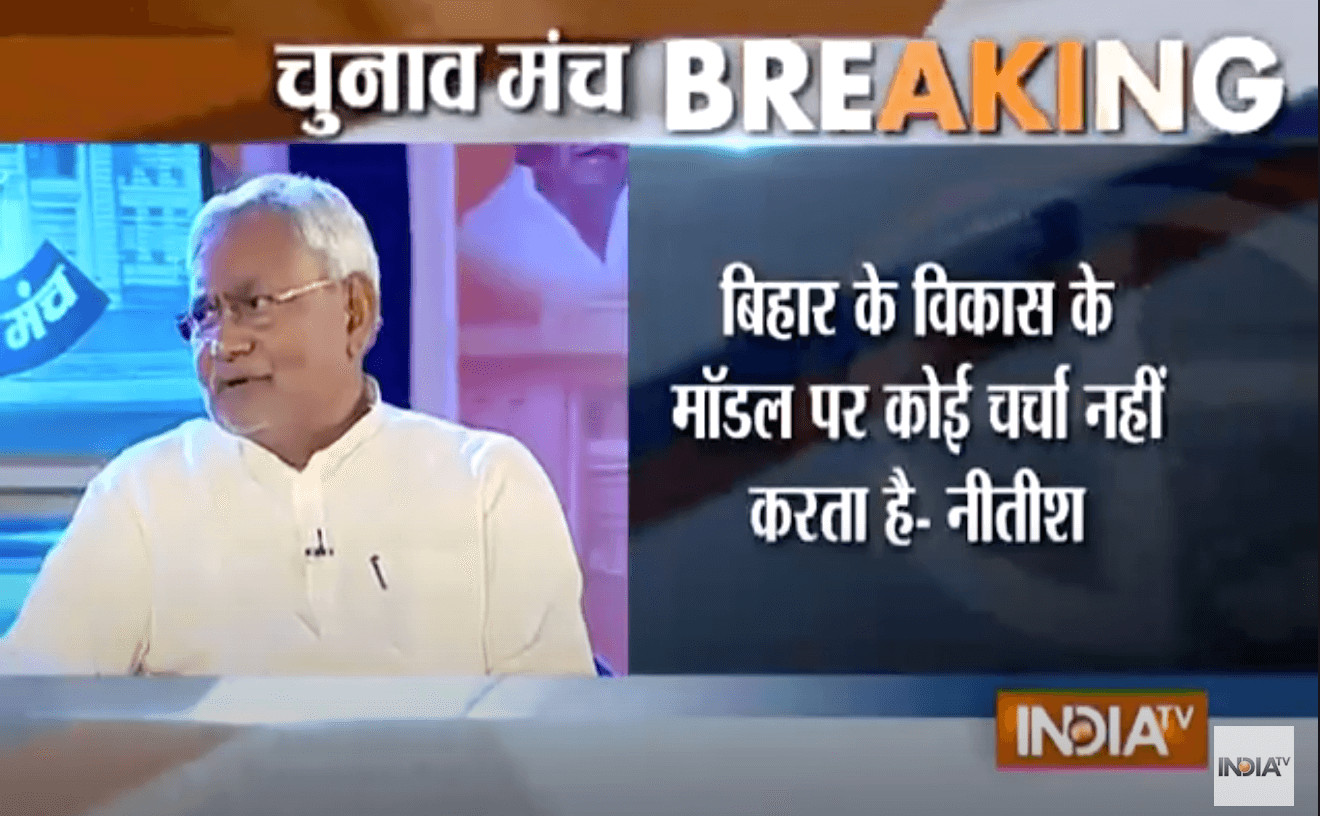
Nitish Kumar is set to return as the chief minister of Bihar state for yet another term in a tightly fought contest in which he leveraged Prime Minister Narendra Modi’s popularity and the NDA (National Democratic Alliance). His win has important implications for bordering Nepal.
The Nitish-led NDA managed to secure an absolute majority of 125, three more than the half-way mark needed in the 243-member Bihar state assembly. However, it is the BJP that has emerged as the senior partner in Bihar for the first time with 73 seats.
Modi, whose campaigning in Bihar paved the way for the NDA win, called it a mandate for “a self-reliant Bihar”. BJP stalwarts in New Delhi have also called the victory people’s desire for good governance and development revolving around Modi’s call of “Sabh ka Saath, sab ka vikas, sab ka biswas.” (Everyone’s Trust, Everyone’s Development with Everyone)
Although Modi has given Bihar to Nitish Kumar as he has been a valuable ally for the BJP, the Chief Minister can now only play second fiddle in policy making, with BJP maintaining stronghold in the state. So far Nitish-BJP dynamics was of equal partnership, but the new mandate will diminish Kumar’s stature and credibility.
Bihar has a 726km long border with Nepal, the longest among five states. Most of Nepal’s trade with the outside world passes through two checkpoints on this border, which were blockaded for five months in 2015 during the Madhesh Movement causing a humanitarian crisis in Nepal.
The people on both sides of the border share similar languages, culture and history, and also similar problems of development and caste divisions. The open border has also facilitated a fake currency racket, contraband of all sorts, human trafficking, and after Nitish Kumar declared Bihar dry, thriving cross-border alcohol smuggling.
A serious issue has been that of annual flooding and inundation. Nitish Kumar has been vocal on this matter mainly since 2008 when Bihar was badly affected due to a breach in an Indian-built embankment of Kosi river in Nepal.
However, no progress has been made in the management of crossborder rivers like the Kosi. In August, Nitish Kumar unnecessarily criticised Nepal over “non-cooperation” in Bihar’s flood management efforts. He requested Modi to intervene in order to resolve this “serious” matter.
As per the Indo-Nepal Treaty, Bihar government’s water resources department executes the flood management work along the border. But it is futile to blame Nepal wholly when other cooperative frameworks have not been fully functional between the two countries.
Impact of Bihar polls on Nepal, Editorial
Cooperation is subject to dialogue between the two central governments, and state governments have very little influence over foreign policy matters in India. In his new term Chief Minister Nitish Kumar is in a good position to seek timely embankment works and encourage state and central government bureaucrats to speed up the long-standing water management issues between the two countries.
Nitish Kumar has been Chief Minister for 15 years, and his performance in delivering infrastrcuture and social development has waned. His alliance partnerships in the past have dented the Nitish brand.