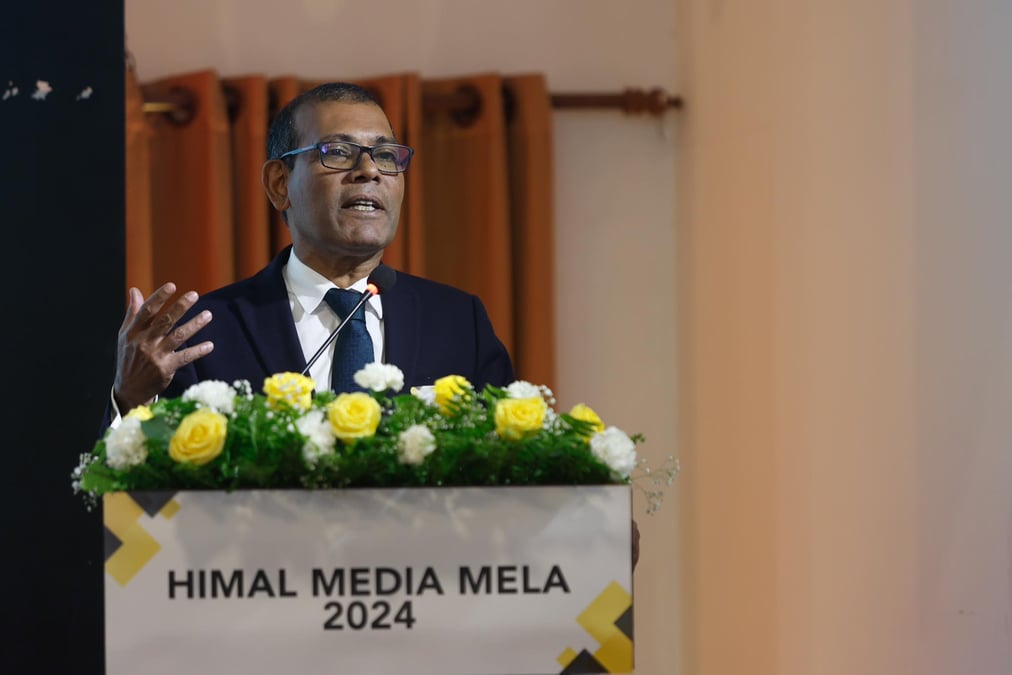
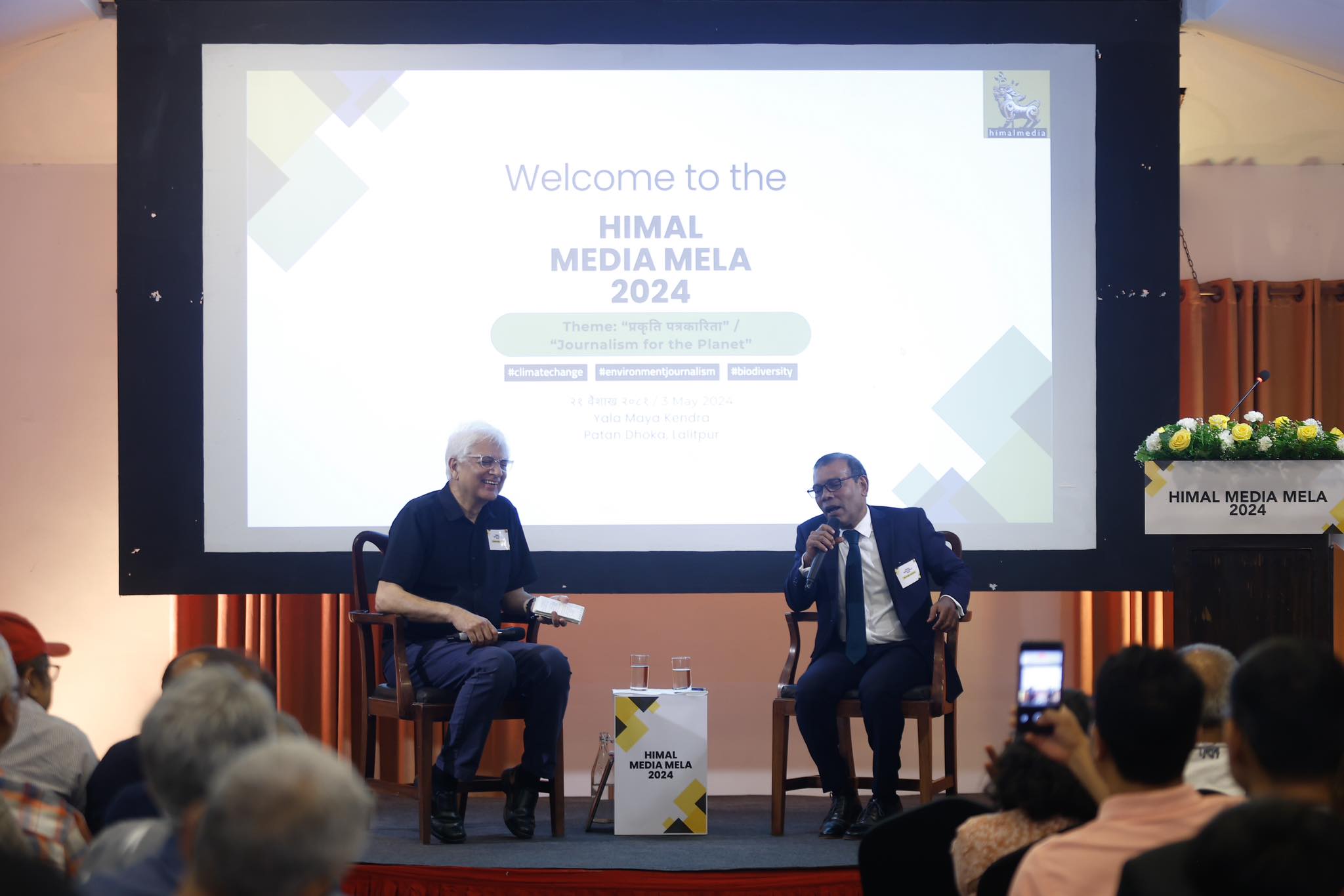
The third Himal Media Mela opened on World Press Freedom Day on 3 May, adopting the UNESCO theme to focus on the link between the media, politics and environmental action. Mohamed Nasheed, former president of the Maldives, a climate activist and a writer/journalist was the keynote speaker.
“The danger that the journalists face is immense and it continues. Just this year more than 100 writers were murdered in Gaza simply for telling the truth and sadly it will continue,” said Nasheed who was jailed for 12 years, 18 of those months in solitary confinement where he was tortured for his writings on corruption and the abuse of human rights by the government in the Maldives.
He added: “Therefore it is encouraging to see all of you here making a stand for no media in South Asia has had the resolve, the courage and the consistency to continue in their work relentlessly for so long as Himalmedia.”
Kunda Dixit, co-publisher of Himalmedia started his welcome remarks with a quip about disrupted Internet service on World Press Freedom Day before quickly drawing attention to how journalists reporting on illegal logging or mining have actually been killed in the Philippines, Brazil, Mexico, and India.
Even in Nepal, the press has come under fire for reporting about the Chure deforestation, illegal sand mining, logging, wildlife trade and the crusher industry, especially their interlinkages with politics and corruption.
“Even as human activity globally has endangered nature and threatened all life on the planet, journalists reporting on these issues face threat, intimidation, or are silenced by abusive trolling,” said Dixit.
He added: “It is no coincidence that the threats to environmental journalists come from the same sources that are undermining democracy, pluralism, and freedom of expression.”
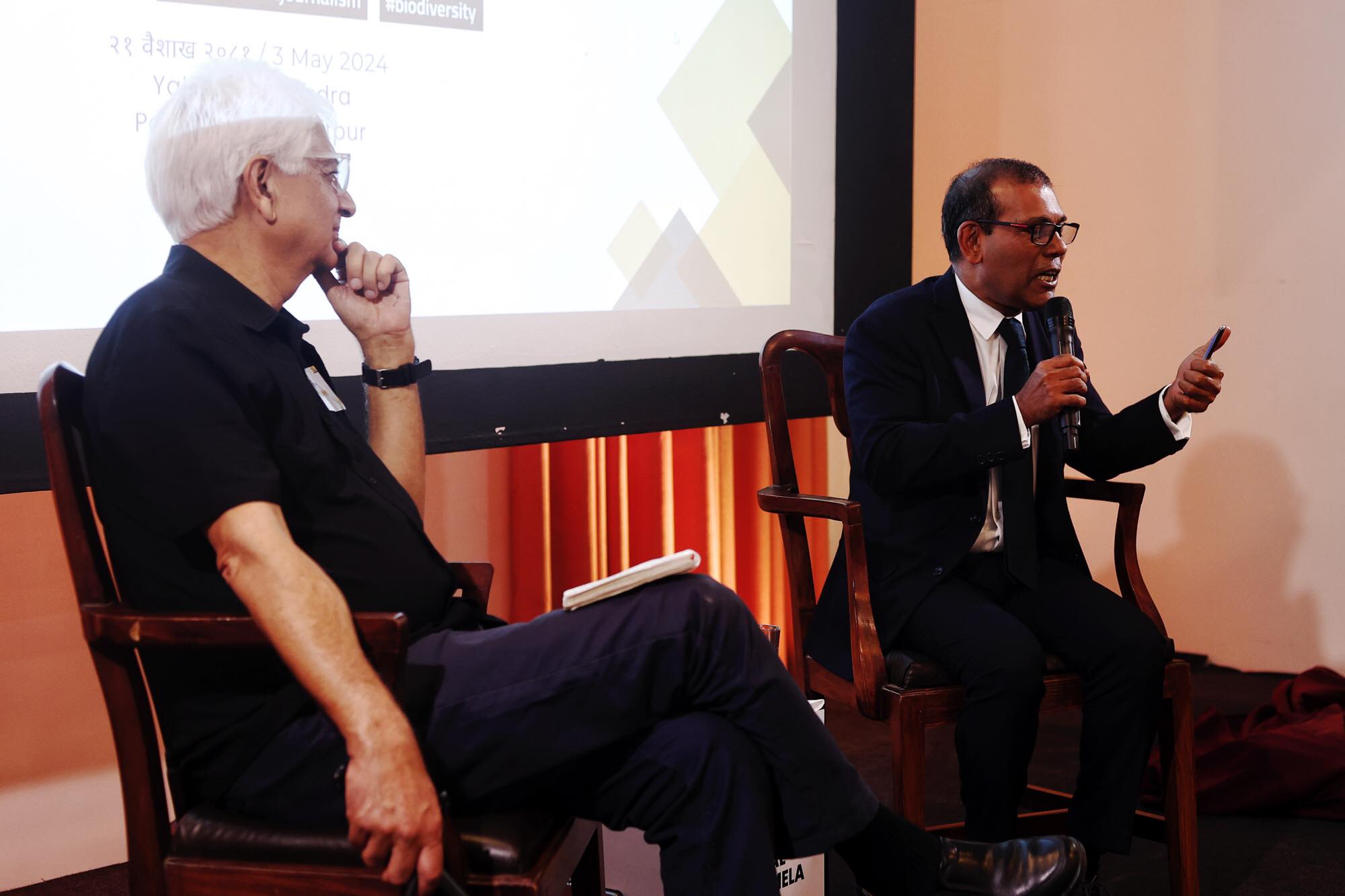
During his keynote address, Nasheed highlighted the clear ties between media, and climate action. “Freedom of expression and democracy is the most important adaptation measure against climate change,” he said.
He explained: “If we don’t have democracy and the ability to express ourselves, we will continue to build the wrong dam, wrong roads, wrong embankments at the wrong place at the wrong price. We already see bridges bridging nothing, roads leading to nowhere, airports not used, and vanity projects of politicians. This is because we are unable to speak out because we do not have a say in what our governments do.”
Nasheed now leads the Climate Vulnerable Forum which is the intergovernmental organisation of 68 countries including Nepal set up in 2009. He said that all 68 countries have lost 20% of their GDP because of bad weather, emphasising that environmental stories are not just human rights and justice stories anymore but rather economic and financial dispatches.