
Art is one of the few honest ways of expressing unspoken emotion. A line, colour, or shape can communicate what is hidden in the recesses of the human soul.
Annapurna Art in Bhaktapur is currently hosting the provocative exhibition titled Chromatic Psyche that leans into this truth. It brings together nine Nepali artists, each offering a distinct perspective on the human psyche.
Rupak Rai’s Excavation series is an homage to Nepal’s heritage. Using mixed media, he assembles motifs like chariots, Swayambunath, statues, stone carvings, temples – into compositions that feel unearthed. Excavator shapes recur and are deliberate symbols of digging into the past, or perhaps building over it.
“I just assembled our cultural pieces, I can’t call these pieces completely mine,” muses Rai modestly. But the vision is completely his, posing an important question: Is traditional art threatened by modern advances?
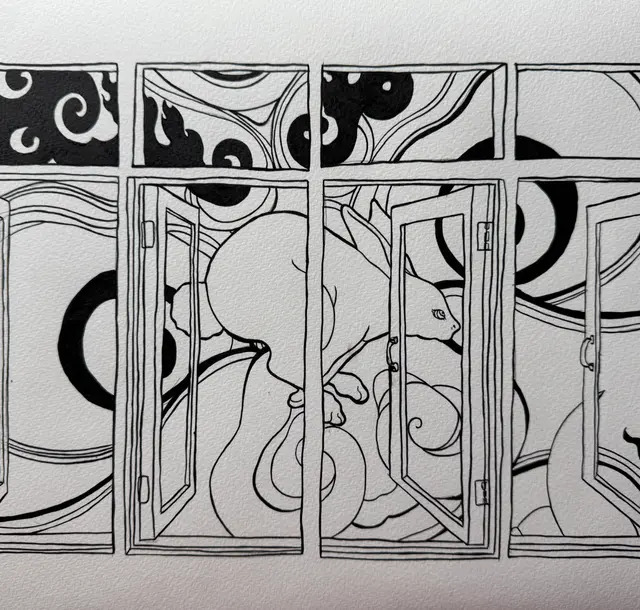
Ayush Thapa’s Architecture of Curiosity is a standout for its conceptual clarity. Working with black ink on white paper, he depicts inquisitiveness as rabbits. Open windows evoke the act of opening eyes.
Thapa explains: “The world is outside the window. If you look, you can even find god.” It is a simple yet profound invitation to stay awake to the world beyond one’s room. And in an age of endless doom-scrolling, Thapa’s works ask us to peer into our inner selves to look outward again.
Suchin Shrestha’s Silent Duality is deeply personal, working in charcoal and acrylics with a restrained palette. Dramatic poses and firm gestures speak to internal fears, insecurities, and thoughts that get stuck in our throats. Hands claw through darkness, a powerful metaphor for resilience.
“I’m trying to show what can’t be expressed verbally through gestures, lines,” Shrestha says. Indeed, the paintings name your grief before you do, the lines shaping amorphous anger. Shrestha’s works feel startlingly personal and relatable.
Pramila Bajracharya’s Women Expression series enriches the show with a feminist lens. The semi-abstract portraits use bold, vivid colours to depict assertive women.
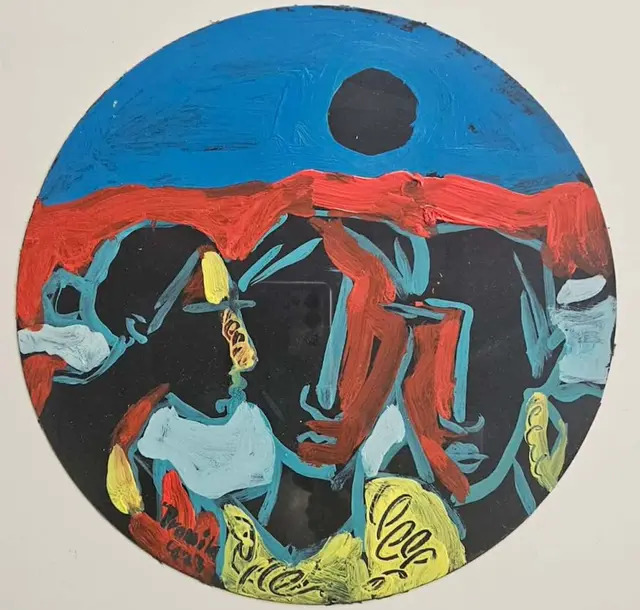
Their faces arrest viewers with direct, questioning stares, and command the space around them. These gazes carry the weight of all the courage and resilience of a woman’s life, and the women claim their presence with authority.
Manasi Bhatt offers two emotional registers. Silent Beggars portrays three mournful cows struggling in the streets of Nepal — abandoned after outliving their usefulness to their human owners.
The Charms of Village Home, on the other hand, shifts to a softer, nostalgic warmth, capturing the bucolic beauty of rural Nepal. Using the same brown, monochromatic acrylics and pen for both, Bhatt balances the struggle and tenderness that coexist.
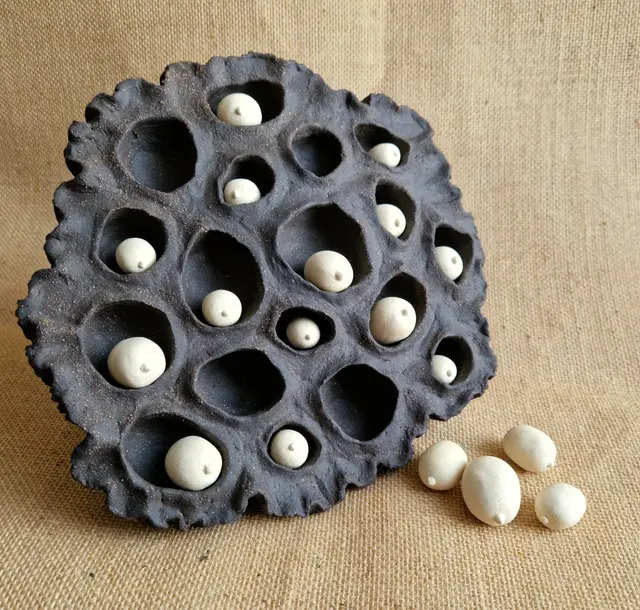
Anmari Tamang’s ceramic work Bebe is among the most provocative in the show. It is intentionally uncomfortable – an insect curled into the posture of a baby, its head like a human skull, and red eyes staring at the viewer make the piece deliberately unsettling, forcing us to contemplate our relationship with nature.
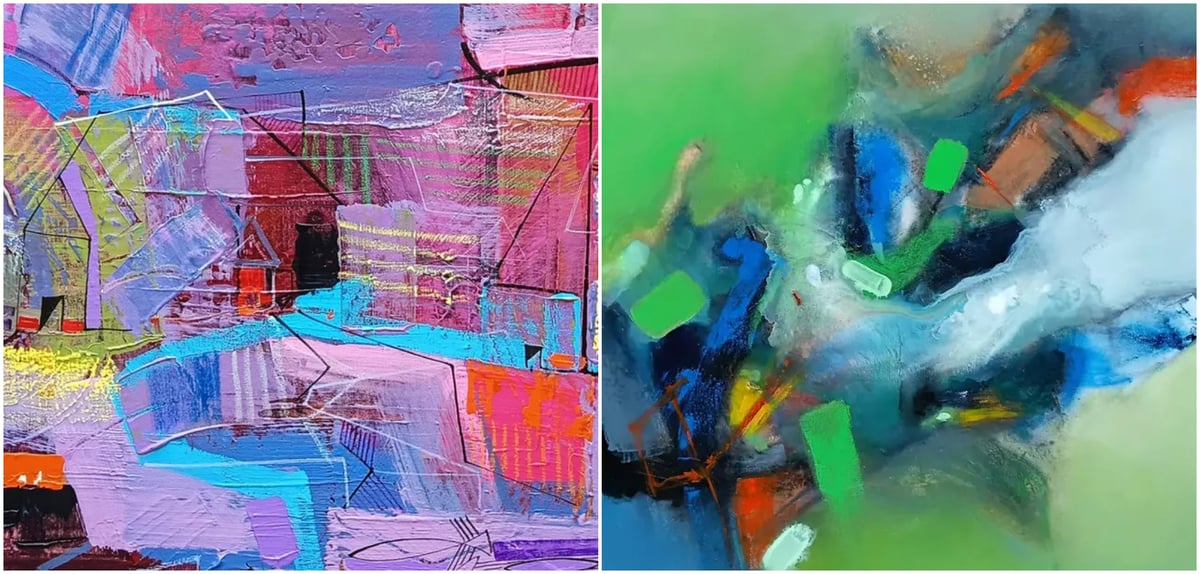
Jeevan Rajopadhay and Sagar Manandhar bring abstraction and nature into the dialogue. Rajopadhay’s untitled works are lush with blues, greens, and yellows, as abstract as the mysteries of nature itself. Manandhar takes a more modern, geometric approach.
Bold pinks, blues, and greens mimic the sounds and interactions of the artist’s surroundings, amalgamating all sensory experiences into a single colorful visual experience.
Finally, Suman Thapa’s untitled works close the show with raw, unfiltered emotions that cannot be bound to a single feeling. Using oil pastels and charcoal in single, unerasable strokes, he captures the fleeting movements and phases of human life in ultramarine blue. They represent the openness and darkness of the human mind and the world around us.
The exhibition Chromatic Psyche, like many exhibitions does not just show what the artist sees, it turns its gaze back on the viewer, asking them to peer inwards.
This small but rich exhibition is worth braving the traffic to Bhaktapur to visit.
Chromatic Psyche
Annapurna Art
Radhe Radhe Bhaktapur
Till 25 August