We call them ‘natural disasters’: earthquakes, floods, landslides. Yet, earthquakes don’t kill people, unsafe buildings do. Our ancestors instinctively knew not to live along river banks, settlements were located along ridges. Countries exposed to seismic and tsunami risk, like Japan, have detailed prevention and rescue plans in place. Most disasters may be natural, but the casualties are largely manmade.
In 2010, two earthquakes struck the Americas. The one in Haiti killed more than 300,000 people, but a much greater earthquake in Chile a few months later killed less than 600. The Chileans were better prepared, had stricter building codes and had trained rescue teams. Nepal has Chile-like earthquakes and Haiti-like preparedness.
The Himalayan arc is the planet’s highest and youngest mountain range, and it is still rising. The bedrock is on the move with the top soil clinging precariously to steep slopes. The mountains act as a rain barrier, too, giving the Himalayan foothills some of the heaviest precipitation rates in the world. In this naturally unstable terrain is situated the most-densely populated mountain country in the world. Now, add to this mix a prolonged state of flux in which criminalised politicians recklessly resettle people for vote banks and plunder natural resources, and you have a recipe for manmade human catastrophes.
Nepal’s location makes natural calamities a given. We have to learn to live with them occurring at regular intervals, we should not be taken by surprise when they happen. Yet, when they do we blame god ('daibi prakop') even though most of the casualties are a result of bad planning, lack of hazard mapping, the non-enforcement of zoning and building codes.
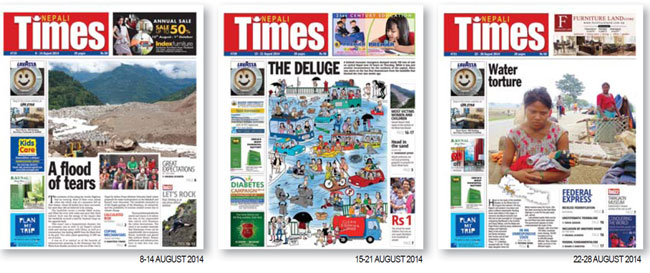
Let’s start calling them ‘unnatural disasters’ because most of the damage is preventable. The Kosi embankment did not breach by itself in 2008, quarrying of the boulders on the levee had weakened it. This was repeated on the Kamala this month. The Siraha bridge did not just collapse, it was caused by illegal sand-mining upstream. The highest death toll in the mid-west on the night of 12 August was among people recently resettled along riverbanks. Indiscriminate mining of river beds along the Seti, Trisuli, Narayani and the Tarai rivers increases water velocity, making even a normal river run amok.